Tomato Safety & Cleaning Guide
Step 1: Inspect Your Tomato
Answer these questions to assess your tomato's condition.
Step 2: Recommended Action
Click "Analyze Safety" to see if your tomato is safe and how to clean it.
Effective Cleaning Methods
Baking Soda Soak
High EffectivenessBest for breaking down chemical bonds in pesticides.
Nutrient Loss: Minimal | Effort: Medium- Mix 1 teaspoon baking soda in 2 cups of water.
- Submerge tomatoes completely.
- Soak for 12-15 minutes.
- Rinse thoroughly under running water.
Vinegar Solution
Medium-High EffectivenessGood for neutralizing surface residues and bacteria.
Nutrient Loss: Minimal | Effort: Medium- Mix 1 part white vinegar with 3 parts water.
- Soak tomatoes for 5-10 minutes.
- Rinse well with clean water.
Peeling (Blanching)
Very High EffectivenessMost effective way to ensure zero residue by removing skin.
Nutrient Loss: Moderate | Effort: High- Score a small 'X' at the bottom of the tomato.
- Blanch in boiling water for 30 seconds.
- Immediately plunge into ice water.
- Skin will slip off easily; discard skin.
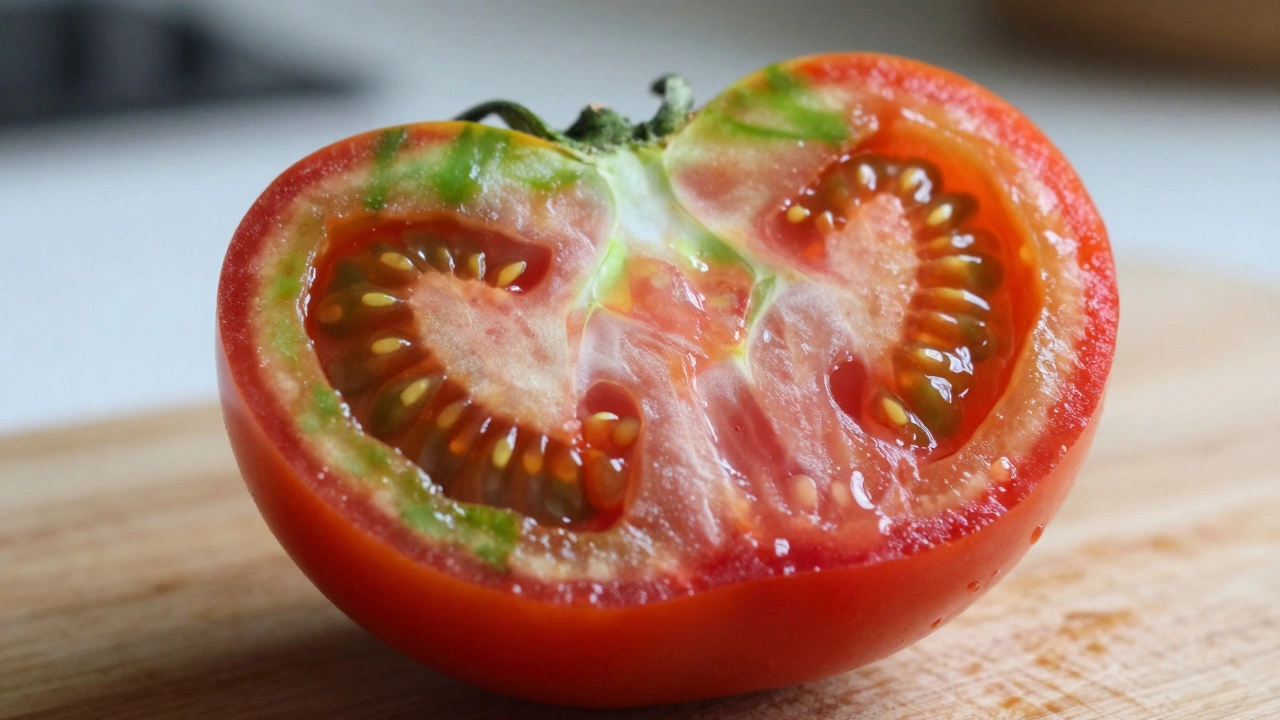
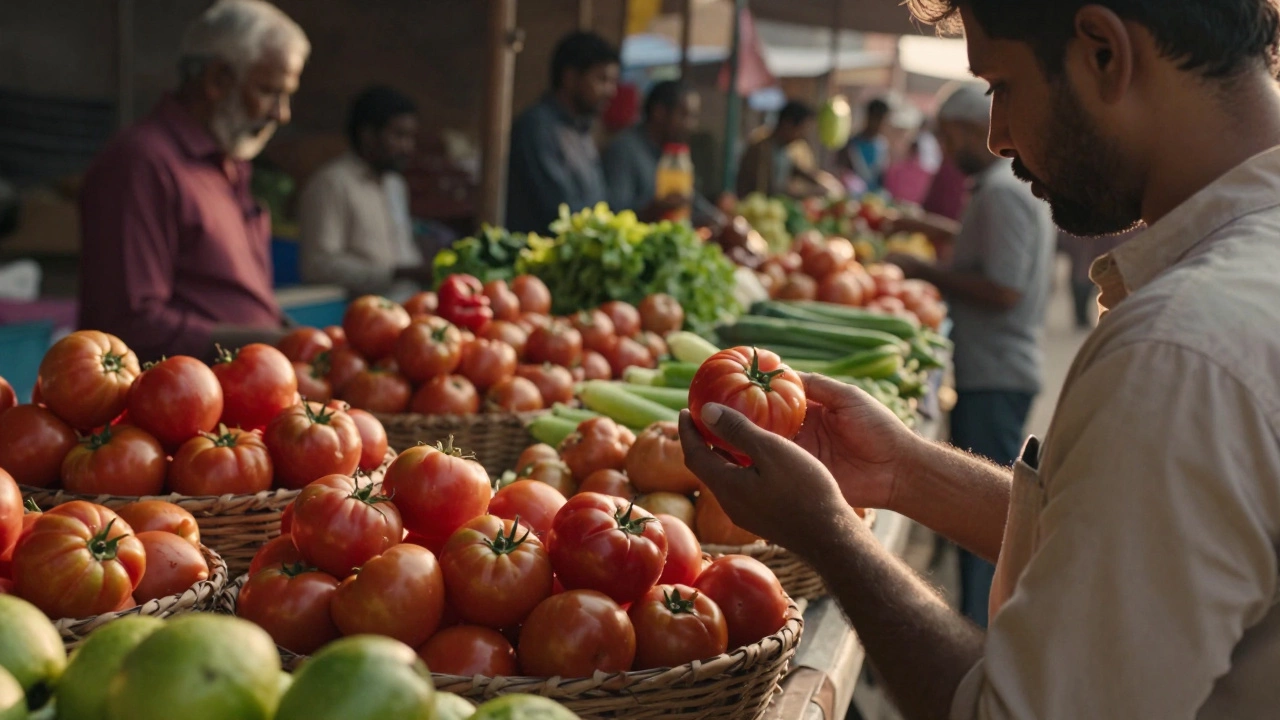
You’ve probably seen it happen. You’re at the local market or scrolling through your grocery delivery app, and you notice that bright red, juicy tomato sitting next to one that is distinctly green on the inside. It looks like an unripe fruit that hasn’t finished its job. For years, this visual anomaly has sparked a wave of anxiety across Indian households. Is it safe? Is it poisoned? Should I throw it away?
The short answer is yes, tomatoes are generally safe to eat in India, even if they show some greenness inside. However, the concern isn't entirely baseless. The fear stems from legitimate issues regarding pesticide residues, specifically fungicides like carbendazim a broad-spectrum fungicide used to control fungal diseases in crops, which have been found in violation levels in some samples over the past decade. But before you banish the tomato from your kitchen, let’s look at what’s actually happening with our produce, why that green color appears, and how you can eat them safely without worrying.
The Mystery of the Green Tomato
First, we need to separate myth from biology. Many people believe that a green interior means the tomato was picked too early and forced to ripen artificially. While early harvesting does happen for transport durability, it doesn’t automatically mean the fruit is unsafe. Tomatoes are complex fruits. They contain two main pigments: lycopene, which gives them their red color, and chlorophyll, which makes them green.
As a tomato ripens, chlorophyll breaks down and lycopene takes over. Sometimes, this process is uneven. If the weather fluctuates-hot days followed by cool nights-the breakdown of chlorophyll can be incomplete. This results in a condition called "internal green shoulder" or simply uneven ripening. In these cases, the green part is just natural plant tissue. It might taste slightly more acidic or tart than the red part, but it is not toxic. It’s the same chlorophyll found in spinach and kale, which we eat daily for health benefits.
So, if you cut open a tomato and see green streaks, ask yourself: Did it smell right? Was the skin fully red? If yes, it’s likely just nature being inconsistent, not a chemical hazard.
The Real Concern: Pesticide Residues
If the green color itself isn’t usually the danger, then why all the panic? The real issue lies in agricultural practices. To keep yields high and protect crops from fungal infections, many farmers use chemical fungicides. One of the most common culprits in the news has been carbendazim a systemic fungicide often banned or restricted due to health concerns. Other chemicals include imidacloprid and thiamethoxam.
Reports from the Food Safety and Standards Authority of India (FSSAI) and various non-governmental organizations have periodically flagged tomato samples containing pesticide residues above the Maximum Residue Limits (MRL). When these chemicals remain on the peel or seep into the flesh, they pose long-term health risks, including potential hormonal disruptions and other chronic conditions. This is where the "green tomato" myth gained traction: people associated the unnatural appearance with chemical treatment.
It is important to note that not every tomato is contaminated. Regulatory bodies conduct regular tests, and the majority of samples do pass safety standards. However, the inconsistency in enforcement and the sheer volume of produce make it difficult for the average consumer to know exactly what they are buying.
How to Choose Safer Tomatoes
Since you cannot test your vegetables in a lab before cooking, you need practical strategies to minimize risk. Here is how you can navigate the market with confidence:
- Look for Uniformity: Avoid tomatoes with strange discolorations, dark spots, or unusual shapes. A good tomato should feel firm but slightly yielding to gentle pressure.
- Buy Local and Seasonal: Tomatoes grown locally during peak season (usually winter and early spring in India) require fewer pesticides because the climate naturally discourages pests. Out-of-season tomatoes, especially those transported from distant states, are more likely to have been treated heavily to survive transit.
- Check for Certification Labels: Look for the India Organic logo or FPO (Farmer Producer Organization) labels. These indicate stricter adherence to safety guidelines, though they are not foolproof guarantees.
- Variety Matters: Some heirloom or local varieties are naturally more resistant to pests than the large, hybrid supermarket tomatoes. Smaller, rougher-skinned tomatoes often have thicker skins that block some pesticide absorption.
Cleaning Techniques That Actually Work
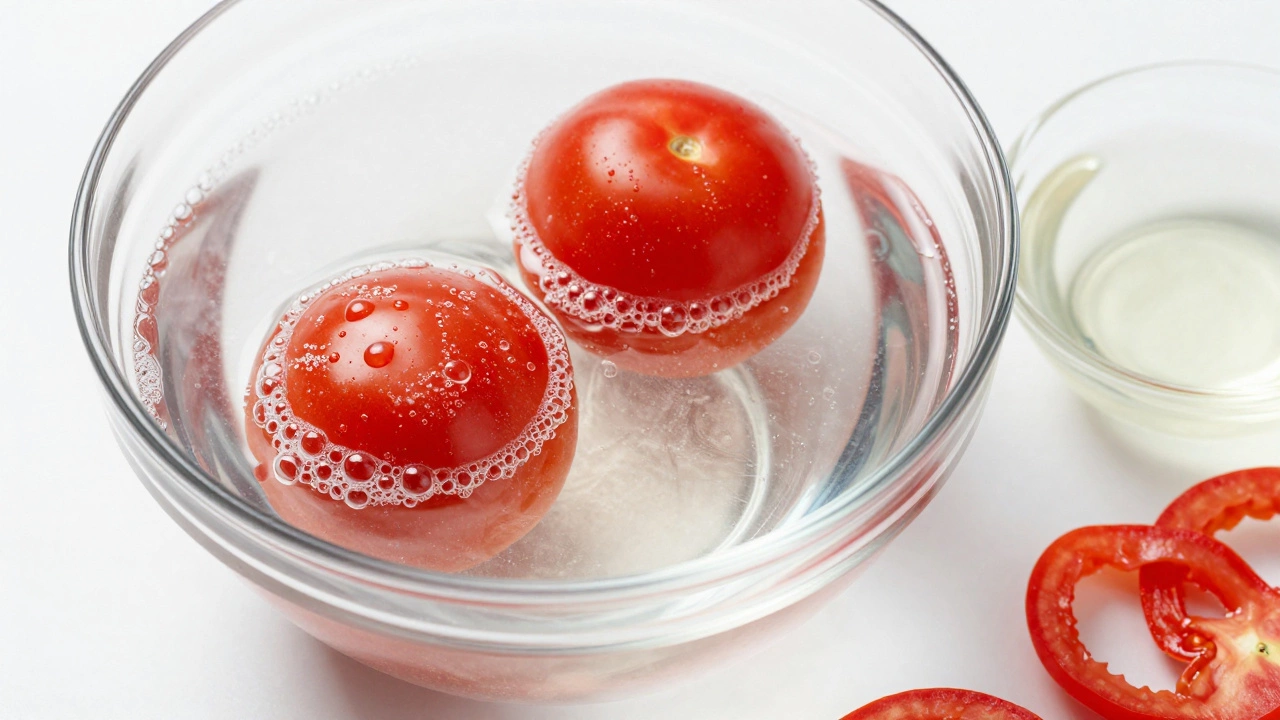
Washing your tomatoes under tap water is a start, but it’s not enough to remove waxy coatings or lipophilic (fat-loving) pesticides that cling to the skin. Here are three effective methods to reduce residue significantly:
- Baking Soda Soak: Mix one teaspoon of baking soda in two cups of water. Submerge your tomatoes for 12-15 minutes. Baking soda helps break down the chemical bonds of certain pesticides. Rinse thoroughly afterward.
- Vinegar Solution: A mixture of one part white vinegar to three parts water can also help neutralize surface residues. Soak for 5-10 minutes, then rinse well. This method is particularly good for removing bacteria as well.
- Peeeling: Since many pesticides accumulate in the skin, peeling the tomato is the most effective way to ensure zero residue. You can blanch the tomato in boiling water for 30 seconds, then plunge it into ice water. The skin will slip off easily. Yes, you lose some fiber and nutrients, but you gain peace of mind.
| Method | Effectiveness | Nutrient Loss | Effort Level |
|---|---|---|---|
| Tap Water Rinse | Low | None | Very Low |
| Baking Soda Soak | High | Minimal | Medium |
| Vinegar Soak | Medium-High | Minimal | Medium |
| Peeling | Very High | Moderate (Skin removed) | High |
Nutritional Benefits vs. Risks
Despite the fears, tomatoes remain a nutritional powerhouse. They are rich in lycopene a powerful antioxidant linked to reduced risk of heart disease and cancer, vitamin C, potassium, and folate. Lycopene is fat-soluble, meaning your body absorbs it better when cooked with a little oil. This is why tomato-based curries and sauces are so beneficial.
The health benefits of consuming fresh, clean tomatoes far outweigh the theoretical risks of occasional pesticide exposure, provided you take basic precautions. Removing tomatoes from your diet entirely means missing out on essential nutrients that support immune function and skin health. Instead of avoidance, adopt a strategy of mitigation: wash, peel, and source wisely.
What About Green Tomatoes in Recipes?
If you accidentally buy a tomato that is hard and green on the outside, don’t toss it. In Indian cuisine, unripe tomatoes are actually prized for specific dishes. Their high acidity adds a tangy kick to curries without needing extra tamarind or lemon juice. Dishes like Tomato Rasam or certain Sambar variations benefit from the sharp flavor of semi-ripe tomatoes. Just ensure you cook them thoroughly, as heat helps break down any minor irritants and improves digestibility.
For salads or chutneys, stick to fully ripe, red tomatoes. The sugar content is higher, and the texture is softer, making them ideal for raw consumption. If you suspect high pesticide load, always peel them first.
Regulatory Landscape and Future Outlook
The situation is improving. The FSSAI has tightened regulations on carbendazim and other hazardous pesticides. There is a growing push towards organic farming and integrated pest management (IPM), which uses biological controls instead of chemicals. As consumers become more aware, demand for safer produce is forcing suppliers to adapt.
However, change takes time. Until traceability systems are universal, individual vigilance remains key. Support local farmers' markets where you can ask directly about farming practices. Building a relationship with your grocer can also help; they often know which batches come from trusted sources.
Is it dangerous to eat a tomato with green inside?
No, it is not inherently dangerous. The green color is usually due to chlorophyll, which is safe and natural. It may indicate uneven ripening rather than toxicity. However, if the tomato also has an odd smell or texture, discard it.
Do green tomatoes contain more pesticides?
Not necessarily. Pesticide levels depend on farming practices, not the color of the flesh. However, unripe tomatoes picked early for transport might have been treated with ripening agents or fungicides, so washing or peeling is recommended regardless of color.
How can I remove pesticide residue from tomatoes?
The most effective methods are soaking in a baking soda solution for 15 minutes or peeling the skin after blanching. Simple rinsing with water removes only surface dirt, not embedded chemicals.
Are organic tomatoes completely free of pesticides?
Organic tomatoes are grown without synthetic pesticides, but they may still contain traces of natural pesticides or environmental contaminants. They are generally safer, but washing is still advised.
Can I eat green tomatoes raw?
You can, but they will be very sour and hard. They are better suited for cooking. If you eat them raw, ensure they are washed thoroughly or peeled to avoid any potential residue.