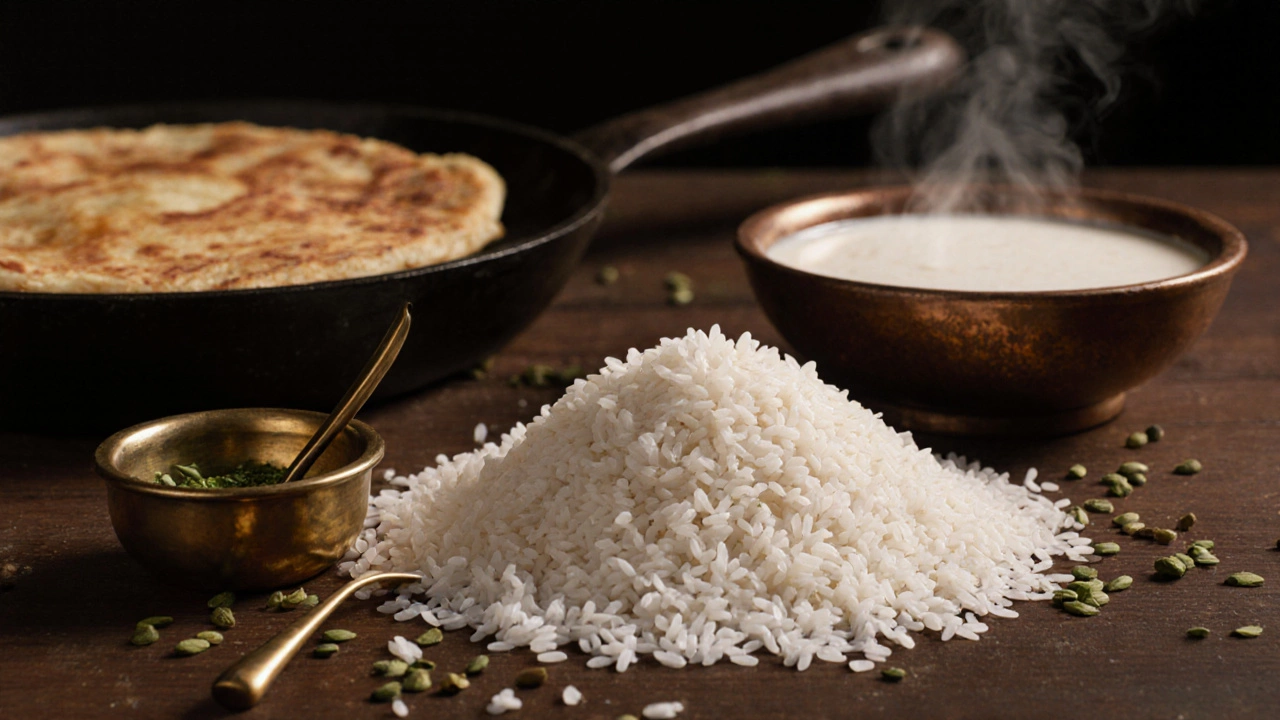
If you’ve ever made dosa at home and ended up with a thick, rubbery pancake instead of a crisp, golden one, the problem isn’t your technique-it’s the rice. The type of rice you use makes all the difference. Not all rice is created equal when it comes to dosa batter. Even if you ferment it perfectly, soak it for hours, and grind it just right, using the wrong rice will ruin the texture. The best rice for dosa isn’t just any long-grain variety. It’s a specific kind that’s been used for generations in South India, and it’s not always easy to find outside of Indian grocery stores.
Why Rice Matters More Than You Think
Dosa batter relies on fermentation to become light and airy. The starch in the rice breaks down during soaking and fermentation, releasing sugars that feed the natural yeast and lactic acid bacteria. That’s what gives dosa its slight tang and airy bubbles. But not all starches behave the same way. Some rice varieties gelatinize too quickly, making the batter sticky. Others don’t release enough starch, leaving the dosa dense and hard.
Traditional dosa recipes use a blend of two rices: one for structure and one for crispness. The most common and effective combo is 3 parts dosa rice to 1 part idli rice. Dosa rice is short-grain, slightly sticky when cooked, and has a higher amylopectin content. That means it holds moisture well and creates a soft interior. Idli rice is even shorter and rounder, with a higher starch-to-protein ratio. It ferments faster and helps the batter puff up, giving you those signature bubbles.
Using regular long-grain white rice-like basmati or jasmine-will give you a flat, chewy dosa. It doesn’t ferment properly, and the batter stays thick. Even parboiled rice, which works fine for idlis, can make dosas too dense if used alone. You need the right balance.
The Top 3 Rices for Perfect Dosa Batter
Here are the three rice types that actually work for dosa, ranked by performance:
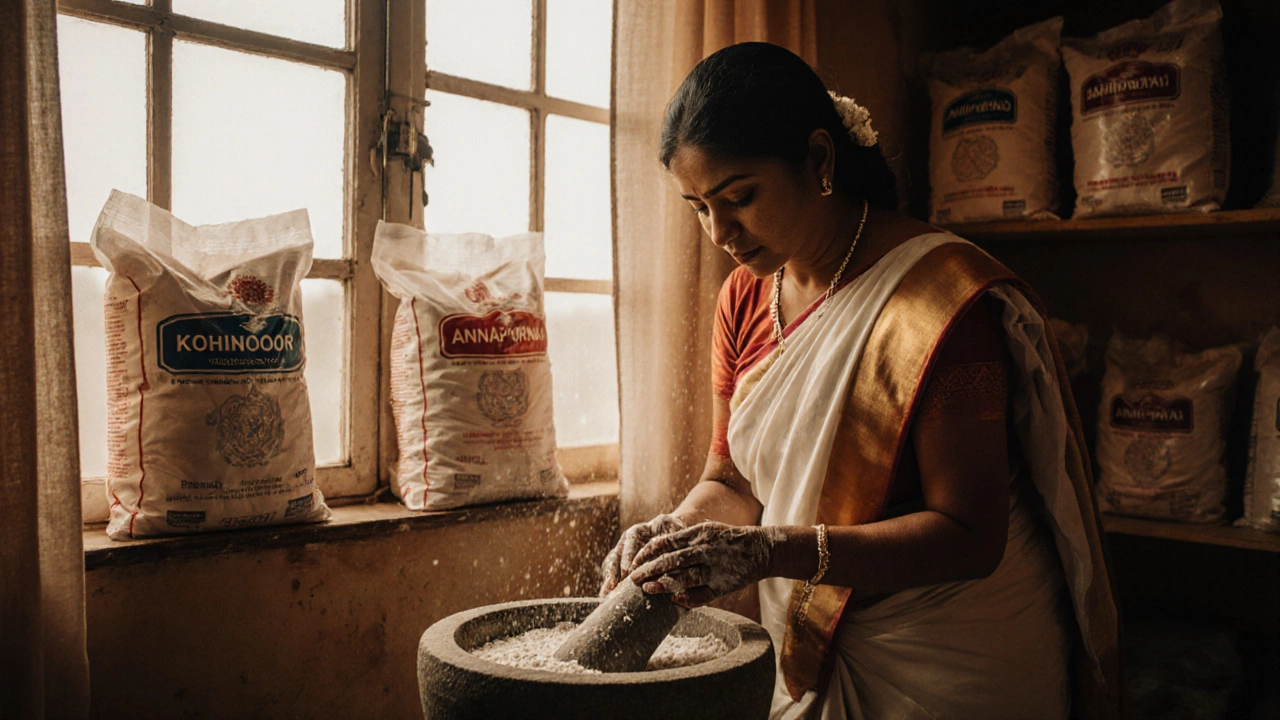
- Dosa rice (also called dosa parboiled rice or South Indian dosa rice): This is the gold standard. It’s parboiled, short-grain, and has a milky white appearance. It’s sold in 1kg packs in Indian grocery stores, often labeled as “Dosa Rice” or “Idli & Dosa Rice.” Brands like Kohinoor, Annapurna, and Aashirvaad make it. This rice absorbs water slowly, ferments evenly, and gives you that perfect crisp edge with a soft center.
- Idli rice: Slightly smaller and rounder than dosa rice, idli rice ferments faster and creates a lighter batter. It’s often blended with dosa rice to boost fluffiness. If you can’t find dosa rice, using 100% idli rice is your next best option. It won’t be as crispy, but the texture will still be far better than regular rice.
- Raw short-grain rice (like Sona Masoori or Ponni): These are common in Tamil Nadu and Karnataka households. They’re not parboiled, so they need longer soaking-up to 8 hours. The resulting batter is slightly more sour and the dosas are crispier. But they’re harder to find outside of India, and the soaking time makes them less convenient for weeknight cooking.
Don’t use brown rice, wild rice, or jasmine rice. They don’t ferment well, and the fiber content interferes with the batter’s texture. Even if you see a recipe online that says “use any rice,” it’s likely written by someone who’s never made authentic dosa.
What Happens When You Use the Wrong Rice
Let’s say you grab a bag of basmati rice because it’s what you have in your pantry. You soak it for 6 hours, grind it with urad dal, let it ferment overnight, and fry your dosa. What happens?
- The batter stays thick and doesn’t spread easily on the pan.
- The dosa doesn’t crisp up-it stays chewy and sticks to the griddle.
- There are no bubbles. The surface looks flat and lifeless.
- It tastes bland, even with good seasoning.
This isn’t your fault. It’s the rice. Basmati rice has a high amylose content, which means it resists gelatinization. That’s great for fluffy biryanis, but terrible for dosa. Amylose doesn’t break down during fermentation the way amylopectin does. Without that breakdown, you don’t get the light, airy texture you want.
Even parboiled long-grain rice-common in many Western households-won’t cut it. Parboiling changes the starch structure, but not in a way that helps dosa. It can make the batter gummy and slow to ferment.
Where to Buy the Right Rice (Even Outside India)
If you live in Sydney, Melbourne, or any major city with an Indian community, head to your local Indian grocery. Look for the rice aisle. Dosa rice is usually in small, labeled bags-often near the urad dal and fenugreek seeds. It’s not expensive: a 1kg bag costs around $5-$7 AUD.
Some common brands you’ll find:
- Kohinoor Dosa Rice
- Annapurna Dosa Rice
- Aashirvaad Dosa & Idli Rice
- Amrit Dosa Rice
If you don’t have access to an Indian store, online retailers like Amazon Australia, iHerb, or even eBay often carry these brands. Search for “dosa rice” or “idli dosa rice.” Avoid listings that just say “long-grain rice” or “basmati rice for idli.” Those won’t work.
Some people try substituting with glutinous rice or sushi rice. Don’t. Glutinous rice is too sticky-it turns the batter into glue. Sushi rice has too much moisture and doesn’t ferment cleanly.
Pro Tip: The 3:1 Ratio That Always Works
Here’s the ratio that South Indian households use for perfect dosa batter every time:
- 3 cups dosa rice
- 1 cup idli rice
- 1 cup dried urad dal (skin-on, not split)
- 1 tsp fenugreek seeds (optional, for fermentation)
- Water as needed for grinding
Soak the rice and fenugreek seeds together for 4-6 hours. Soak the urad dal separately for the same time. Grind the dal first into a smooth, fluffy paste. Then grind the rice separately into a slightly coarse batter. Mix both together, add salt, and ferment overnight at room temperature (25-30°C). In Sydney’s climate, this usually takes 8-10 hours. If it’s cold, place the batter near a warm oven or in a turned-off microwave with a bowl of hot water.
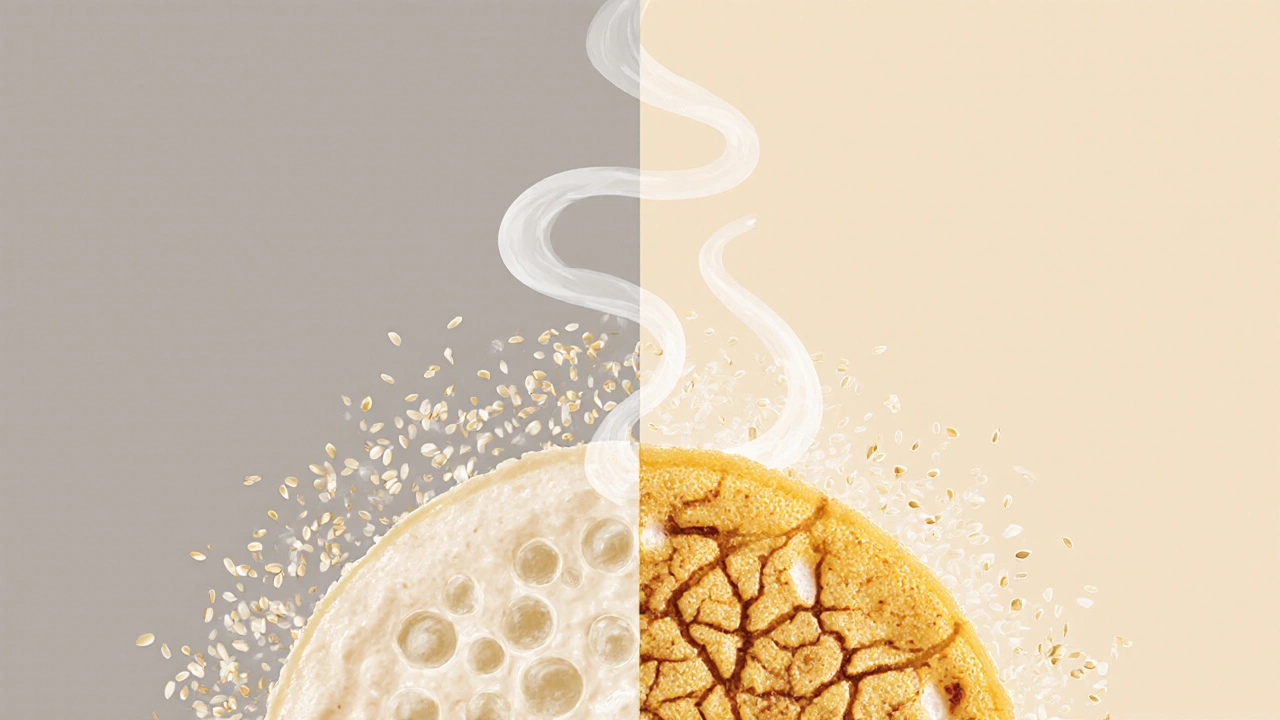
The batter should double in volume, smell slightly sour, and have bubbles all over. If it doesn’t, your rice might be old or the wrong type.
Common Mistakes Even Experienced Cooks Make
- Using leftover rice from last night’s meal. Cold rice doesn’t absorb water properly and ruins fermentation.
- Grinding the rice too fine. It should be coarse, not powdery. Fine grinding makes the batter gummy.
- Adding too much water. The batter should be thick enough to drizzle slowly, not run like cream.
- Not fermenting long enough. Rushing fermentation leads to flat dosas. Give it at least 8 hours.
- Using a non-stick pan that’s too hot. Dosa needs medium heat. Too hot, and it burns before it crisps.
One more thing: don’t store the batter in the fridge unless you’re making it days ahead. Cold temperatures kill the natural yeast. If you must refrigerate, bring it to room temperature for 2 hours before cooking.
What If You Can’t Find Dosa Rice?
If you’ve searched every store and still can’t find it, here’s a backup plan: use 100% idli rice. It’s the next best thing. The dosas won’t be as crisp, but they’ll still be fluffy and delicious. You can add 1-2 tablespoons of cooked white rice to the batter before grinding to help with texture. It’s not traditional, but it works in a pinch.
Some people swear by adding 1/4 cup of cooked rice flour to the batter for extra crispness. It’s not authentic, but it’s a trick used by many home cooks in Australia and the US. Try it if you’re desperate.
But here’s the truth: if you want authentic dosa, you need the right rice. It’s not a suggestion-it’s a requirement. Just like you wouldn’t make pasta with rice flour, you shouldn’t make dosa with the wrong rice.
Final Thought: Taste Is in the Grain
Good dosa isn’t about fancy spices or perfect flipping. It’s about the rice. The right rice ferments beautifully, spreads easily, and crisps up in seconds. The wrong rice? It’s a waste of time, effort, and urad dal.
Next time you make dosa, check the bag. If it doesn’t say “dosa rice” or “idli rice,” you’re starting from a disadvantage. Go to your local Indian store. Buy a bag. Try it once. You’ll never go back to regular rice again.
Can I use basmati rice for dosa?
No, basmati rice is not suitable for dosa. It has high amylose content, which prevents proper fermentation and results in a dense, chewy texture. Dosa requires rice with high amylopectin, like dosa rice or idli rice, to create the right airy, crisp batter.
Is idli rice the same as dosa rice?
They’re similar but not the same. Idli rice is shorter, rounder, and ferments faster, making it ideal for soft idlis. Dosa rice is slightly longer and has more starch, giving dosas their crisp edge. Most traditional recipes use a blend of both: 3 parts dosa rice to 1 part idli rice.
Can I use parboiled rice for dosa?
Only if it’s specifically labeled as dosa rice or idli rice. Regular parboiled long-grain rice (like Uncle Ben’s) won’t work. It’s processed differently and doesn’t ferment properly. Stick to South Indian parboiled rice labeled for dosa or idli use.
Why is my dosa batter not fermenting?
The most common reasons are using the wrong rice, not soaking long enough, or fermenting in a cold environment. Dosa rice needs 4-6 hours of soaking and 8-10 hours of fermentation at 25-30°C. If your kitchen is below 20°C, place the batter near a warm appliance or in a turned-off oven with a bowl of hot water.
Can I use rice flour instead of whole rice for dosa?
No. Rice flour lacks the natural enzymes and structure needed for fermentation. Dosa batter must be made from whole soaked and ground rice to develop the right texture and flavor. Rice flour may work for instant dosa mixes, but it won’t give you authentic results.