Indian Coffee Caffeine Calculator
Indian street filter coffee typically contains 80-100 mg of caffeine per serving. Calculate your intake based on how many cups you'll drink.
Your Caffeine Intake
Based on typical Indian street filter coffee (80-100 mg per cup)
This is equivalent to espresso shots
People ask if they can drink coffee in India like they do back home-straight from a roadside cart, steaming hot, and cheap as chips. The answer? Yes. But not like you think.
Coffee Isn’t Just a Drink in India
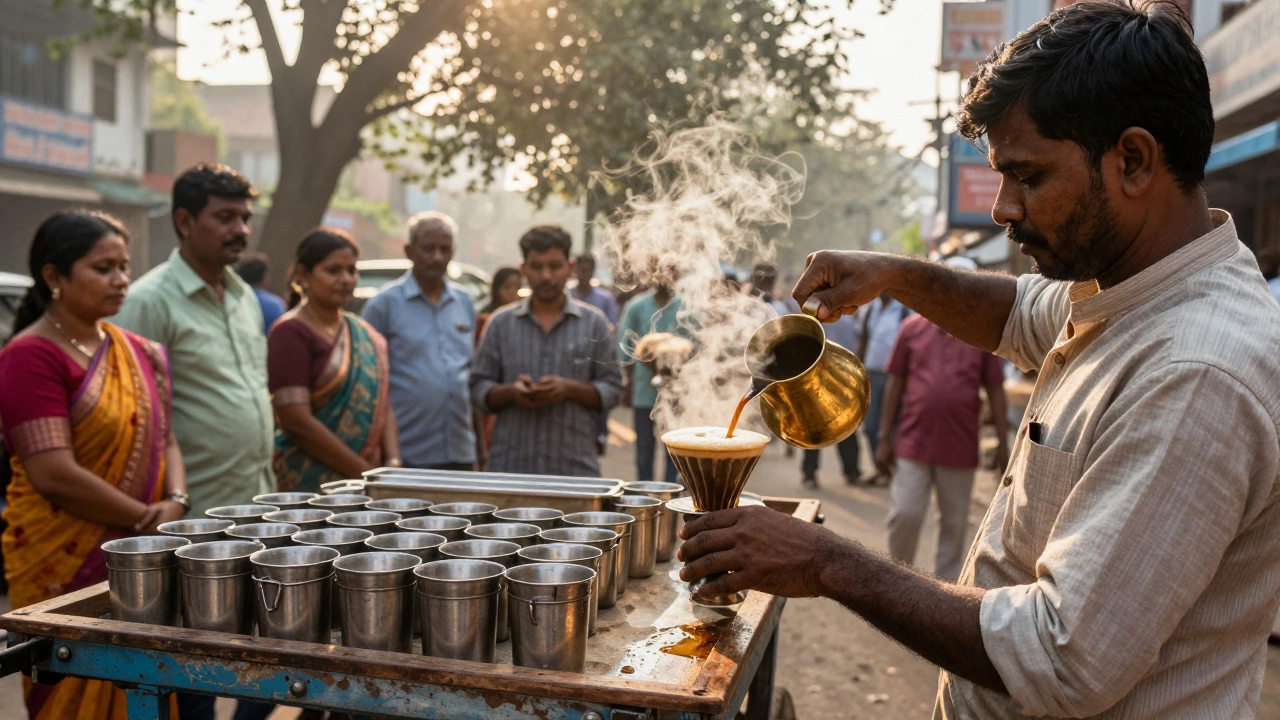
In India, coffee isn’t an afterthought. It’s a ritual. You don’t just sip it-you experience it. From the busy lanes of Bangalore to the quiet corners of Mysore, coffee is served in small steel tumblers, poured from a height to create a froth, and often sweetened with condensed milk. It’s not Starbucks. It’s not instant. It’s filter coffee, a brew that’s been around since the 1800s and still tastes like home to millions.
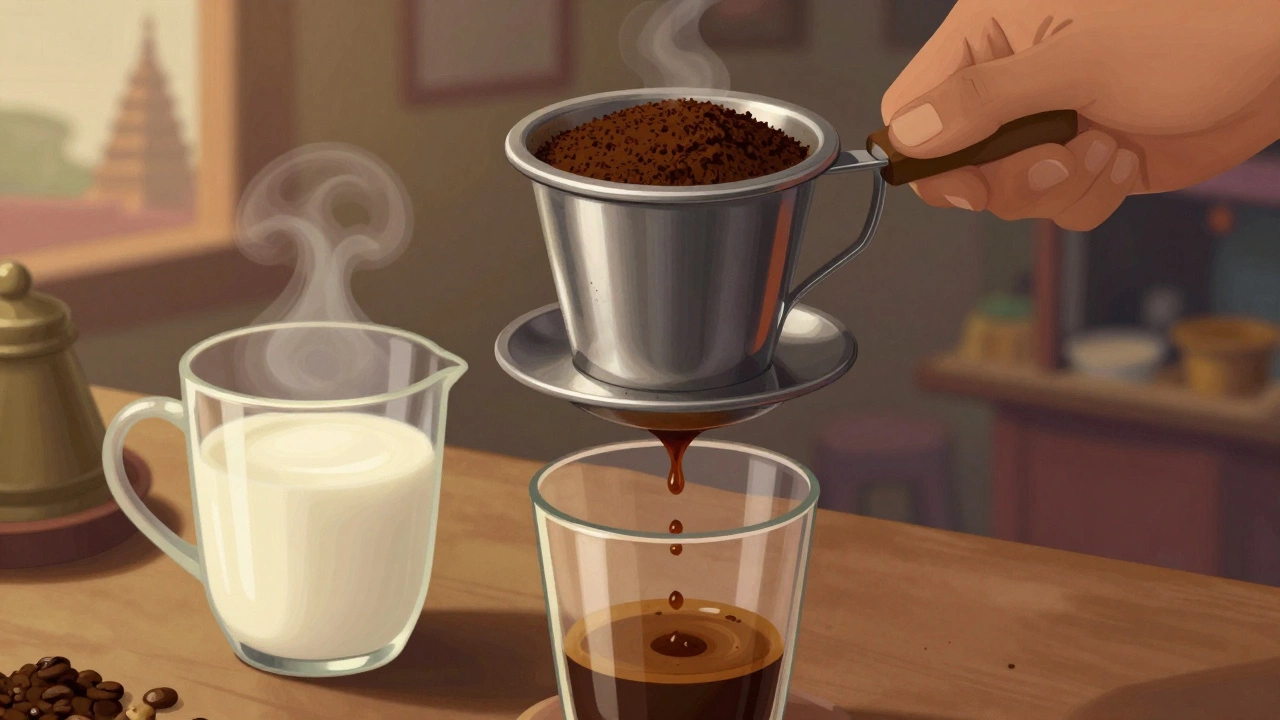
Street vendors don’t just sell coffee-they serve culture. You’ll find them outside temples in Tamil Nadu, near bus stops in Kerala, and beside chai stalls in Mumbai. Their setup is simple: a brass or stainless steel filter, a pot of boiling water, and a tin of strong coffee powder made from a mix of Arabica and Robusta beans. The grounds are steeped slowly, then dripped into a container. When it’s time to serve, they pour it into a tumbler, add milk and sugar, then lift the tumbler high and pour it back into the pot. Repeat. That’s how they aerate it. That’s how they make it smooth.
Is It Safe to Drink Coffee from a Street Stall?
Yes-if you watch how it’s made. Most reputable street vendors use boiled water. They clean their tumblers with hot water before each use. You’ll see them rinse the metal filters, wipe down the containers, and sometimes even use gloves. In cities like Chennai or Coimbatore, coffee carts have been running for decades. Families pass them down like heirlooms.
That said, avoid places where the coffee sits in an open pot for hours, or where the milk is kept at room temperature. Look for stalls where the milk is fresh, the tumbler is washed in front of you, and the coffee is brewed on demand. If the vendor is busy and the line is long, that’s a good sign. High turnover means fresh batches.
A 2024 study by India’s Food Safety and Standards Authority found that 87% of street coffee vendors in major cities met hygiene standards during unannounced inspections. That’s higher than some packaged beverage manufacturers. The real risk isn’t the coffee-it’s the milk if it’s not stored properly.
What You’ll Actually Get
Order coffee in India and you won’t get a latte. You’ll get a tumbler with about 150 ml of thick, sweet, milky brew. It’s not weak. It’s not bitter. It’s rich, almost syrupy, with a deep roasted aroma. Most places use a 1:4 ratio of coffee powder to water, then add equal parts milk. Sugar? Usually two teaspoons, but you can ask for less. Some vendors even offer it without sugar-rare, but possible.
The flavor? Earthy, nutty, with a hint of chocolate. It’s not like espresso. It’s not like drip coffee. It’s its own thing. And once you’ve had it, you’ll notice how different it is from the coffee you know.
Where to Find the Best Street Coffee
Head to Tamil Nadu for the purest version. In Madurai, vendors serve it with a side of hot idli or vada. In Bangalore, you’ll find it near the old markets-places like MG Road or Chickpet. In Kerala, they serve it with a spoonful of ghee in some homes, but street stalls keep it simple.
Don’t miss the coffee shops in Mysore. They use beans grown in the nearby hills. The coffee is darker, less sweet, and served with a side of cardamom. It’s not just a drink-it’s a flavor experience.
In Mumbai, you’ll see coffee carts near railway stations. In Delhi, they’re tucked into side alleys near Connaught Place. In Pune, you’ll find students sipping it after college. Each city has its own rhythm, but the ritual stays the same.
How Much Does It Cost?
Expect to pay between ₹15 and ₹30 (about $0.18 to $0.36 USD). In tourist areas, it might hit ₹50. That’s less than half the price of a bottled water in some places. It’s one of the most affordable hot drinks you’ll find in India.
Compare that to a coffee at a café-₹120 to ₹200. Street coffee isn’t just cheaper. It’s better. It’s made with care. It’s made with tradition.
What About Caffeine?
One serving of Indian street coffee has about 80-100 mg of caffeine. That’s similar to a standard espresso. But because it’s served in smaller portions and sipped slowly, the effect feels gentler. It doesn’t spike you. It warms you.
Most people drink one or two cups a day. It’s not a habit to get addicted to-it’s a rhythm to fall into. You’ll find truck drivers, students, and office workers all sipping it at 7 a.m. and again at 4 p.m. It’s fuel. It’s comfort. It’s routine.
What You Should Avoid
Don’t drink coffee from stalls that don’t use boiled water. If the water tank looks dirty or the tap is rusted, walk away. Avoid places where the milk is left out in the sun. If the vendor doesn’t wash the tumbler before pouring, don’t risk it.
Also, skip the coffee if you’re not used to sweet drinks. Indian coffee is sweet-sometimes very sweet. Ask for "less sugar" or "without sugar" if you’re sensitive. Some vendors understand English. Others will nod and smile. Try it once. If it’s too sweet, just sip slowly and enjoy the flavor.
Why This Matters
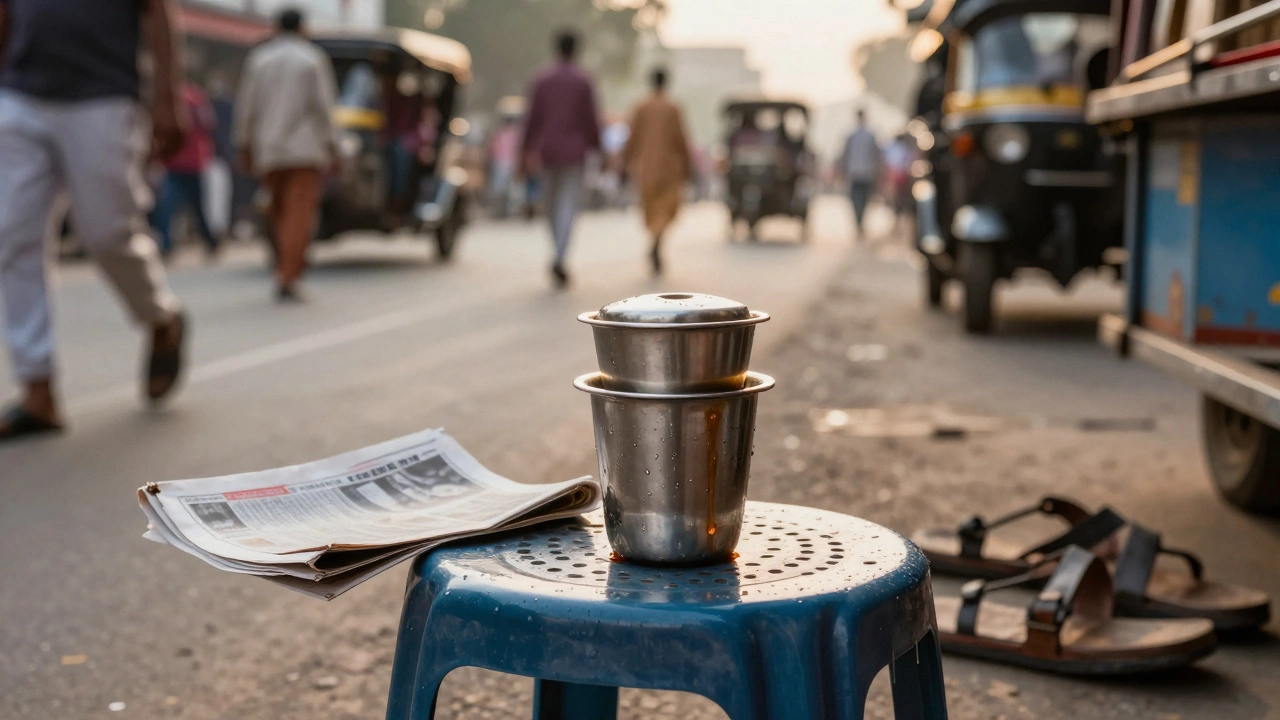
Drinking coffee on the street in India isn’t just about caffeine. It’s about connection. It’s about trusting a stranger who’s been serving the same brew for 30 years. It’s about sitting on a plastic stool, watching the world go by, and realizing that the simplest things-hot coffee, clean water, a steady hand-can feel like luxury.
It’s also a quiet rebellion against the idea that foreign = better. This coffee doesn’t need a name brand. It doesn’t need a logo. It just needs to be made right. And in India, it always is.