Turmeric Substitute Calculator
Calculate exact spice measurements when you're out of turmeric. Based on the article: "Can I Make a Curry Without Turmeric? Yes, Here’s How"
Your Substitutes
You’re standing in your kitchen, ready to make chicken curry. You grab the spices - cumin, coriander, chili powder - and then you freeze. The turmeric jar is empty. Or maybe you’re avoiding it for health reasons. Or you just ran out and the store’s closed. Can you still make a good curry without turmeric? The short answer: yes. And it won’t taste like a compromise.
Why Turmeric Shows Up in Curry
Turmeric isn’t just for color. It’s one of the three core spices in most Indian-style curries, along with cumin and coriander. It adds a warm, earthy background note and a slight bitterness that balances the richness of coconut milk, tomato, or yogurt. But it’s not the star. It’s the supporting actor. The real flavor in curry comes from the blend - the toasted cumin seeds, the smoky paprika, the sharpness of garlic and ginger, the sweetness of onions caramelizing in oil.Many people think turmeric is essential because it gives curry its yellow hue. But color doesn’t equal flavor. You can make a rich, deep, aromatic chicken curry without a single grain of turmeric and still have people ask for the recipe.
What Happens When You Skip Turmeric
Without turmeric, your curry won’t be bright yellow. It’ll be more golden-brown, like a slow-cooked stew. The flavor profile changes slightly - less earthy, more focused on the other spices. Some people notice a subtle difference; others can’t tell at all. In fact, in parts of southern India and Sri Lanka, traditional curries use less turmeric than you’d find in Western recipes. They rely more on mustard seeds, curry leaves, and dried red chilies for depth.Here’s what you lose: a mild bitterness that rounds out sweetness, and a slight astringency that cuts through fat. But you can replace that balance with other tools in your kitchen.
Best Substitutes for Turmeric in Chicken Curry
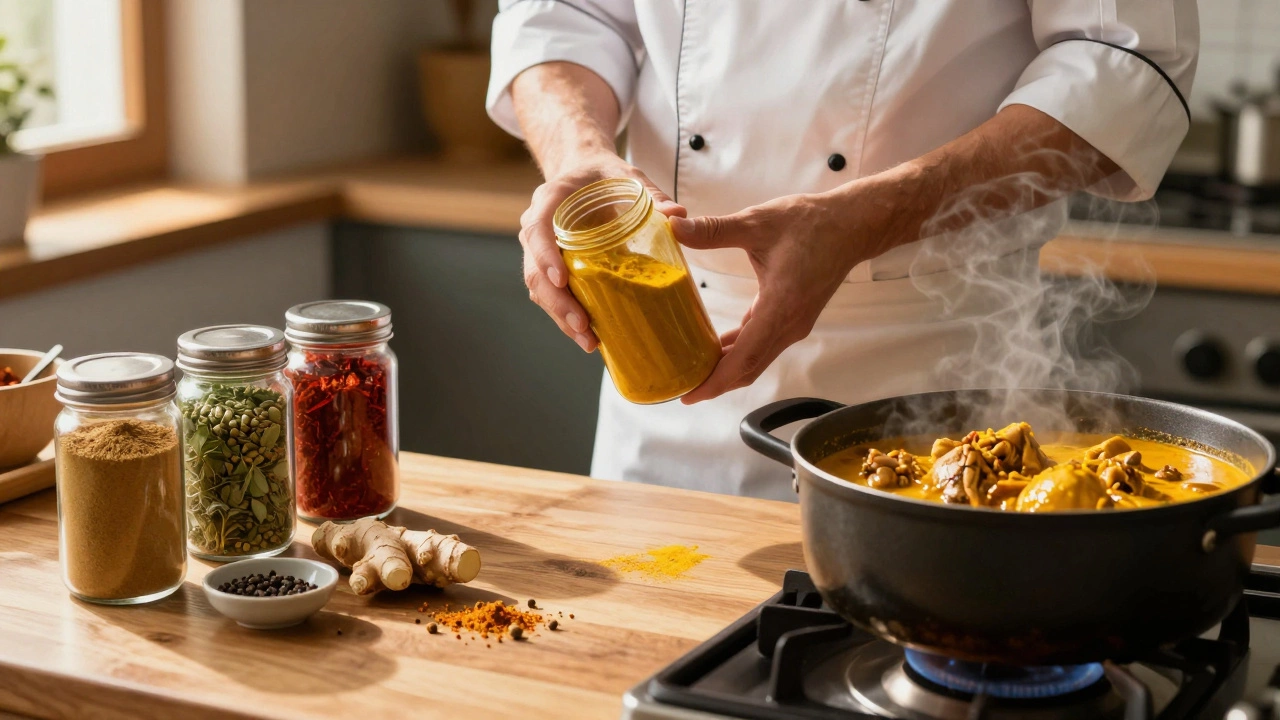
You don’t need turmeric to make your curry taste complete. Here are the top three swaps, ranked by effectiveness:- Ground cumin + smoked paprika - Use 1 teaspoon cumin and 1/2 teaspoon smoked paprika for every 1 teaspoon of turmeric you’d normally use. Cumin brings earthiness; smoked paprika adds warmth and a hint of depth without sweetness.
- Ground ginger + a pinch of black pepper - Ginger mimics turmeric’s warmth, and black pepper enhances the overall spice profile. Use 1 teaspoon ground ginger and 1/4 teaspoon black pepper. This combo also boosts absorption of other spices, just like turmeric does.
- Saffron (for color only) - If you care about the yellow tone, soak 5-6 threads of saffron in 2 tablespoons of warm water and stir it in at the end. It’s expensive, but a little goes a long way. It won’t add flavor, but it’ll give you the color people expect.
Don’t use annatto or curry powder as a direct substitute. Annatto is bitter and artificial-tasting. Most store-bought curry powders contain turmeric anyway - defeating the purpose.
A Real Recipe: Chicken Curry Without Turmeric
Here’s a simple, foolproof version that works in under 40 minutes and uses zero turmeric:- 2 tablespoons coconut oil or ghee
- 1 large onion, finely chopped
- 3 garlic cloves, minced
- 1 tablespoon fresh ginger, grated
- 1 teaspoon ground cumin
- 1 teaspoon ground coriander
- 1/2 teaspoon smoked paprika
- 1/4 teaspoon cayenne pepper (adjust to taste)
- 1 pound boneless chicken thighs, cut into chunks
- 1 (14-ounce) can diced tomatoes
- 1 cup coconut milk
- 1 teaspoon salt
- 1 tablespoon lemon juice
- Fresh cilantro for garnish
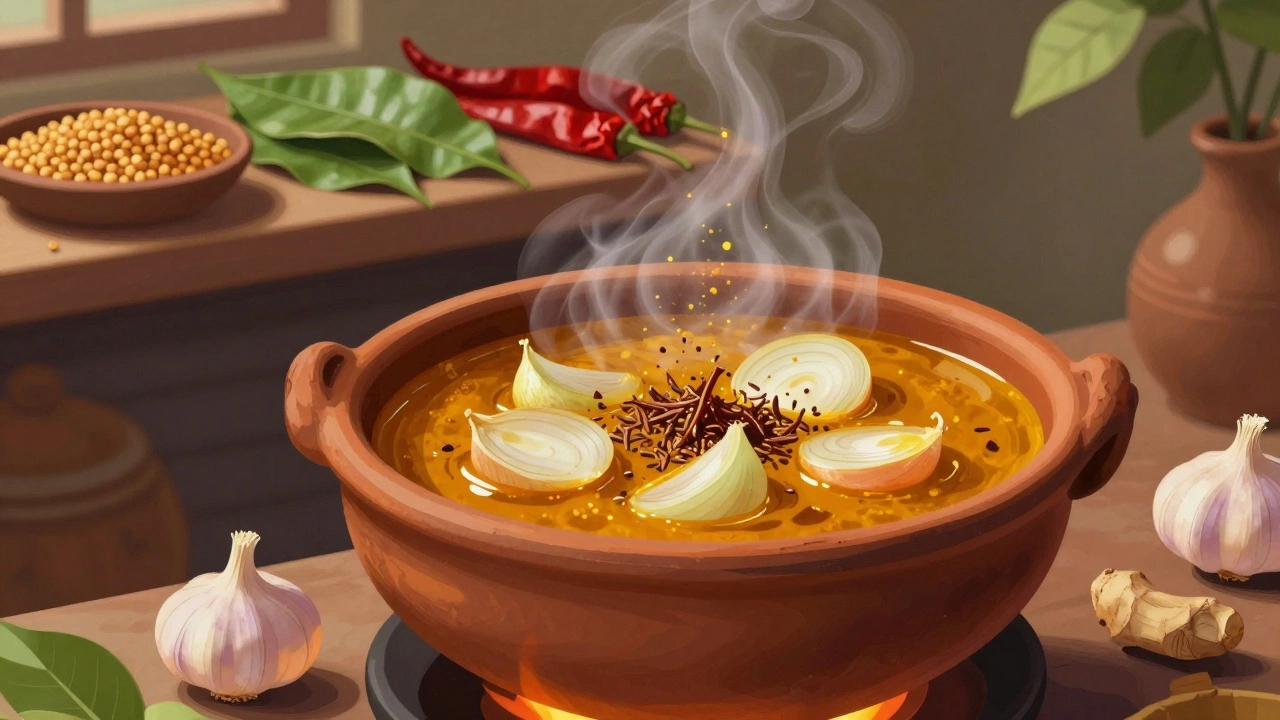
- Heat oil in a heavy pot over medium heat. Add onions and cook until golden, about 7 minutes.
- Add garlic, ginger, cumin, coriander, smoked paprika, and cayenne. Stir for 30 seconds until fragrant - don’t let it burn.
- Add chicken. Cook until browned on all sides, about 5 minutes.
- Pour in tomatoes and their juice. Simmer for 10 minutes, stirring occasionally.
- Add coconut milk and salt. Lower heat and simmer for another 15 minutes until chicken is tender and sauce has thickened.
- Stir in lemon juice just before serving. Garnish with cilantro.
This curry tastes rich, slightly smoky, with a bright finish from the lemon. The coconut milk softens the heat, and the paprika gives it a deep, satisfying color. No one will miss the turmeric.
Why This Works Better Than You Think
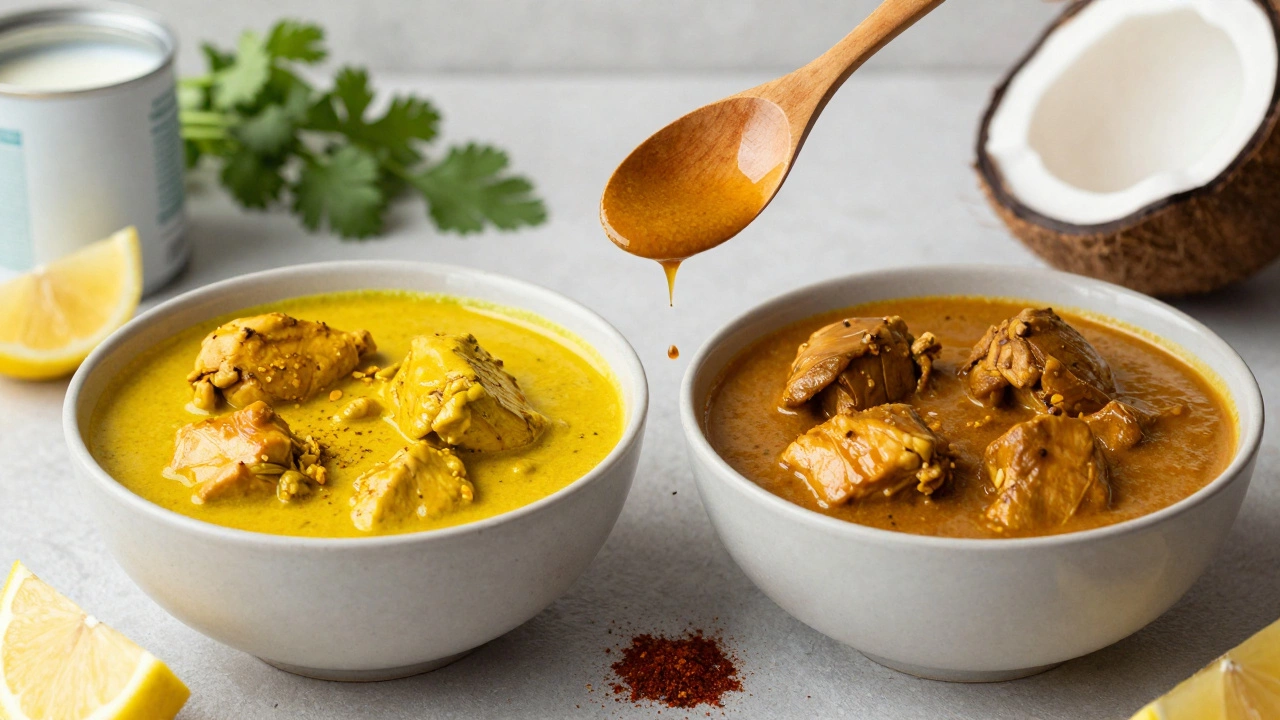
People assume curry = turmeric. But curry is a technique, not a spice. It’s about layering flavors: aromatics first, then dry spices, then liquids, then finishing touches. Turmeric is just one layer. Remove it, and you’re left with a cleaner, more focused flavor. In fact, many professional chefs skip turmeric in dishes where they want the chicken or the coconut to shine through.Try this next time: make two batches of chicken curry. One with turmeric, one without. Taste them side by side. You might find you prefer the one without. It’s not missing anything - it’s just different.
Common Myths About Turmeric-Free Curry
- Myth: You can’t make authentic curry without turmeric. Truth: Authenticity varies by region. In Kerala, curries use more coconut and less turmeric. In Bangladesh, mustard oil and fenugreek dominate. Turmeric is common, but not universal.
- Myth: It’ll taste bland. Truth: Blandness comes from under-seasoning, not from skipping one spice. Use salt, acid (lemon or tamarind), and fat (coconut milk or ghee) to build depth.
- Myth: Turmeric is the only anti-inflammatory spice. Truth: Ginger, black pepper, and cinnamon also have strong anti-inflammatory properties. You’re not losing health benefits - you’re just swapping them.
When You Should Avoid Substitutes
There’s one case where skipping turmeric matters more: if you’re following a traditional Ayurvedic recipe or a dish meant to be medicinal. Turmeric is used in those contexts for its specific bioactive compound, curcumin. But if you’re just cooking dinner? You’re fine.Also, avoid using artificial yellow food coloring. It tastes chemical and ruins the natural balance of the dish. Stick to real ingredients.
Final Tip: Taste as You Go
The biggest mistake people make with curry is adding all the spices at once and walking away. Taste after each step. After the onions are golden. After you add the tomatoes. After the coconut milk goes in. Adjust salt, acid, or heat as you go. That’s how you make a curry that tastes like yours - not like a recipe book.You don’t need turmeric to make a great curry. You need attention, patience, and the willingness to trust your own taste. Your kitchen doesn’t need to follow every rule. Sometimes, the best dishes come from what you didn’t have.
Can I use curry powder instead of turmeric?
No. Most curry powders contain turmeric as a main ingredient. If you’re avoiding turmeric, curry powder will defeat the purpose. Stick to individual spices like cumin, coriander, and smoked paprika instead.
Will my curry still be healthy without turmeric?
Yes. While turmeric has curcumin, other spices like ginger, garlic, and black pepper also offer anti-inflammatory benefits. Coconut milk provides healthy fats, and chicken gives you protein. The overall dish remains nutritious - you’re just swapping one benefit for another.
What if I only have fresh turmeric and no ground?
If you have fresh turmeric, you can still use it - but if you’re avoiding it entirely, skip it. Fresh turmeric is stronger than ground, so use about 1 tablespoon grated fresh for every 1 teaspoon ground. But if you’re trying to avoid it completely, stick to the substitutes listed above.
Can I make a white chicken curry without turmeric?
Absolutely. White curries - like korma or coconut-based dishes - traditionally use less turmeric. Use cream, cashew paste, or yogurt for richness, and rely on cardamom, cinnamon, and nutmeg for warmth. The color will be creamy beige, not yellow, and it’ll still be delicious.
Is there a spice that tastes exactly like turmeric?
No single spice tastes exactly like turmeric. It has a unique earthy, slightly bitter, peppery note. But you can replicate its role in a recipe using cumin + smoked paprika + ginger. The flavor won’t be identical, but it’ll be balanced and satisfying.