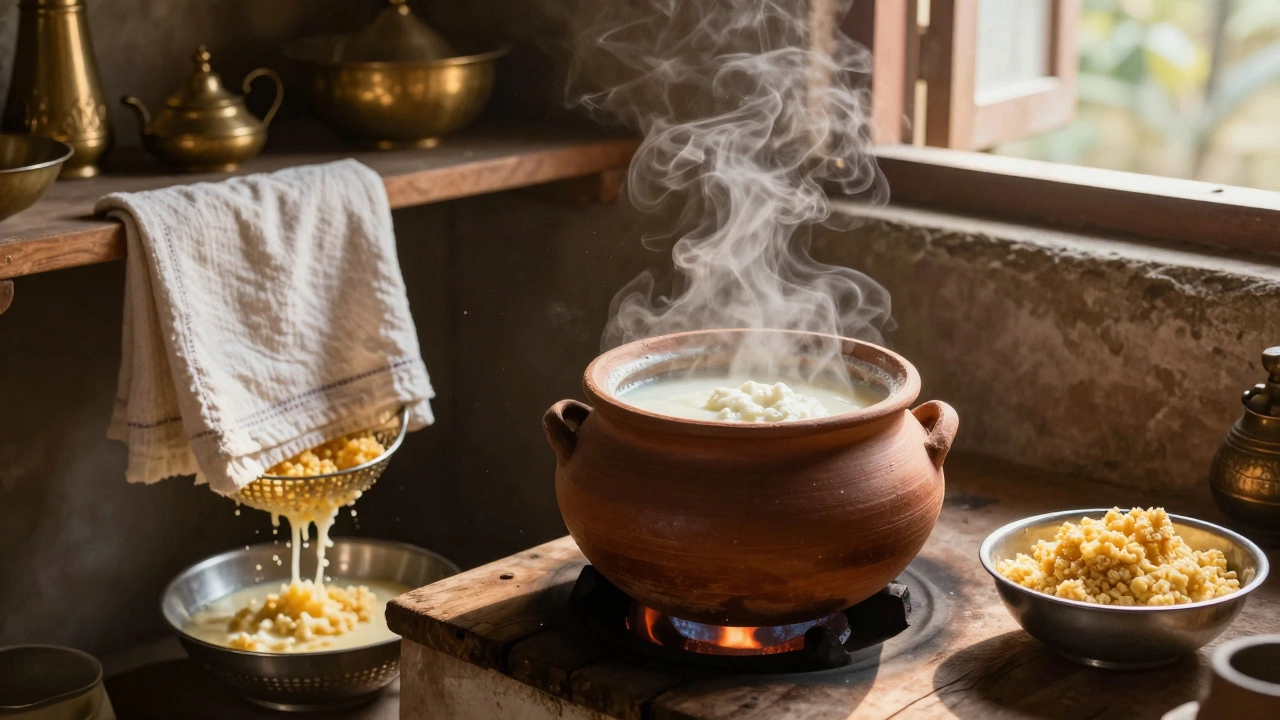
Ever opened your fridge and found a container of milk that’s lumpy, sour, or just… off? You might’ve thought, “Uh oh, trash time.” But what if I told you that broken milk could be the secret ingredient to fresh, soft paneer? It’s not a myth. In many Indian households, this is how paneer has been made for generations - no fancy equipment, no store-bought starter cultures. Just milk, heat, and a little patience.
Paneer is a fresh, unaged cheese common across South Asia. It’s mild, firm enough to grill or fry, and melts beautifully into curries. But here’s the thing: you don’t need fresh milk to make it. You need curdled milk. And that’s exactly what “broken milk” is - milk that’s started to separate into curds and whey, whether from natural souring, heat, or a bit of acid.
What Exactly Is “Broken Milk”?
When milk breaks, it means the proteins - mostly casein - have clumped together. This happens when:
- The milk sours naturally (lactic acid from bacteria)
- You add lemon juice, vinegar, or yogurt
- It’s been left out too long (especially in warm climates)
- It was heated too fast or boiled too long
It’s not spoiled in the dangerous sense. It’s just changed. Think of it like yogurt or kefir - the same process, just not fully fermented. If the milk smells like sour cream, not rot, it’s perfectly fine for paneer.
Why This Works: The Science Behind It
Milk is 87% water and 13% solids - mostly fat, protein, and sugar. When you heat it and add acid, the proteins denature and bind together, forming solid curds. The liquid (whey) separates. That’s paneer. It doesn’t matter if the acid came from lemon juice or from naturally occurring lactic acid in old milk. The chemistry is identical.
Studies from the Journal of Dairy Science show that paneer made from soured milk has nearly identical texture and yield to paneer made from fresh milk with added citric acid. In fact, some chefs prefer it - the natural fermentation adds a subtle tang that balances rich curries.
How to Make Paneer from Broken Milk: A Simple Guide
You don’t need a recipe book. Just follow these steps:
- Take 1 liter of broken milk - it should look lumpy, with visible separation between solids and liquid.
- Pour it into a heavy-bottomed pot. Heat it slowly over medium flame. Stir gently to prevent scorching.
- Once it reaches a gentle boil (around 85°C / 185°F), turn off the heat. Let it sit for 5 minutes. You’ll see more curds rise to the top.
- Line a colander with a clean muslin cloth. Pour the mixture in. Let it drain for 10 minutes.
- Gather the edges of the cloth and twist gently to squeeze out extra whey. Don’t crush it - you want it soft, not rubbery.
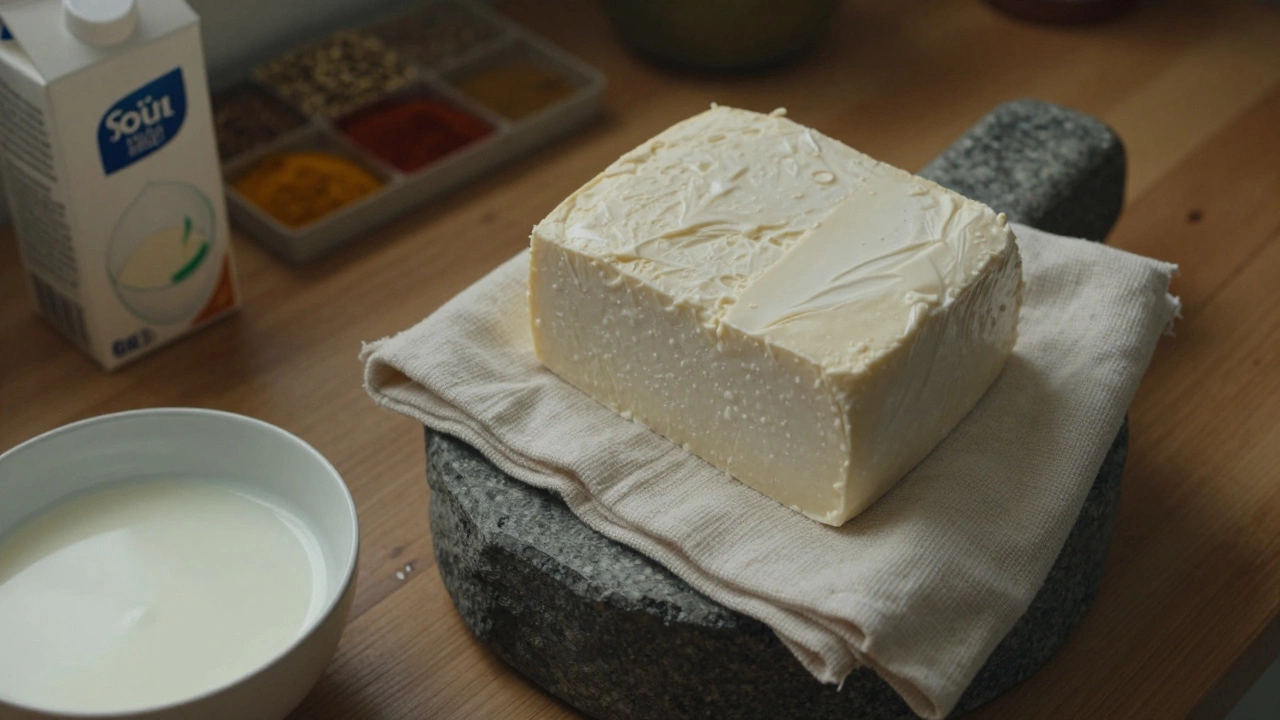
- Place the bundle on a flat surface. Put a heavy plate or a 1kg weight on top. Let it press for 30-45 minutes.
- Unwrap. You’ve got paneer.
That’s it. No vinegar. No lemon. Just heat and time.
When Broken Milk Won’t Work
Not all “broken” milk is good milk. Here’s when to throw it out:
- It smells like rotten eggs or ammonia
- There’s mold - fuzzy spots, green, black, or pink
- The texture is slimy or stringy
- You can’t tell if it’s sour or spoiled (if in doubt, toss it)
Trust your nose. If it makes you wrinkle your face, it’s not worth the risk. Paneer is simple, but safety isn’t something to cut corners on.
What You Can Do With the Whey
Don’t pour it down the drain. That yellowish liquid? It’s packed with protein, calcium, and lactose. Use it to:
- Replace water in bread dough
- Boil rice or lentils for extra nutrition
- Make smoothies or soups
- Water your plants - it’s a gentle organic fertilizer
Whey from paneer made with sour milk is especially rich. I’ve used it for weeks in my dosa batter - the fermentation gets a natural boost.
Real-World Test: My Own Experiment
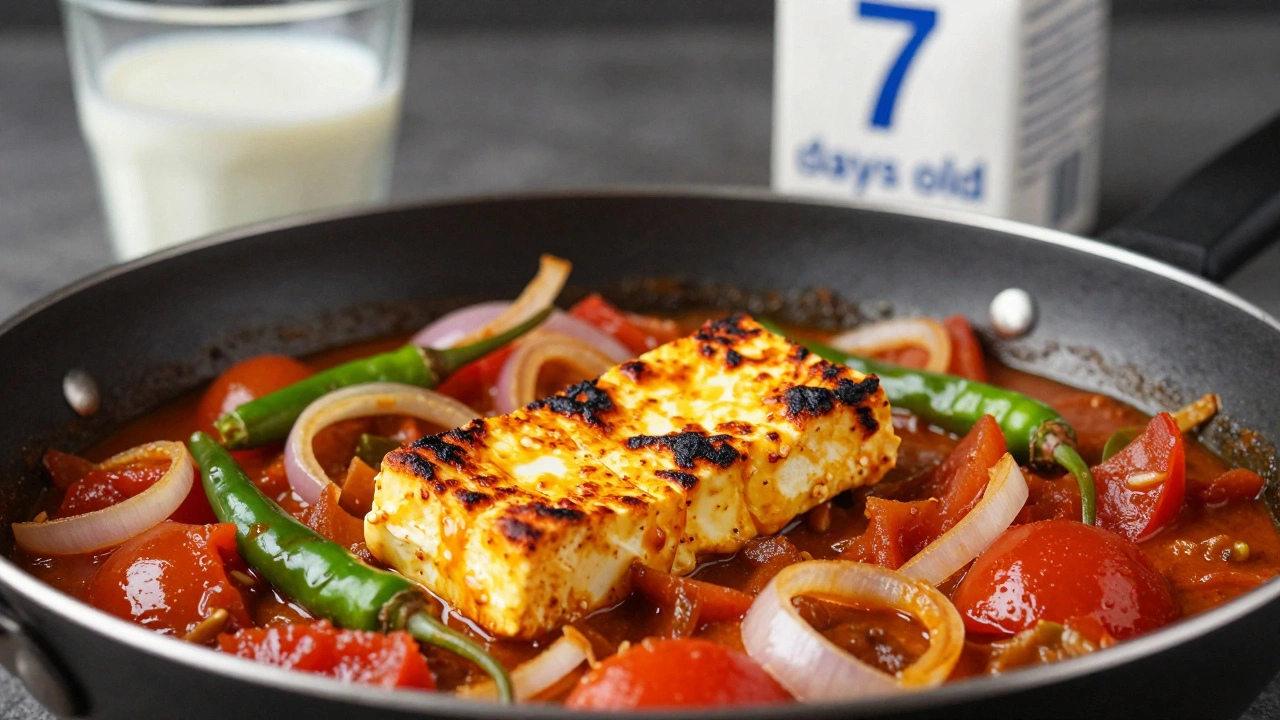
Last month, I left a carton of full-fat milk in the fridge for 7 days. It was thick, sour, and clumpy - I’d never have drunk it. But I made paneer anyway.
The result? A slightly tangier paneer than usual. It held shape perfectly when fried. I tossed it into a kadai paneer with onions, tomatoes, and spices. My partner didn’t even notice it wasn’t made with fresh milk. He just said, “This is the best paneer you’ve made in months.”
Turns out, the natural acidity gave it a depth you can’t get from bottled lemon juice. And I saved $5 on cheese.
Why This Matters Beyond the Kitchen
Food waste is a huge problem. In Australia alone, households throw out over 2 million tonnes of food each year. A lot of it is dairy - milk past its “best before” date, yogurt with a little separation, cream that’s gone lumpy.
Learning to turn “broken” milk into paneer isn’t just clever. It’s sustainable. It’s cheap. And it connects you to a tradition thousands of years old - where nothing was wasted, and everything had a second life.
Common Mistakes to Avoid
- Using skim milk - you need fat to get that creamy texture
- Boiling too fast - it scorches and makes rubbery paneer
- Not pressing long enough - your paneer will crumble
- Using ultra-pasteurized milk - it’s been treated so much, the proteins won’t coagulate properly
Stick to full-fat, homogenized milk if you can. If you’re using store-bought, check the label: if it says “ultra-pasteurized,” skip it. Go for regular pasteurized.
How Long Does Paneer Last?
Paneer made from broken milk lasts just as long as paneer made from fresh milk - about 3-4 days in the fridge. Keep it submerged in cold water to keep it soft. Change the water daily. You can also freeze it for up to 3 months. Thaw it in the fridge overnight before cooking.
Can You Use Non-Dairy Milk?
No. Soy, almond, or oat milk won’t work. They lack casein - the protein that forms curds. You’ll get sludge, not cheese. Stick to cow, buffalo, or goat milk.
Can I use milk that’s been in the fridge for a week?
Yes - if it smells sour but not rotten, and has no mold. Natural souring is how paneer was traditionally made. Just heat it gently and strain. The acid from lactic bacteria works just like lemon juice.
Why is my paneer too crumbly?
You didn’t press it enough. Paneer needs at least 30 minutes under weight to hold its shape. Also, if the milk was too low in fat (skim or low-fat), the curds won’t bind well. Always use full-fat milk.
Can I make paneer from spoiled milk?
No. Spoiled milk smells foul, has mold, or feels slimy. That’s harmful bacteria. Broken milk is sour but clean-smelling. Spoiled milk is unsafe. Don’t risk it.
Do I need to add lemon juice or vinegar?
Not if the milk is already broken. The natural acid in soured milk is enough. Adding more acid can make the paneer too tart or grainy. Try it without first - you might be surprised.
Is paneer from sour milk healthier?
It’s not necessarily healthier, but it’s more sustainable. The natural fermentation breaks down lactose, so it may be easier to digest for some people. It also reduces food waste - which is good for your wallet and the planet.
Next time you see lumpy milk, don’t panic. Don’t toss it. Turn it into something delicious. Paneer is forgiving, simple, and smart. It’s cooking at its most practical - turning what others throw away into something worth eating.