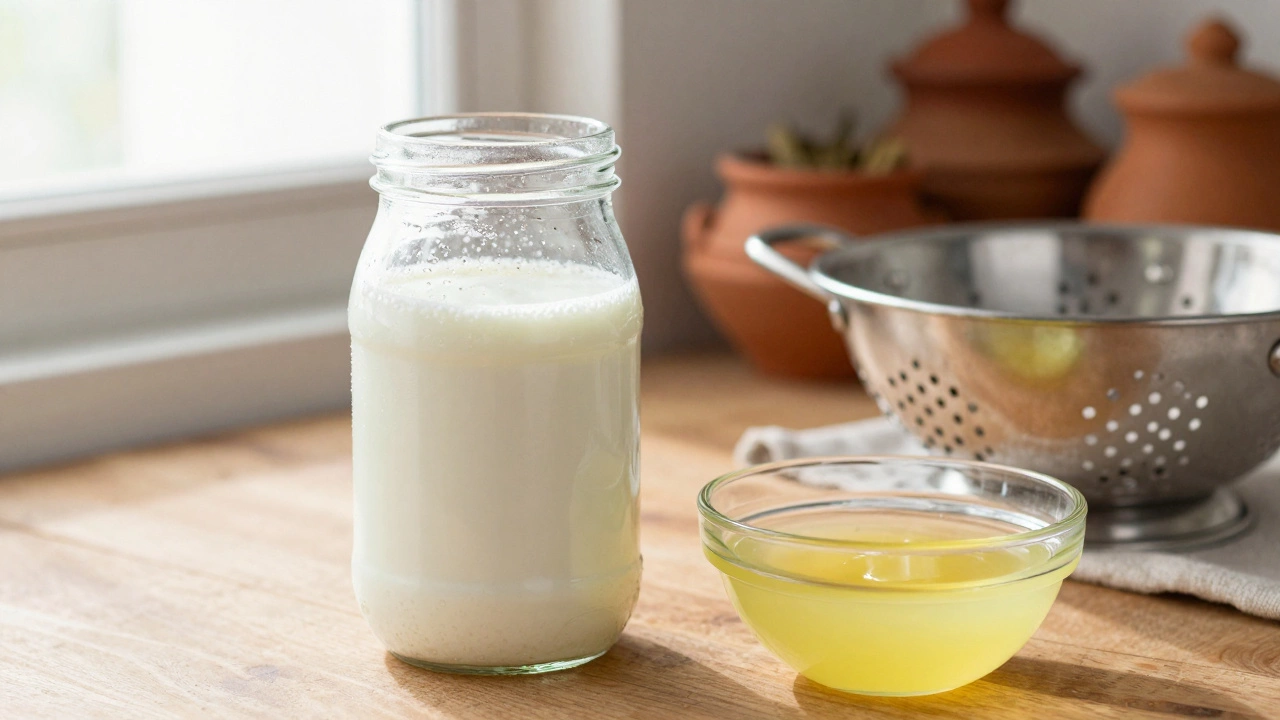
Sour Milk Safety Checker for Paneer
Is Your Milk Safe for Paneer?
Check your milk using the article's guidelines before making paneer. This tool helps determine if your milk is safely soured or contaminated.
You open the fridge and see it-the milk has lumps. It smells sour. The expiration date passed three days ago. Your first thought? Toss it. But then you remember: paneer is made from curdled milk. So… can you use spoiled milk to make paneer?
The short answer? Yes, you can. But not all spoiled milk is created equal.
What Makes Milk Spoil vs. What Makes Paneer
Milk goes bad because of harmful bacteria like Salmonella, E. coli, or Listeria. These microbes multiply when milk isn’t stored properly-above 4°C-or left out too long. They don’t just make it taste off; they can make you sick.
Paneer, on the other hand, is made by adding an acid-like lemon juice, vinegar, or yogurt-to fresh milk. That acid lowers the pH, causing the milk proteins (casein) to clump together into curds. The liquid (whey) separates out. You strain it, press it, and you’ve got paneer.
So here’s the key difference: paneer relies on controlled acidification. Spoiled milk is the result of uncontrolled bacterial growth.
When Spoiled Milk Is Safe to Use for Paneer
Not all sour milk is dangerous. If your milk is just a little past its date and smells like yogurt-not rotten eggs or vomit-it might be fine. This is called lactic acid fermentation. It’s the same process used to make yogurt, kefir, and some traditional cheeses.
Here’s how to tell if your milk is safe to use:
- Smell: It should smell tangy, like yogurt or sour cream. No foul, rancid, or putrid odor.
- Texture: Small lumps are okay. Thick clumps that look like cottage cheese? Probably fine. Slimy or stringy texture? Toss it.
- Color: Slightly off-white is normal. Yellowish or greenish tinges? No.
- Expiration date: If it’s only 1-3 days past the date and was refrigerated the whole time, it’s likely still usable.
If you’re unsure, do a simple test: heat a tablespoon of milk in a pan. If it separates cleanly into curds and whey when you add a splash of lemon juice, it’s good to go. If it just boils and smells worse, throw it out.
Why Using Spoiled Milk Can Actually Help
Here’s a pro tip: slightly soured milk makes better paneer than fresh milk. Why?
Fresh milk has a higher pH. That means you need more lemon juice or vinegar to curdle it-and that can leave a sour taste in the final paneer. Milk that’s naturally soured has already started lowering its pH. You’ll need less acid to get the curds to form. The result? Smoother, milder paneer with less bitterness.
Many home cooks in India and Nepal have used this trick for generations. In rural areas, where refrigeration wasn’t always reliable, letting milk sit out overnight to sour was normal. They’d then use it to make paneer, chhena, or even sweets like rasgulla. It wasn’t about saving spoiled milk-it was about working with what you had.
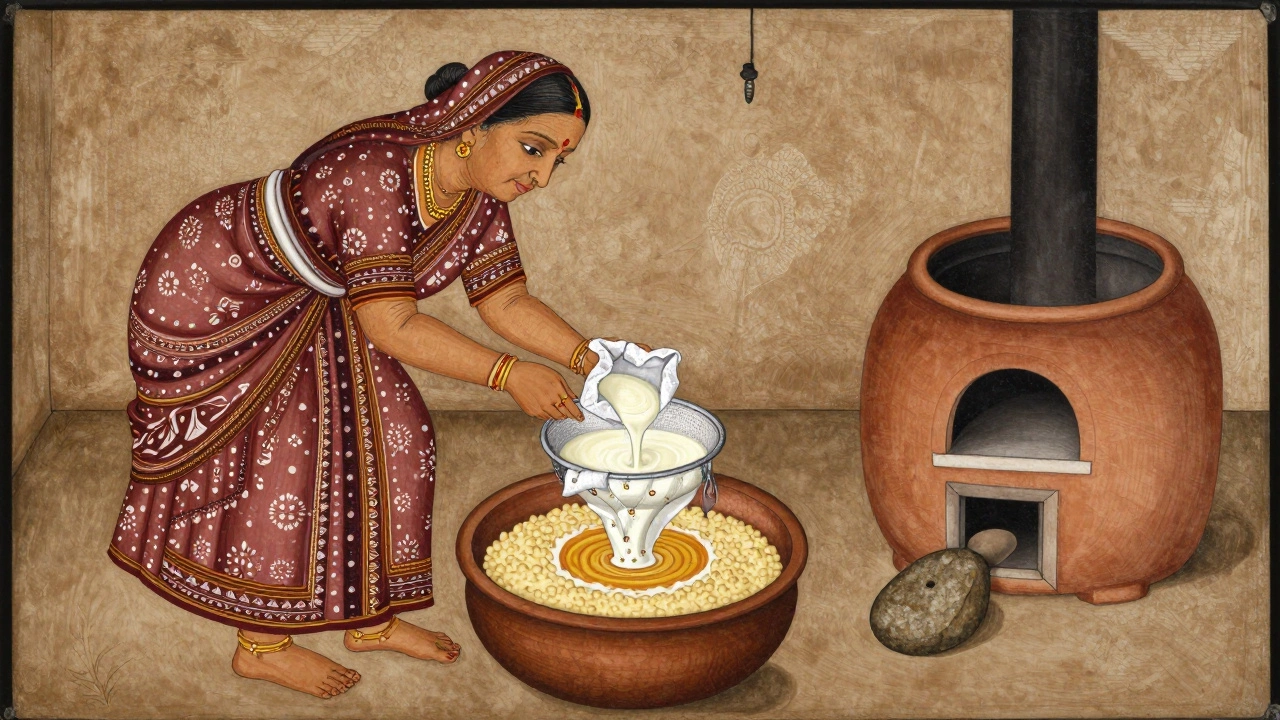
How to Make Paneer from Slightly Sour Milk
Follow these steps if your milk is just tangy-not rotten.
- Heat 1 liter of slightly sour milk in a heavy-bottomed pot over medium heat. Stir occasionally to prevent scorching. Don’t let it boil.
- Once it’s hot (around 80°C), turn off the heat. Add 2-3 tablespoons of lemon juice or white vinegar. Stir gently once or twice.
- Wait 5-10 minutes. The curds should separate clearly from the whey. If not, add another teaspoon of acid and wait again.
- Line a colander with cheesecloth and pour the mixture in. Let it drain for 10 minutes.
- Gather the edges of the cloth, tie them together, and place a heavy weight on top-a cast iron pan or a stack of books works. Press for 1-2 hours.
- Unwrap and cut into cubes. Your paneer is ready.
Pro tip: Don’t rinse the paneer after pressing. That washes away flavor. Just pat it dry with a clean towel.
When to Avoid Spoiled Milk Completely
Some situations are not worth the risk.
- If the milk smells like rotten eggs, garbage, or chemicals-throw it out.
- If it’s more than 5 days past the expiration date, even if refrigerated.
- If you see mold-any color. Even a tiny spot means the whole container is contaminated.
- If you’ve left it out at room temperature for more than 2 hours.
- If you’re pregnant, elderly, immunocompromised, or cooking for young kids-stick to fresh milk.
There’s no shame in tossing milk that looks or smells wrong. Paneer is easy to make. Fresh milk costs less than a hospital bill.
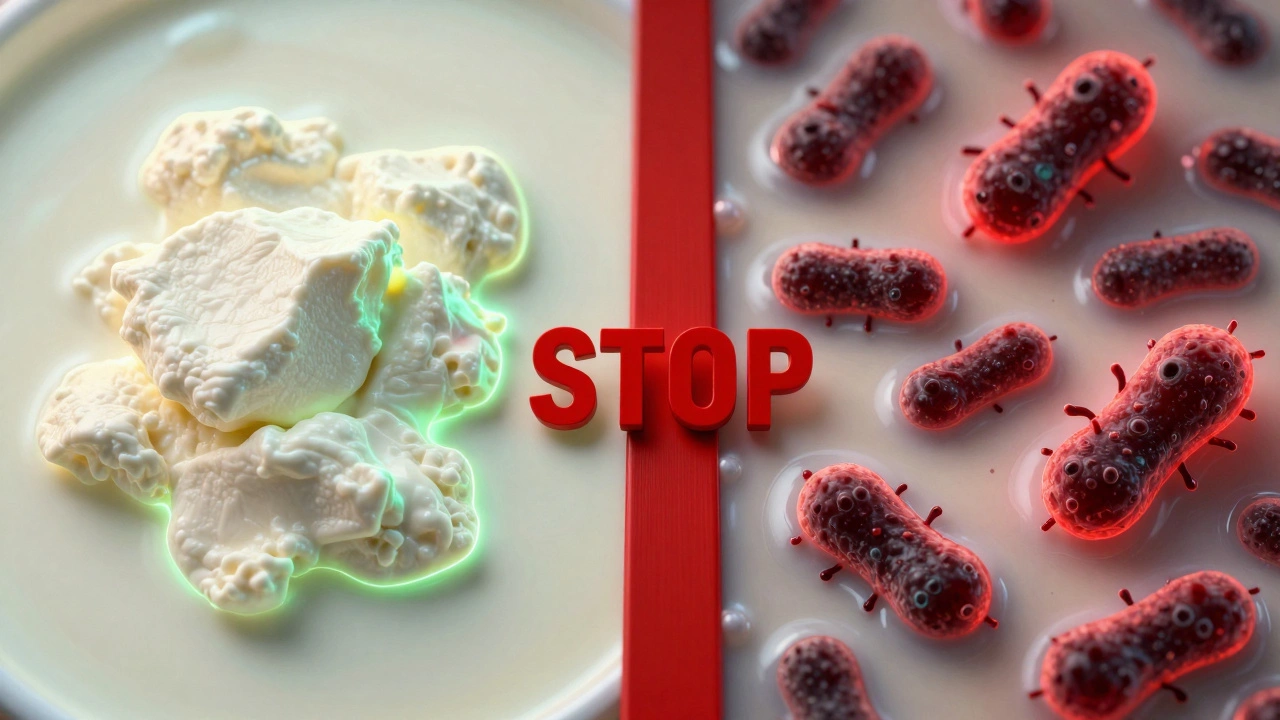
What Happens If You Use Bad Milk?
If you accidentally use milk with harmful bacteria, here’s what could go wrong:
- Your paneer might taste off-bitter, metallic, or just plain weird.
- It could have a slimy texture instead of firm and crumbly.
- Most importantly, you could get food poisoning. Symptoms include nausea, vomiting, diarrhea, and fever. They can show up in 6-48 hours.
There’s no way to “cook out” harmful bacteria from milk. Boiling doesn’t destroy all toxins, especially those made by Staphylococcus or Clostridium. Once they’re in, they’re in.
Alternatives to Spoiled Milk
If you don’t have spoiled milk but want better paneer, here are two foolproof tricks:
- Use yogurt instead of lemon juice: Mix 2 tablespoons of plain yogurt into warm milk. Let it sit for 30 minutes before heating. It gives a creamier, less acidic paneer.
- Use buttermilk: Add 1/4 cup of buttermilk to a liter of milk and let it sit overnight in the fridge. The next day, heat and strain. The paneer will be extra soft and flavorful.
These methods give you the same benefit as naturally soured milk-without the risk.
Final Verdict: Yes, But Only If It’s Good Sour Milk
You can use slightly sour milk to make paneer-and sometimes, it makes better paneer. But don’t confuse spoiled milk with fermented milk. Spoiled means unsafe. Fermented means intentional.
If your milk smells like yogurt and you’ve kept it cold, go ahead. It’s a smart, traditional way to use what you have. But if it smells wrong, looks wrong, or you’re even a little unsure-buy fresh milk. It’s cheaper than regret.
Paneer is simple. It doesn’t need fancy ingredients. Just clean milk, a little acid, and patience. That’s all it takes to make something delicious.
Can I use milk that’s 2 days past its expiration date to make paneer?
Yes, if it was refrigerated the whole time and doesn’t smell or look off. Check for a tangy smell like yogurt, not sour or rotten. Heat a small amount with lemon juice-if it curdles cleanly, it’s safe to use.
Why does my paneer turn out rubbery?
Rubbery paneer usually means you overcooked the milk or pressed it too hard. Heat the milk gently-don’t boil it. Press for no more than 2 hours. Use a moderate weight, like a heavy pot. Over-pressing squeezes out too much moisture, making it tough.
Can I use plant-based milk like almond or soy to make paneer?
No. Paneer requires casein protein, which only exists in animal milk. Almond, soy, or oat milk won’t curdle the same way. You’ll get a mushy mess, not firm paneer. Stick to cow, buffalo, or goat milk.
Is paneer made from spoiled milk safe to eat?
Only if the milk was safely soured-meaning it had lactic acid bacteria and no harmful pathogens. If you’re unsure, use fresh milk. When in doubt, throw it out. Your health isn’t worth the risk.
How long does homemade paneer last?
Store paneer in water in the fridge and change the water daily. It will last 3-4 days. For longer storage, freeze it-wrap it tightly in plastic and use within 2 months. Thaw in the fridge before using.