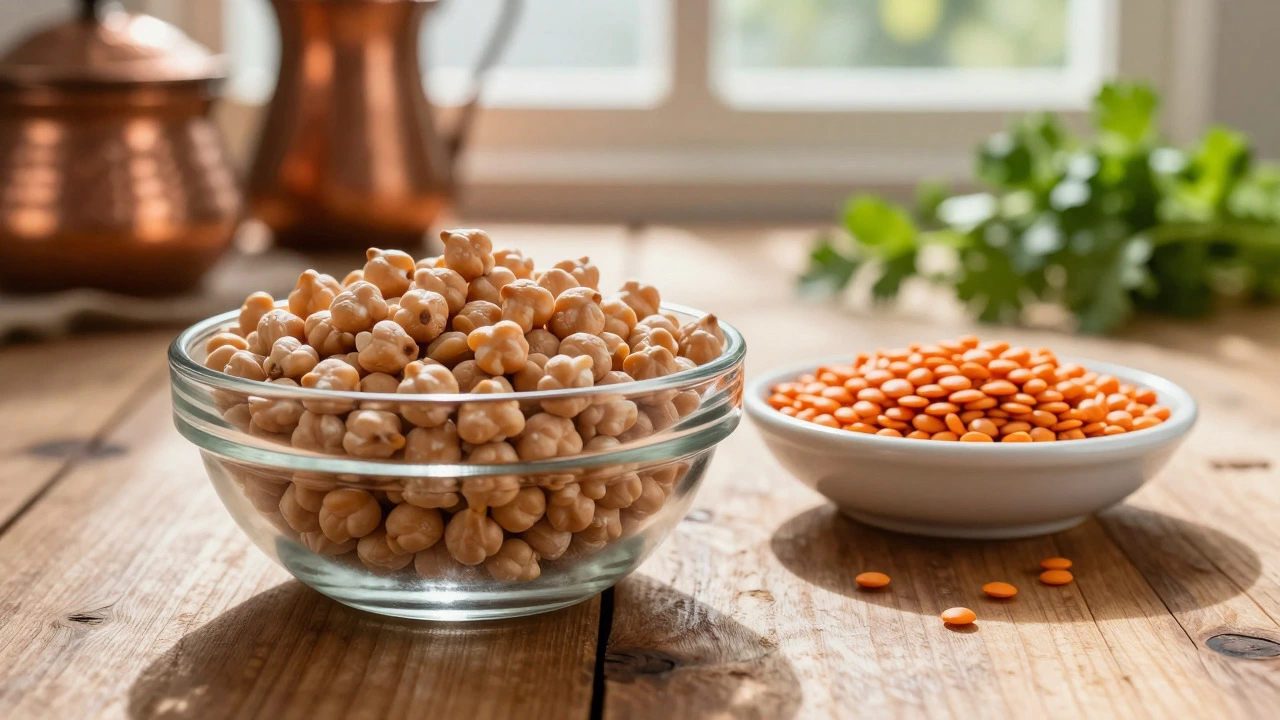
Chickpeas vs Lentils: Health Goal Matcher
Select your primary health goal to discover which legume is best for you
Weight Loss
Burn fat while staying full
Muscle Building
Maximize protein intake
Blood Sugar Control
Steady energy levels
Easy Digestion
Reduce bloating and gas
Why This Winner?
Quick Comparison
| Nutrient (per cup) | Chickpeas | Lentils |
|---|
Standing in the pantry aisle, staring at a jar of canned chickpeas and a bag of dried red lentils, you might wonder: which one actually deserves a spot in your weekly meal plan? Both are staples in kitchens around the world, especially in Indian cooking where they form the backbone of comforting dishes like dal. But nutritionally, they are not twins. One might be better for your blood sugar, while the other could be your best friend for gut health. The truth is, neither is universally "better." It depends entirely on what your body needs right now.
If you are looking to build muscle without the heavy fat content of meat, or if you want to keep your heart happy with fiber, both legumes deliver. However, their nutritional profiles have distinct differences that change how they affect your energy levels, digestion, and long-term health. Let's break down exactly what goes into each bite so you can decide which bean belongs in your next pot of soup or stir-fry.
The Nutritional Breakdown: Protein and Fiber
When we talk about legumes, we usually start with protein and fiber. These are the two reasons most people switch from animal products to plants. Chickpeas, also known as garbanzo beans, are dense and hearty. In a standard one-cup serving of cooked chickpeas, you get roughly 14.5 grams of protein and 12.5 grams of fiber. That is a solid amount of fuel. They feel substantial in your stomach, which helps with satiety. If you eat them for lunch, you are less likely to crave snacks by mid-afternoon.
Lentils, on the other hand, pack a slightly tighter punch per calorie. A cup of cooked lentils gives you about 18 grams of protein and 15.6 grams of fiber. This makes lentils the clear winner if your primary goal is maximizing protein intake while keeping calories in check. For athletes or anyone trying to increase lean muscle mass, lentils offer more building blocks for less energy expenditure. The higher fiber content also means they move through your digestive system efficiently, supporting regular bowel movements and feeding the good bacteria in your gut.
| Nutrient | Chickpeas | Lentils |
|---|---|---|
| Calories | 269 kcal | 230 kcal |
| Protein | 14.5 g | 17.9 g |
| Fiber | 12.5 g | 15.6 g |
| Carbohydrates | 45 g | 39.8 g |
| Fat | 4.2 g | 0.8 g |
| Iron | 4.7 mg | 6.6 mg |
Blood Sugar Control: The Glycemic Index Factor
If you are managing diabetes or simply trying to avoid those post-lunch energy crashes, the glycemic index (GI) matters. The GI measures how quickly a food raises your blood sugar levels. Lower is generally better for steady energy. Chickpeas have a low GI, typically ranging between 28 and 33. This means they digest slowly, releasing glucose into your bloodstream gradually. They are excellent for maintaining stable energy levels throughout the day.
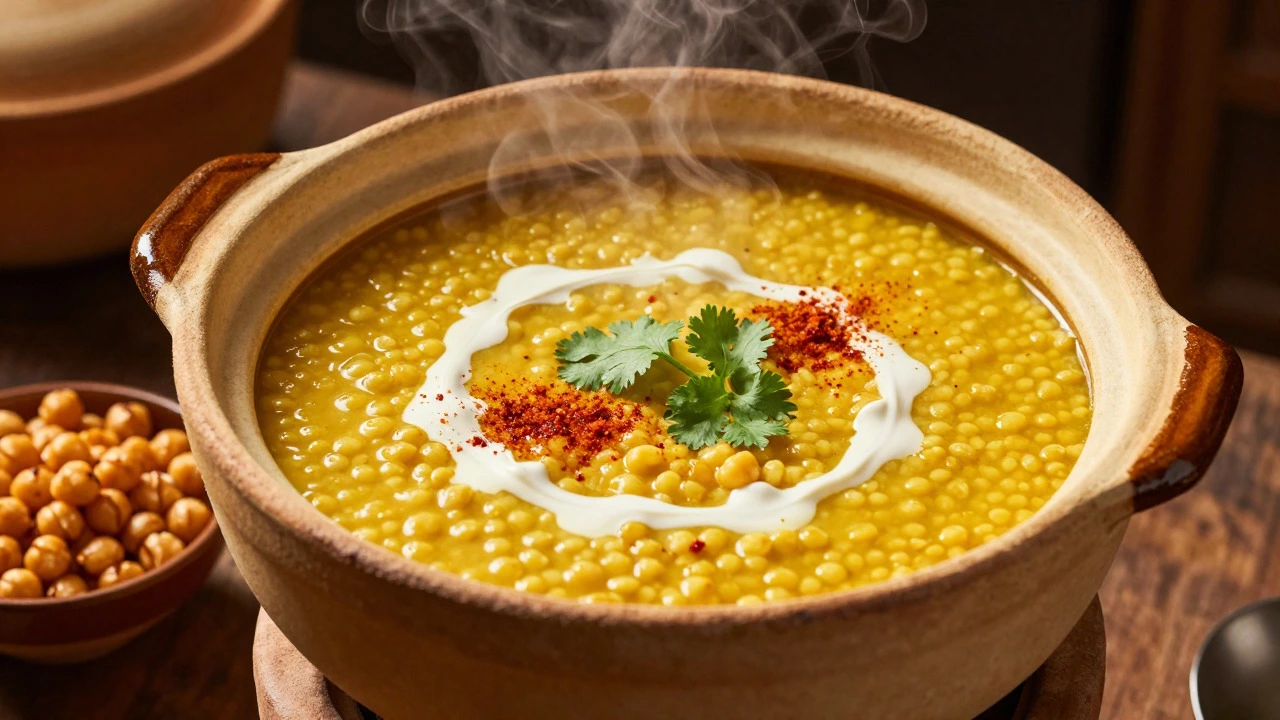
Lentils are even lower, often sitting around a GI of 25 to 30. Because they have less starch and more soluble fiber than chickpeas, they cause an even slower rise in blood sugar. For someone who is insulin resistant or watching their glucose closely, lentils are the superior choice. When you make a simple dal recipe using red or brown lentils, you are creating a meal that supports metabolic health without spiking your insulin. This stability helps reduce cravings for sugary snacks later in the day.
Digestion and Gut Health
Here is where things get personal. Legumes are famous for causing gas and bloating. This happens because they contain oligosaccharides, complex sugars that our bodies cannot fully break down in the small intestine. When these sugars reach the large intestine, bacteria ferment them, producing gas. Chickpeas tend to be heavier on these compounds. Many people find that eating a large portion of chickpeas leads to noticeable discomfort, especially if they are not used to high-fiber diets.
Lentils are generally easier to digest. Their smaller size and different fiber structure mean they pass through the digestive tract with less fermentation drama. Red lentils, in particular, break down completely when cooked, becoming soft and mushy. This makes them ideal for people with sensitive stomachs or conditions like IBS (Irritable Bowel Syndrome). If you want the benefits of legumes without the bloat, start with lentils. You can soak chickpeas overnight and discard the water before cooking to remove some of the gas-causing compounds, but lentils still win for ease of digestion.
Micronutrients: Iron, Folate, and More
Beyond macros, look at the micronutrients. Both chickpeas and lentils are rich in iron, which is crucial for oxygen transport in the blood. Lentils provide about 37% of your daily recommended iron intake per cup, while chickpeas offer around 26%. For vegetarians and vegans, this is significant. However, plant-based iron (non-heme iron) is harder for the body to absorb. To maximize absorption, pair either legume with vitamin C-rich foods like lemon juice, tomatoes, or bell peppers. In Indian cooking, this is naturally handled by adding tamarind or lime to your dal.
Folate is another key player. Lentils are exceptionally high in folate, providing nearly 90% of your daily needs in just one cup. Chickpeas provide about 50%. Folate is essential for DNA synthesis and repair, making it particularly important for pregnant women to prevent neural tube defects. If you are planning a family or already expecting, lentils should be a regular part of your diet. Magnesium and potassium are also present in both, supporting heart health and muscle function, but lentils edge out chickpeas in total mineral density per calorie.
Culinary Versatility: How They Taste and Cook
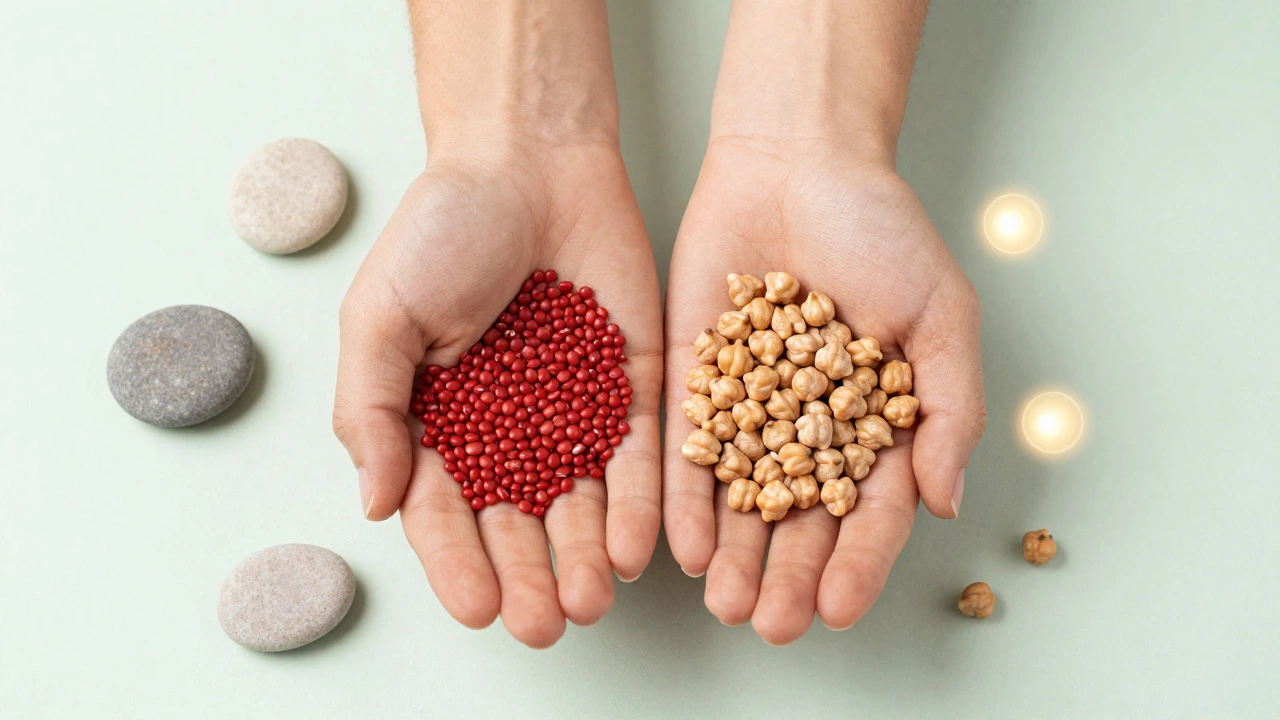
Nutrition is only half the battle; taste and texture determine whether you will actually eat them. Chickpeas have a firm, nutty texture that holds its shape well. This makes them perfect for roasting until crispy, blending into hummus, or adding to curries where you want distinct bites. They absorb flavors but don't disintegrate. If you like the mouthfeel of meat substitutes, chickpeas are your go-to. They work beautifully in salads, stews, and even baked goods.
Lentils vary significantly by type. Red lentils cook quickly and break down into a creamy consistency, perfect for thick soups and traditional dal recipes. Green and brown lentils hold their shape better and have an earthy, peppery flavor. They are great for salads and side dishes. Because red lentils cook in under 20 minutes without soaking, they are the ultimate convenience food for busy weeknights. Chickpeas require longer cooking times unless you use canned versions, which adds sodium to your diet. Dried lentils need no prep, saving you time and reducing waste.
Which Should You Choose?
So, who wins? It depends on your goals. If you want maximum protein, lowest calories, and easiest digestion, choose lentils. They are the efficiency experts of the legume world. If you prefer a firmer texture, want to make dips or roasted snacks, or need a versatile ingredient for diverse cuisines, pick chickpeas. They are the all-rounders.
For most people, the best approach is rotation. Eat lentils three times a week for quick, nutrient-dense meals that support blood sugar control. Enjoy chickpeas twice a week for variety and different culinary experiences. Your body thrives on diversity. By including both, you cover all your bases for protein, fiber, iron, and folate. Start with a simple red lentil dal tonight-it’s fast, easy, and packed with nutrients. Then try roasting chickpeas with spices for a crunchy snack tomorrow. Your gut and muscles will thank you.
Are chickpeas or lentils better for weight loss?
Lentils are slightly better for weight loss because they have fewer calories and less fat per serving than chickpeas, while offering more protein and fiber. This combination helps you feel full longer with less energy intake, supporting a calorie deficit without hunger pangs.
Do I need to soak lentils before cooking?
No, you do not need to soak red or yellow lentils. They cook quickly in about 15-20 minutes. Green and brown lentils benefit from a short soak (30 minutes) to reduce cooking time and improve digestibility, but it is not strictly necessary. Chickpeas, however, always require soaking overnight if using dried beans.
Can I eat chickpeas every day?
Yes, you can eat chickpeas daily, but listen to your body. If you experience bloating or gas, reduce the portion size or alternate with lentils. Gradually increasing your fiber intake allows your gut bacteria to adjust, minimizing digestive discomfort over time.
Which is better for diabetics: chickpeas or lentils?
Lentils are generally better for diabetics due to their lower glycemic index and higher fiber content. They cause a slower, more gradual rise in blood sugar levels compared to chickpeas, helping maintain better glucose control throughout the day.
How do I reduce gas from eating legumes?
To reduce gas, rinse canned legumes thoroughly under cold water to remove surface oligosaccharides. If using dried beans, soak them overnight and discard the soaking water before cooking. Adding spices like cumin, ginger, or fennel to your dal can also aid digestion and reduce bloating.