
Lentil Fiber Calculator
Calculate how many cups of lentils you need to meet your daily fiber goal. Different lentil types contain varying amounts of fiber.
Ever wondered if your bowl of dal is doing more than just warming you up? If you’ve heard that lentils clean your gut, you’re not alone. Millions of people eat dal daily-especially in South Asia-but few know what’s really happening inside their digestive system when they do. The short answer? Yes, lentils help clean your gut-but not in the way you might think. They don’t flush things out like a cleanse. Instead, they feed the good bacteria, reduce inflammation, and keep things moving smoothly. Here’s how it works.
Lentils Are Packed With Fiber That Actually Works
One cup of cooked lentils gives you about 15.6 grams of fiber. That’s more than half the daily recommended amount for most adults. Most fiber falls into two categories: soluble and insoluble. Lentils have both, but they’re especially rich in soluble fiber, which turns into a gel-like substance in your gut.
This gel slows digestion, helps stabilize blood sugar, and acts like a broom for your intestines. It binds to bile acids and cholesterol, helping your body get rid of them. But here’s the real magic: soluble fiber becomes food for your gut bacteria. These microbes ferment it and produce short-chain fatty acids like butyrate, which feed the cells lining your colon. Butyrate is one of the most studied compounds in gut health-it reduces inflammation, strengthens the gut barrier, and may even lower your risk of colon cancer.
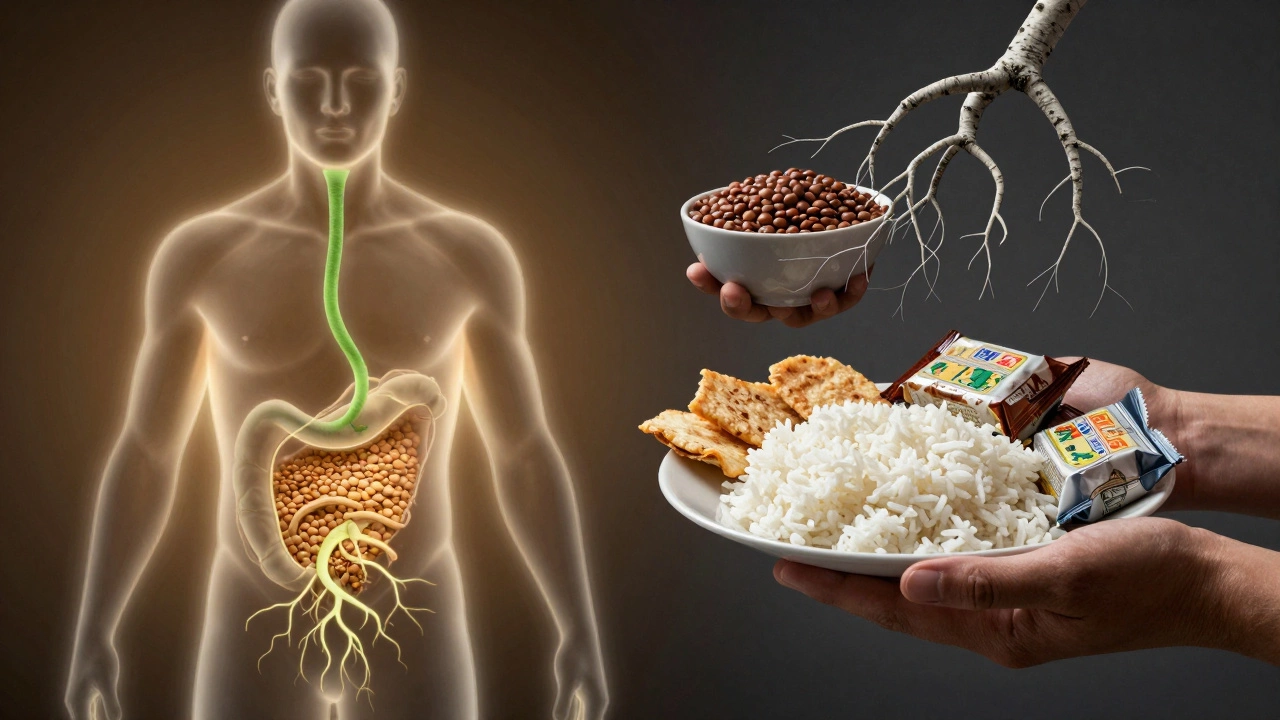
Compare that to processed foods or white rice-low in fiber, no fermentation, no benefits. Lentils don’t just add bulk. They rebuild your gut environment from the inside out.
Not All Lentils Are Created Equal
When people say "lentils," they often mean red dal-the kind used in Indian kitchens. But there are over 100 varieties. Red lentils (masoor dal) cook fast and break down into a creamy texture. Green and brown lentils hold their shape better and have slightly more fiber. Black lentils (urad dal) are higher in protein and take longer to digest, which can be good for sustained energy but harder on sensitive guts.
For gut health, the best choice is whole, unpeeled lentils. Peeling removes some of the outer layer where fiber and polyphenols live. That’s why whole green or brown lentils often score higher in gut-friendly studies than split red ones. But don’t write off red dal. Even though it’s peeled, it still delivers 12-14 grams of fiber per cup. And because it’s softer, it’s easier to digest for people with IBS or irritable bowel syndrome.
If you’re new to lentils, start with red dal. It’s gentle. Cook it well. Add a pinch of cumin and asafoetida (hing)-traditional Indian spices that reduce gas and bloating. You don’t need fancy supplements. A simple dal recipe with turmeric, ginger, and garlic does more for your gut than most probiotic pills.
What Happens When You Eat Lentils Daily?
A 2023 study from the University of Sydney followed 84 adults who swapped one daily serving of refined carbs for cooked lentils for 12 weeks. Results? Their gut microbiome diversity increased by 27%. That’s a big deal. A diverse microbiome means your gut can handle stress, fight off bad bacteria, and absorb nutrients better.
Participants also saw a 19% drop in markers of intestinal inflammation. Many reported less bloating after the first week-not because lentils eliminated gas (they don’t), but because their gut bacteria adapted. The bad bacteria that caused gas started to shrink. The good ones took over.
Another study from the University of Toronto found that people who ate lentils four times a week had 30% higher levels of Faecalibacterium prausnitzii-a bacteria linked to lower rates of Crohn’s disease and ulcerative colitis. This isn’t magic. It’s science. Lentils create the environment where good bacteria thrive.

Why Some People Say Lentils Hurt Their Stomach
If you’ve eaten lentils and felt bloated, gassy, or crampy, you’re not broken. You’re just not used to them. Lentils contain oligosaccharides-complex sugars your body can’t digest. These reach your colon intact, where bacteria feast on them. That fermentation produces gas. It’s normal. It’s not a sign they’re bad for you.
Here’s how to make lentils easier on your gut:
- Soak them for 8-12 hours before cooking. This breaks down some of the gas-causing sugars.
- Boil them hard for at least 20 minutes. Undercooked lentils are harder to digest.
- Add digestive spices: cumin, coriander, ginger, fennel, or asafoetida. These are used in Indian cooking for a reason.
- Start small: ¼ cup per meal, then increase slowly.
- Drink plenty of water. Fiber needs water to work.
Most people find their gut adjusts within 2-4 weeks. After that, the gas drops off. What’s left is better digestion, fewer cravings, and more regular bowel movements.
Simple Dal Recipe for Gut Health
You don’t need a chef’s knife or fancy ingredients. Here’s a basic, gut-friendly dal recipe that takes 30 minutes and uses pantry staples:
- 1 cup red lentils (masoor dal), rinsed
- 2 cups water or low-sodium vegetable broth
- 1 tsp turmeric
- ½ tsp ground cumin
- ½ tsp ground coriander
- 1 clove garlic, minced
- 1 small onion, finely chopped
- 1 tbsp coconut oil or ghee
- Pinch of asafoetida (hing) - optional but helpful
- Salt to taste
- Lemon wedge for serving
Heat oil in a pot. Add onion and sauté until soft. Add garlic, spices, and asafoetida. Stir for 30 seconds until fragrant. Add lentils and water. Bring to a boil, then simmer for 20 minutes until mushy. Stir occasionally. Add salt. Serve with a squeeze of lemon. That’s it.
Pair it with a side of steamed spinach or a small bowl of plain yogurt. The probiotics in yogurt team up with the fiber in lentils to create a powerful gut duo.
What Lentils Don’t Do
Let’s clear up the myths. Lentils won’t:
- "Detox" your body (your liver does that)
- Make you lose weight overnight
- Replace medication for IBS or Crohn’s
- Work if you eat them once a month
They’re not a miracle. They’re a daily habit. Think of them like brushing your teeth. One brushing won’t fix cavities. But brushing every day? That’s how you keep your mouth healthy. Same with lentils.
They don’t clean your gut like a plumber. They nurture it like a gardener. Feed the good soil, and the whole system thrives.
Who Should Eat More Lentils?
If you have:
- Irregular bowel movements
- Chronic bloating after meals
- High cholesterol or blood sugar
- Low fiber intake
- Want to reduce processed foods
Then lentils belong on your plate. They’re cheap, shelf-stable, plant-based, and packed with iron, folate, and magnesium. No supplements needed.
Even if you’re not vegetarian, adding lentils to soups, salads, or grain bowls boosts nutrition without meat. They’re one of the few foods that help both your gut and your heart.
Final Thought: It’s Not About Cleansing. It’s About Cultivating.
Your gut isn’t a pipe that needs unclogging. It’s a living ecosystem. And like any ecosystem, it needs the right inputs. Lentils are one of the most powerful, accessible, and underused tools we have to support it.
Forget the buzzwords. You don’t need expensive probiotics or detox teas. Just a simple pot of dal, cooked well, eaten regularly. That’s the real gut cleanse.