Dosa Batter Fermentation Calculator
Optimal Fermentation Time:
How to Know It's Ready:
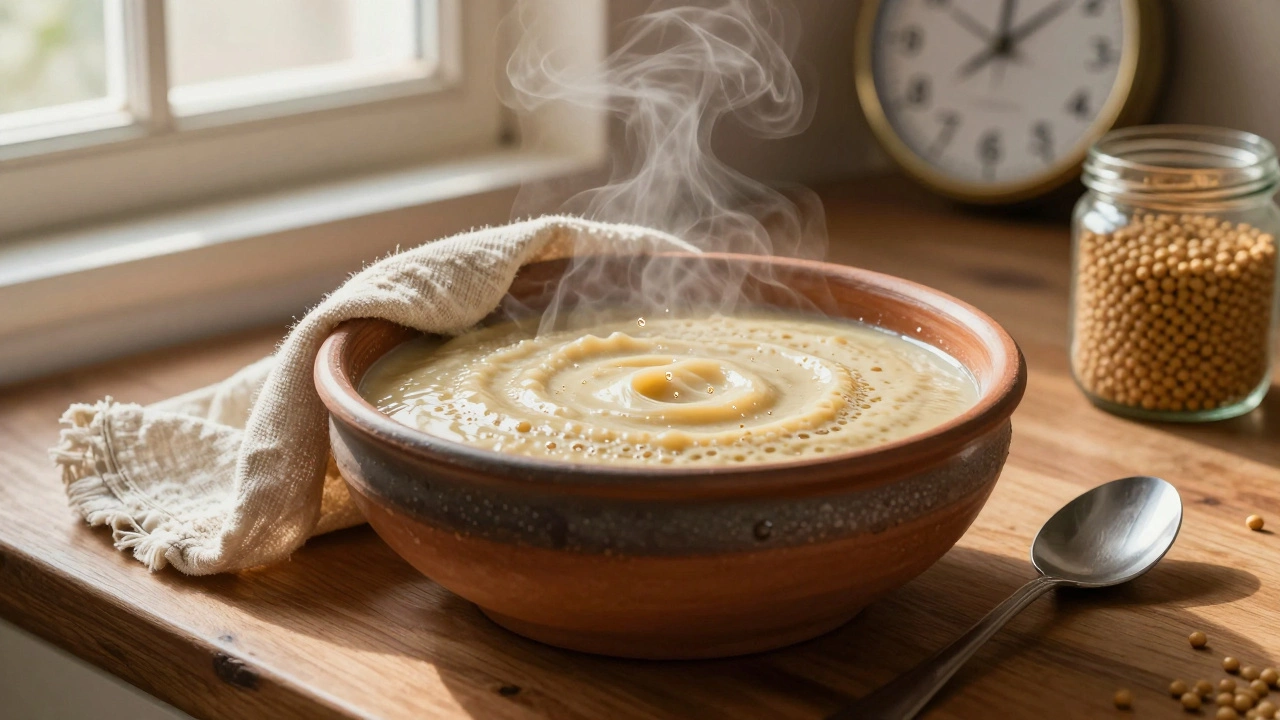
- Bubbles: Surface covered with tiny bubbles like sparkling water
- Volume: Increased by 50-100%, doubled is ideal
- Smell: Mildly sour like yogurt or sourdough
- Texture: Flows slowly like thick cream
Warning: Over-fermentation may cause sour taste, sticking to pan, or poor texture.
Getting the perfect dosa isn’t just about the ingredients-it’s about patience. The batter needs time to breathe, to wake up, to transform. Too short, and your dosa will be dense and flat. Too long, and it turns sour, sticky, or worse-fails to cook right. So how many hours should dosa batter be fermented? The answer isn’t one-size-fits-all. It depends on your kitchen, your climate, and your ingredients.
Why Fermentation Matters
Fermentation isn’t just a step in the dosa recipe-it’s the secret behind the crisp edges, the soft interior, and that slightly tangy flavor that makes dosa addictive. The batter is made of rice and urad dal (black gram), both full of starch and protein. When left to sit with a little salt and water, wild yeasts and lactic acid bacteria naturally present in the air and on the grains start breaking things down. This process produces carbon dioxide, which makes the batter rise, and lactic acid, which gives it that mild sour note.
Without fermentation, you’re not making dosa-you’re making rice pancakes. Fermentation changes everything: texture, flavor, digestibility. Studies show that fermented rice batter can be easier to digest than unfermented batter because the microbes break down complex starches and phytic acid, which can block nutrient absorption.
Standard Fermentation Time: 8 to 12 Hours
In most home kitchens, especially in warmer climates like South India, 8 to 12 hours is the sweet spot. If you mix your batter in the evening-say, around 8 p.m.-and leave it out overnight, it’ll be ready by 7 or 8 a.m. the next day. You’ll see bubbles all over the surface. The batter will have doubled in volume. When you lift a spoon, it should fall slowly, like thick cream. That’s your sign.
Many experienced cooks swear by this window. It’s long enough for the yeast to do its job but short enough to avoid over-fermentation. This timing works well in places with temperatures between 25°C and 30°C. If you live in a place like Sydney, where winter nights dip to 12°C, you’ll need to adjust.
Temperature Is Your Biggest Factor
Temperature controls fermentation speed. Yeast thrives between 28°C and 32°C. Below 20°C, things crawl. Above 35°C, they go wild-and can turn sour too fast.
- Warm climate (25°C-32°C): 8-10 hours
- Moderate climate (18°C-24°C): 12-16 hours
- Cold climate (below 15°C): 18-24 hours or more
In colder weather, don’t just leave the batter on the counter. Try these tricks:
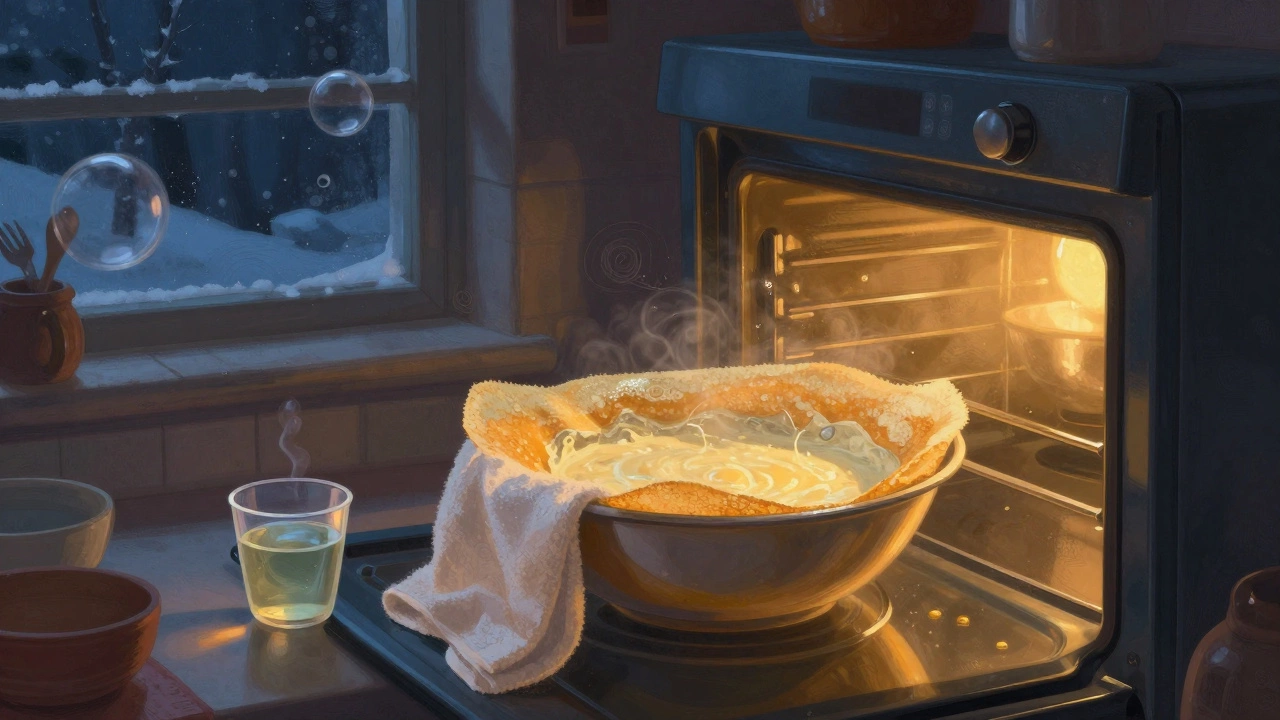
- Place the bowl inside a turned-off oven with the light on. The bulb gives just enough warmth.
- Wrap the bowl in a thick towel and set it near a radiator or heater vent.
- Use a fermentation box or a yogurt maker set to 28°C if you have one.
- Some people even put the bowl in a microwave with a cup of hot water (not turned on). The steam creates a warm microclimate.
I’ve seen people leave batter out for 24 hours in winter and still get great results. The key is not to rush. Fermentation isn’t a timer-it’s a transformation.
Signs Your Batter Is Ready
You don’t need a clock. You need eyes and a spoon.
- Bubbles: The surface should be covered in tiny bubbles, like sparkling water. Big bubbles mean over-fermentation.
- Volume: It should have increased by 50% to 100%. If it hasn’t doubled, give it more time.
- Smell: It should smell mildly sour, like yogurt or sourdough. If it smells like alcohol or vinegar, it’s gone too far.
- Texture: Stir it gently. It should flow slowly, not pour like water. If it’s runny, it’s under-fermented. If it’s thick and pasty, it’s over-fermented.
One trick I learned from a Chennai cook: dip a finger in the batter and leave a mark. If the indentation stays, it’s ready. If it fills back in, wait another hour.
What Happens If You Ferment Too Long?
Over-fermentation isn’t dangerous-it’s just messy. The batter becomes too acidic, which can:
- Make dosas taste overly sour
- Make them stick to the pan because the starch structure breaks down
- Turn the batter gray or watery
If you leave it 24+ hours at room temperature, especially in summer, the lactic acid bacteria can dominate and kill off the yeast. That means no rise, no crispness. You’ll get flat, rubbery dosas that stick like glue.
But here’s the good news: you can rescue it. If your batter is over-fermented, mix in 1-2 tablespoons of fresh rice flour or semolina. That adds structure. Then add a pinch of baking soda (not more than 1/4 tsp) to neutralize the acid. Stir gently. It won’t be perfect, but it’ll still make edible dosas.
What If You Don’t Have Time?
Some people want dosa in 4 hours. Others need it in 2. Is that possible?
Technically, yes-but not well. Fermentation under 6 hours rarely gives full flavor or lift. You can speed it up with:
- Using warm water (not hot) when grinding
- Adding a pinch of fenugreek seeds (1/4 tsp per cup of dal)-they help with fermentation
- Using leftover fermented batter from a previous batch as a starter
Still, even with all these tricks, 6 hours is the absolute minimum. Anything less than that, and you’re not fermenting-you’re waiting.
Storage and Next-Day Use
What if you ferment it too early? No problem. Once the batter is ready, refrigerate it. Cold slows fermentation almost to a stop. Your batter will stay good for 3-4 days. When you’re ready to use it, take it out 1-2 hours before cooking to bring it to room temperature. Stir gently-don’t whisk. You want to preserve the bubbles.
Some people freeze batter in portions. It works, but the texture changes. Thawed batter won’t puff up as much. It’s better for uttapam than dosa.
Common Mistakes to Avoid
- Using cold water: Cold water slows fermentation. Use lukewarm water when grinding.
- Adding salt too early: Salt can inhibit yeast. Add it after grinding, just before leaving the batter to ferment.
- Using a metal bowl: Metal can react with the batter. Use glass, ceramic, or food-grade plastic.
- Covering too tightly: You need airflow. Cover with a lid or cloth-not airtight.
- Stirring too much: Once it’s fermented, gentle stirring is enough. Over-mixing kills the air bubbles.
Final Tip: Trust Your Senses, Not the Clock
Recipes say 8 hours. But what if your kitchen is cool? What if you used old rice? What if your urad dal wasn’t fresh? Rules are guides, not laws.
Look at the batter. Smell it. Feel it. Let it tell you when it’s done. The best dosa makers don’t check the time-they check the bubbles.
Start with 12 hours. Adjust next time based on your results. Keep notes. Over time, you’ll know exactly how long your kitchen needs.
Can I ferment dosa batter in the fridge?
No, you shouldn’t ferment dosa batter in the fridge. Fermentation needs warmth-ideally between 25°C and 30°C. The fridge is too cold (usually 4°C), and the microbes won’t activate. You can store already fermented batter in the fridge to slow down further fermentation, but never start the process there.
Why is my dosa batter not rising?
If your batter isn’t rising, the temperature is likely too low, or the urad dal wasn’t soaked long enough. Make sure the dal is soaked for at least 4-6 hours before grinding. Also, check if you added salt before fermentation-salt can kill the yeast. Try moving the batter to a warmer spot, like near a heater or in an oven with the light on.
Can I use a pressure cooker to ferment dosa batter?
Yes, but carefully. Place the batter bowl inside the pressure cooker without locking the lid. Add a cup of hot water to the bottom and close the lid. The trapped heat creates a warm, humid environment. Leave it for 8-10 hours. Don’t use the cooker’s heat setting-just the residual warmth from hot water.
How do I know if my dosa batter has gone bad?
Bad batter smells strongly alcoholic or rotten, like vinegar or sour milk gone wrong. It may turn gray, develop mold (fuzzy spots), or separate into layers with watery liquid on top. If you see mold or smell something off, throw it out. A little sourness is normal. A sharp, burning smell isn’t.
Should I add baking soda to fermented dosa batter?
Generally, no. Traditional dosa batter doesn’t need baking soda. It’s made to rise naturally through fermentation. But if your batter is over-fermented and too sour, a tiny pinch (1/4 tsp) can help neutralize the acidity and improve texture. Don’t add it before fermentation-it kills the yeast.