
Biryani Chicken Tenderizer Calculator
Calculate the right amount of tenderizing ingredients for your biryani chicken. Based on expert techniques from the article "How to Make Chicken Soft for Biryani".
Important: Always use chicken thighs for best results. Avoid over-marinating with acid (max 6 hours) and never boil chicken for biryani. Follow the blanching step for maximum tenderness.
Pro tip: Save the blanching liquid for cooking rice. It adds flavor and gelatin for a richer biryani.
Nothing ruins a good biryani faster than tough, chewy chicken. You’ve marinated it for hours, layered it with fragrant rice, and slow-cooked it just right-but when you take that first bite, it’s like chewing rubber. It’s frustrating, and it doesn’t have to be that way. Making chicken soft for biryani isn’t about cooking it longer. It’s about preparing it right from the start.
Start with the right cut
Not all chicken works the same in biryani. Bone-in, skin-on thighs are your best friend here. They have more fat and connective tissue than breast meat, which breaks down slowly into gelatin during cooking. That gelatin is what makes the meat tender and juicy. Chicken breast? It dries out fast. Even if you cook it gently, it’ll turn stringy and dry by the time the rice is done. Stick with thighs. At least 6-8 pieces per serving. If you can find drumsticks too, even better. They add depth and stay moist longer.Marinate with yogurt and acid
Yogurt isn’t just for flavor-it’s a natural tenderizer. The lactic acid gently breaks down muscle fibers without turning the meat mushy. Use full-fat plain yogurt, not Greek yogurt. Greek yogurt is too thick and lacks the right balance of moisture and acidity. Mix in 1 cup of yogurt per 1 kg of chicken. Add 1 tablespoon of lemon juice or vinegar. Don’t overdo it. Too much acid and the surface turns grainy. Salt is essential too-about 1.5 teaspoons per kg. It helps the meat hold onto moisture. Add ground spices like turmeric, cumin, coriander, and a pinch of red chili powder. Let it sit for at least 4 hours. Overnight is even better. Keep it covered in the fridge. The cold slows fermentation, letting the yogurt work slowly and evenly.Don’t skip the enzymatic boost
There’s a secret many professional chefs use: raw papaya. Grated raw papaya contains papain, a natural enzyme that breaks down tough proteins. Add 1 tablespoon of finely grated papaya to your marinade. Mix it in well. You’ll notice the chicken starts to soften slightly after an hour. Don’t use cooked papaya. Heat kills the enzyme. And don’t overdo it-too much papaya makes the chicken mushy. One tablespoon for a full batch is enough. If you can’t find fresh papaya, use 1 teaspoon of papaya powder. It’s concentrated, so a little goes a long way.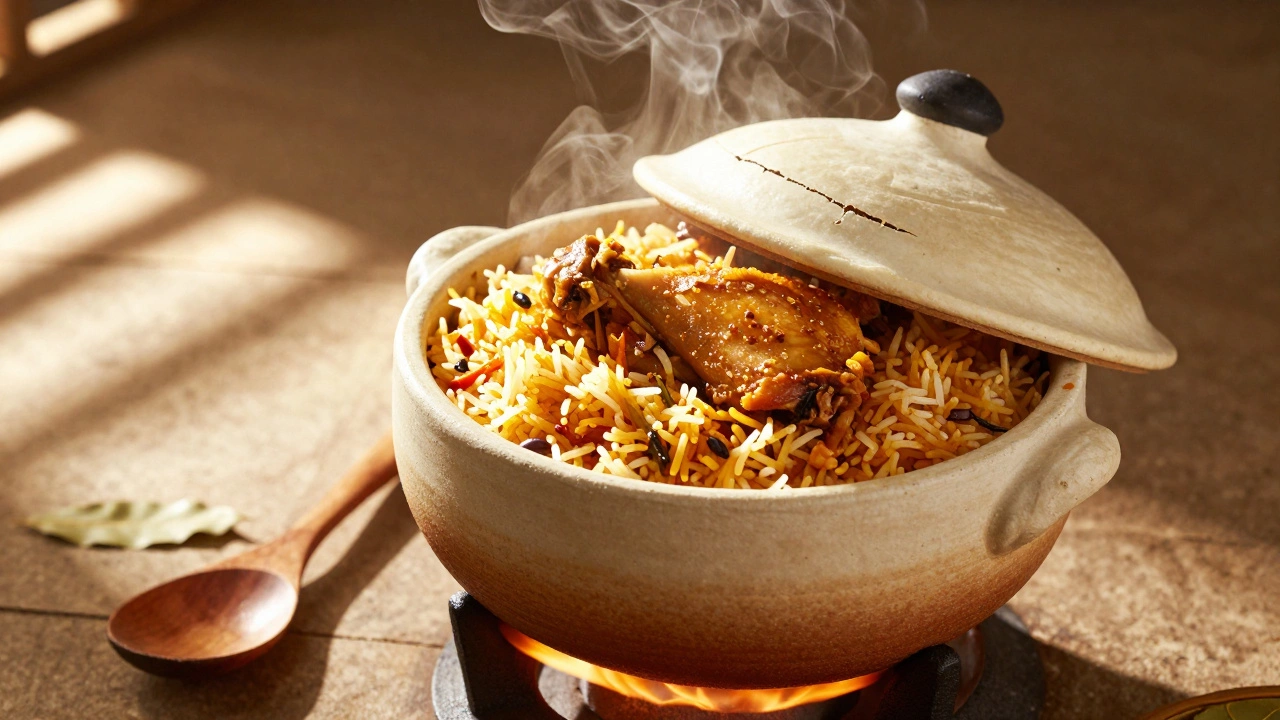
Blanch before layering
This step is often skipped, but it’s critical. After marinating, don’t throw the chicken straight into the biryani pot. Bring a pot of water to a gentle simmer-not a boil. Add a teaspoon of salt and a bay leaf. Drop in the chicken pieces and let them cook for 5 minutes. This isn’t about cooking them through. It’s about setting the surface. Blanching seals in the juices and removes excess fat and foam that can cloud the broth. Remove the chicken, pat it dry with paper towels, and let it cool slightly. This step makes sure the chicken holds its shape during the final slow cook and doesn’t fall apart.Steam, don’t boil
Biryani gets its magic from dum cooking-steaming the rice and meat together under pressure. Use a heavy-bottomed pot with a tight lid. Place the marinated chicken at the bottom, then layer the rice on top. Seal the pot with dough or a damp cloth under the lid to trap steam. Cook on low heat for 30-40 minutes. The steam circulates slowly, cooking the chicken gently from all sides. If you crank up the heat, the meat will toughen. Low and slow is the only way. You can also use a pressure cooker, but only for 1 whistle. Let it release steam naturally. No quick releases. That shocks the meat and makes it chewy.Rest before serving
After cooking, turn off the heat and let the biryani sit for 15 minutes with the lid still on. This lets the steam redistribute, softening any dry spots and letting the chicken absorb the flavors around it. If you dig in right away, the chicken might still be a little tight. Wait. It makes a difference.
Common mistakes to avoid
- Using boneless chicken-no connective tissue means no tenderness.
- Marinating for less than 2 hours-yogurt needs time to work.
- Boiling the chicken too hard-high heat contracts fibers and squeezes out moisture.
- Skipping the blanch step-leads to greasy, unevenly cooked meat.
- Adding vinegar or lemon juice directly to the pot-this curdles the yogurt and makes the texture grainy.
What if your chicken is already tough?
If you’ve already cooked the biryani and the chicken is chewy, there’s still a fix. Mix 2 tablespoons of warm milk with 1 teaspoon of cornstarch. Stir it into the biryani and let it simmer on the lowest heat for 10 minutes. The milk proteins and starch help coat the fibers and soften them slightly. It won’t make it perfect, but it’ll help.Pro tip: Use the broth
When you blanch the chicken, save that liquid. It’s packed with flavor and gelatin. Strain it and use it to cook your rice instead of plain water. Your biryani will be richer, and the rice will cling to the chicken better. This small step turns an average biryani into something unforgettable.Can I use frozen chicken for biryani?
Yes, but thaw it completely in the fridge first. Never cook chicken from frozen for biryani. The outside will overcook before the inside gets tender. Thaw it 24 hours ahead in the fridge. Then marinate as usual. If you’re short on time, use the cold water method: seal the chicken in a zip-lock bag and submerge it in cold water for 1-2 hours, changing the water every 30 minutes.
Why does my chicken get rubbery even after marinating?
You probably used chicken breast or marinated it too long with too much acid. Breast meat has almost no fat or collagen, so it dries out fast. And if you left it in lemon juice or vinegar for more than 6 hours, the surface turned grainy. Stick with thighs and limit acidic ingredients to 1-2 tablespoons max. Use yogurt as your main tenderizer.
Can I use baking soda to tenderize chicken for biryani?
It works, but it’s risky. A pinch of baking soda (1/4 teaspoon per kg) mixed into the marinade for 20 minutes can help. But if you leave it longer, the chicken turns gray and tastes soapy. Rinse it off before adding yogurt and spices. Most home cooks avoid it because the flavor change is noticeable. Papaya or yogurt are safer, more flavorful options.
How long should I cook the biryani for tender chicken?
After layering, cook on low heat for 30-40 minutes. If using a pressure cooker, one whistle (about 8-10 minutes) is enough, then let it release steam naturally for 15 minutes. Overcooking makes the chicken fall apart, but undercooking leaves it tough. The key is steam, not boiling. The chicken should be fork-tender when you test it after resting.
Does the type of rice affect chicken tenderness?
Not directly, but it affects moisture balance. Long-grain basmati absorbs steam better than short-grain rice. If you use sticky rice, the biryani might turn out too wet, and the chicken won’t get the gentle heat it needs. Always use aged basmati. Rinse it until the water runs clear, then soak it for 30 minutes before cooking. This helps it cook evenly and steam properly around the chicken.