Feta vs Paneer Substitution Calculator
Select a dish type to see if feta cheese can be substituted for paneer (or vice versa) in that recipe. The calculator shows you why and what alternatives work best.
Substitution Result
People often ask if Greek feta cheese is the same as paneer. They look similar-both are white, crumbly, and used in salads and cooking. But they’re not the same. Not even close. If you’ve ever swapped feta for paneer in a recipe and ended up with a soggy mess or an overly salty bite, you already know something’s off. Let’s clear this up once and for all.
What Is Paneer?
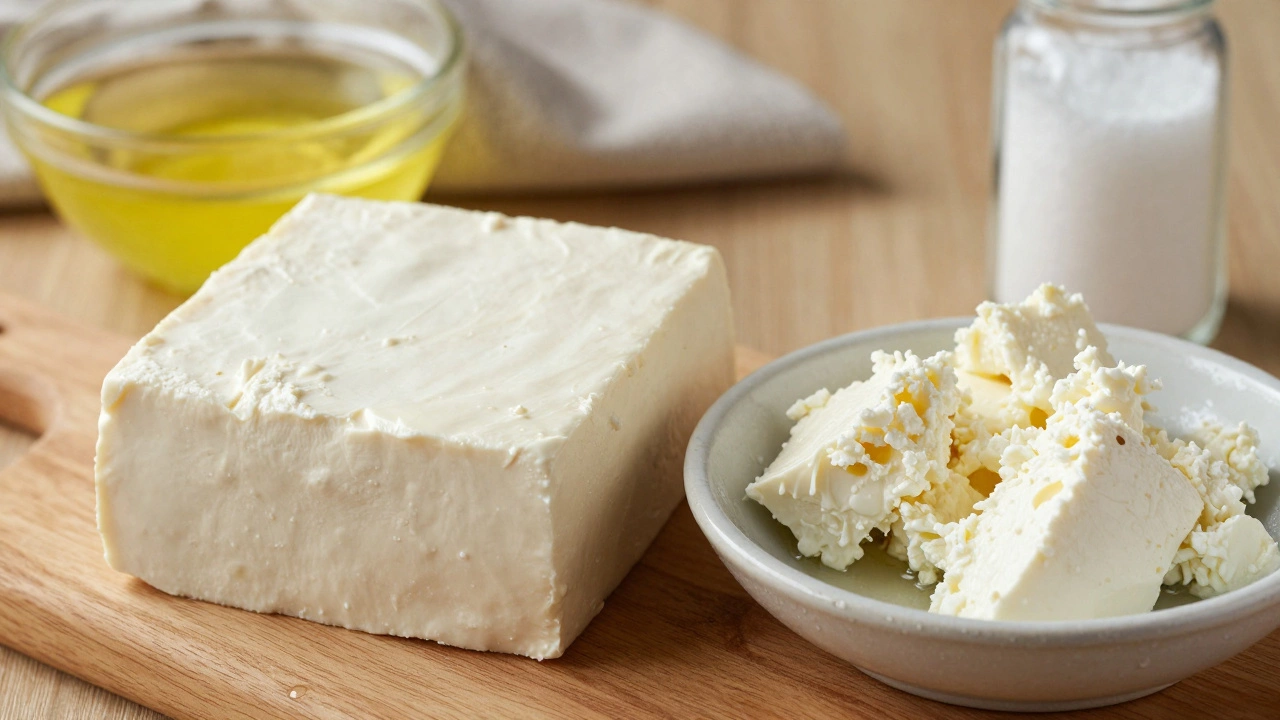
Paneer is a fresh, unaged cheese common in South Asian cooking. It’s made by heating milk and adding an acid-like lemon juice, vinegar, or yogurt-to curdle it. The curds are then drained, pressed into a block, and chilled. The result? A firm, non-melting cheese that holds its shape when fried, grilled, or simmered in gravy. You can slice it, cube it, or crumble it. It’s the star of dishes like paneer tikka, palak paneer, and paneer butter masala.
Paneer has a mild, milky flavor. It doesn’t taste like much on its own, which is why it’s perfect for soaking up spices and sauces. Its texture is dense but soft, like a firm tofu. When you bite into it, it gives slightly, then holds together. That’s why it’s great for grilling-you don’t need to worry about it falling apart.
What Is Greek Feta Cheese?
Feta is a brined cheese from Greece, traditionally made from sheep’s milk or a mix of sheep’s and goat’s milk. It’s aged for at least two months in saltwater brine, which gives it its signature tangy, salty, and slightly sharp flavor. Unlike paneer, feta isn’t pressed into a solid block. It’s stored in chunks or crumbles, soaked in brine to preserve it and develop its taste.
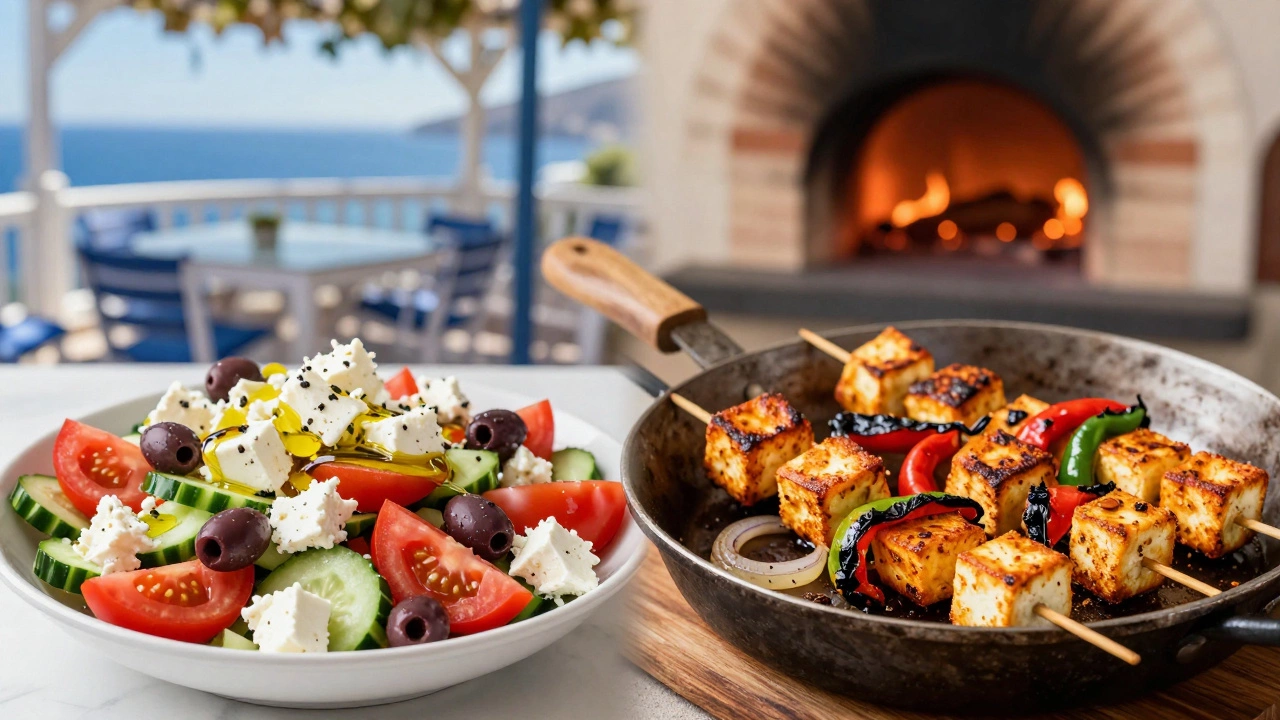
Feta doesn’t melt the way cheddar or mozzarella does. Instead, it softens and releases moisture when heated. That’s why it’s perfect on Greek salads, in spanakopita, or baked with olive oil and herbs. But if you try to fry it like paneer, it’ll fall apart and get watery. Its flavor is bold-some say overpowering-especially compared to the quiet neutrality of paneer.
Key Differences Between Feta and Paneer
Here’s how they stack up side by side:
| Feature | Feta Cheese | Paneer |
|---|---|---|
| Milk Source | Sheep’s or goat’s milk (sometimes cow’s) | Cow’s or buffalo’s milk |
| Production Method | Curdled with rennet, aged in brine | Curdled with acid, pressed and chilled |
| Aging | Aged 2+ months | Fresh, no aging |
| Texture | Crumby, moist, soft | Firm, dense, holds shape |
| Flavor | Tangy, salty, sharp | Mild, milky, neutral |
| Best Used In | Salads, baked dishes, with olives | Curries, grilled skewers, fried snacks |
| Melts When Cooked? | No-softens and releases liquid | No-stays firm even when fried |
One big thing to remember: paneer is designed to hold up under heat. Feta isn’t. If you put feta in a curry, it’ll dissolve into a salty, watery puddle. If you fry paneer, it browns beautifully and stays intact.

Why People Confuse Them
The confusion comes from looks, not taste or function. Both are white, soft cheeses sold in blocks or crumbles. Both are used in salads. Both are vegetarian. But that’s where the similarity ends.
Many grocery stores in Australia, the US, and the UK now stock both cheeses side by side. People assume they’re interchangeable because they’re both "white cheese." But that’s like thinking tofu and ricotta are the same because they’re both white and soft. They’re not.
Even some Indian restaurants outside India use feta in place of paneer because it’s easier to source. It’s a shortcut-and it changes the whole dish. A paneer tikka shouldn’t taste like a Greek salad. It should taste like grilled milk, spiced with cumin, garam masala, and a hint of smokiness.
Can You Substitute One for the Other?
Technically, yes-but only in very specific cases.
If you’re making a cold salad and need a crumbly cheese, feta can work in place of paneer. But you’ll need to rinse the feta under cold water for 30 seconds to cut the salt. Even then, the tang will still stand out.
On the flip side, using paneer instead of feta in a Greek salad? You’ll miss the punch. The dish will taste flat. Paneer won’t give you that salty, bright kick that balances the tomatoes, cucumbers, and olives.
For cooking: don’t substitute. If a recipe calls for paneer, use paneer. If it calls for feta, use feta. Swapping them will ruin the texture and flavor balance.
What If You Can’t Find Paneer?
Not everyone has access to fresh paneer. If you’re in a pinch, here’s what you can do:
- Use firm tofu (pressed well) for a similar texture in curries.
- Try halloumi-it’s another non-melting cheese that can be grilled. It’s saltier than paneer, but it holds shape.
- Make your own paneer in 20 minutes. Boil milk, add lemon juice, strain through a cloth, press under a heavy bowl for 30 minutes. Done.
Homemade paneer is cheaper than store-bought and tastes infinitely better. You control the milk, the acid, and the pressing time. No additives. No preservatives. Just pure, fresh cheese.
Final Verdict
No, Greek feta cheese is not paneer. They’re two completely different cheeses with different origins, methods, flavors, and uses. Calling them the same is like calling a banana an apple because they’re both fruit. They might look similar from far away, but up close, they’re worlds apart.
If you love paneer, stick with it. If you love feta, enjoy it in its own right. Don’t try to force them into each other’s roles. Your food will thank you.
Can I use feta instead of paneer in paneer tikka?
No. Feta will fall apart in the marinade and turn watery when grilled. Paneer holds its shape because it’s pressed and firm. Feta is brined and crumbly-it won’t give you those charred, juicy cubes you expect in paneer tikka.
Why does paneer not melt?
Paneer doesn’t melt because it’s made with acid, not rennet. Acid curdling breaks down the milk proteins differently, creating a structure that stays firm under heat. Melting cheeses like cheddar or mozzarella rely on rennet and fat content, which paneer lacks.
Is feta healthier than paneer?
It depends. Feta has more sodium because it’s brined-about 310mg per ounce. Paneer has less sodium but more fat if made with full-fat milk. Both are good sources of protein and calcium. If you’re watching salt intake, paneer is better. If you want probiotics, aged feta has some beneficial bacteria.
Can I make paneer with goat’s milk?
Yes, you can. But it won’t be traditional Indian paneer. Goat’s milk curdles differently-it’s softer and more delicate. The result will be a looser, creamier cheese. It’s still delicious, but it won’t hold up in curries the same way cow’s milk paneer does.
Where can I buy authentic paneer in Australia?
Look in Indian grocery stores, especially in areas with large South Asian communities like Sydney’s Punchbowl or Melbourne’s Springvale. Some health food stores carry fresh paneer in the refrigerated section. If you can’t find it, make it yourself-it takes less time than driving to the store.
What to Try Next
If you’ve been using feta in your Indian dishes, try making paneer for the first time. All you need is milk, lemon juice, and a cloth. You’ll be amazed at how much better it tastes than store-bought. Once you’ve tried it in a simple dish like paneer bhurji or grilled paneer with mint chutney, you’ll never go back.
And if you love feta? Stick to Greek salads, baked tomatoes, or wrapped in phyllo. Let each cheese shine in its own kitchen.