Rice & Beans Nutritional Analyzer
Select your ingredients below to see how your combination stacks up against recommended daily values.
Build Your Meal
Health Assessment
Missing Nutrients?
- ✗ Vitamin B12
- ✗ Vitamin D
- ✗ Omega-3s
Tip: Add leafy greens or citrus to boost iron absorption and vitamin C.
Make a selection above to calculate your meal's stats.
You probably grew up hearing that rice and beans are the ultimate comfort food. Maybe your grandmother swore by it, or you’ve seen it dominate dinner tables across Latin America, the Caribbean, and yes, plenty of households in India where lentils (dal) often replace the kidney bean but play the same role. But here’s the nagging question: is eating this combo every single day actually good for you? Or are we just repeating a habit because it’s cheap and easy?
The short answer is: mostly yes, but with some serious caveats. If you’re eating plain white rice and canned beans with zero variety, you might be missing out on key nutrients while overloading on carbs. But if you tweak how you cook them and what you pair them with, this duo can become a nutritional powerhouse. Let’s break down exactly what happens to your body when you eat rice and beans daily, and how to do it right without getting bored or deficient.
The Protein Myth vs. Reality
For decades, people believed you had to eat rice and beans together at the exact same meal to get "complete" protein. The idea was that grains lack lysine and legumes lack methionine, so combining them fills the gaps. Modern nutrition science has largely debunked the strict timing rule. You don’t need to have them on the same plate for your body to use the amino acids effectively. As long as you eat both throughout the day, your liver pools these resources.
However, the combination remains highly effective. A cup of cooked black beans provides about 15 grams of protein, while a cup of brown rice adds another 5 grams. Together, they offer a solid plant-based protein profile. This is crucial for vegetarians or anyone looking to cut back on meat. But relying solely on this for protein means you’re missing out on other benefits found in eggs, fish, or poultry, such as higher bioavailability of certain vitamins like B12.
Fiber: Your Gut’s Best Friend
If there’s one reason to love this combo, it’s the fiber. Most Americans and Australians fall short on their daily fiber intake, hovering around 15 grams instead of the recommended 25-30 grams. One cup of black beans alone contains nearly 15 grams of fiber. Add half a cup of brown rice, and you’re hitting 50% of your daily needs in one sitting.
This isn’t just about keeping things moving. Soluble fiber helps lower LDL cholesterol by binding to bile acids in the gut. Insoluble fiber feeds your gut microbiome. Recent studies suggest that a diverse gut flora is linked to better mood regulation and immune function. If you’re used to low-fiber diets, though, jumping straight into daily bean consumption might cause bloating and gas. Start slow. Soak your dried beans overnight and discard the water before cooking to reduce oligosaccharides, the sugars responsible for digestive distress.
The White Rice Problem
Here is where things get tricky. If you’re using refined white rice, you’re stripping away most of the bran and germ, which holds the fiber, magnesium, and B vitamins. White rice has a high glycemic index (GI), meaning it spikes blood sugar quickly. For someone with insulin resistance or type 2 diabetes, eating large portions of white rice daily could lead to energy crashes and increased fat storage.
Consider swapping to brown rice, red rice, or even basmati rice, which has a lower GI than sticky jasmine rice. In many Indian traditions, people mix rice with dal (lentils), which naturally lowers the overall glycemic load of the meal thanks to the protein and fat content. If you must eat white rice, keep the portion small-about half a cup cooked-and always pair it with vegetables and a source of healthy fat like ghee or olive oil to slow down absorption.
Nutrient Gaps You Need to Watch
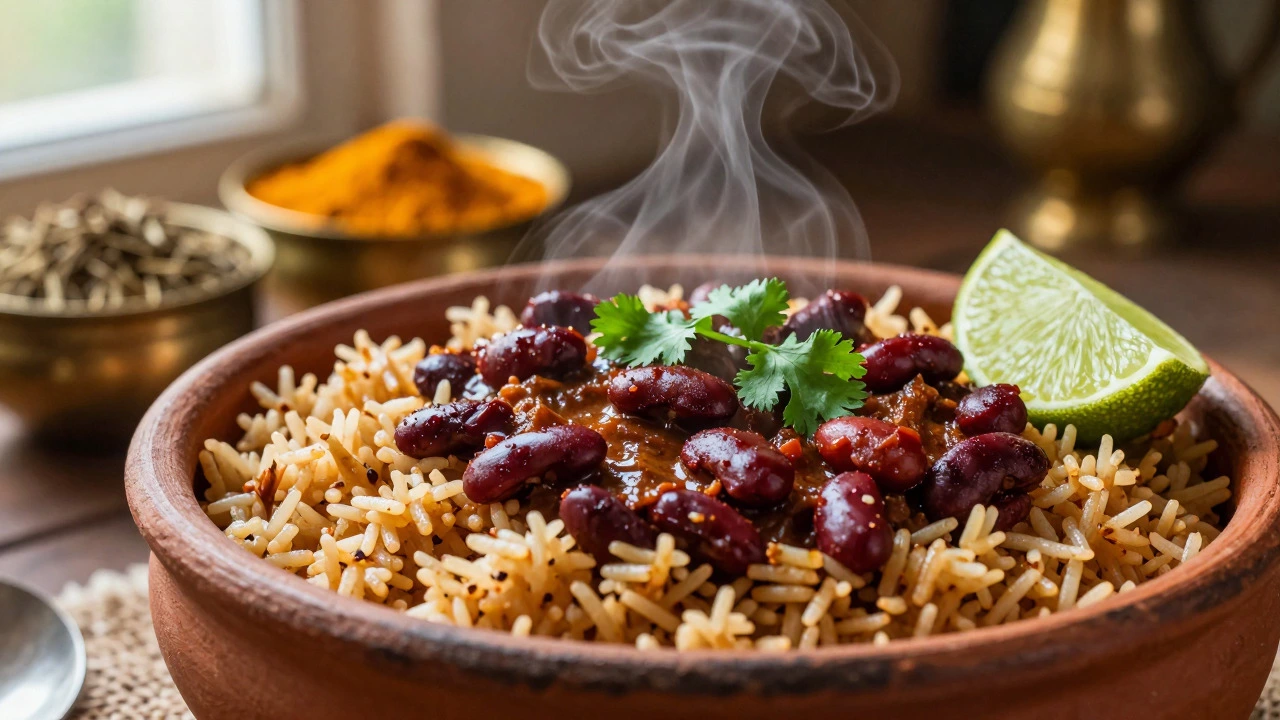
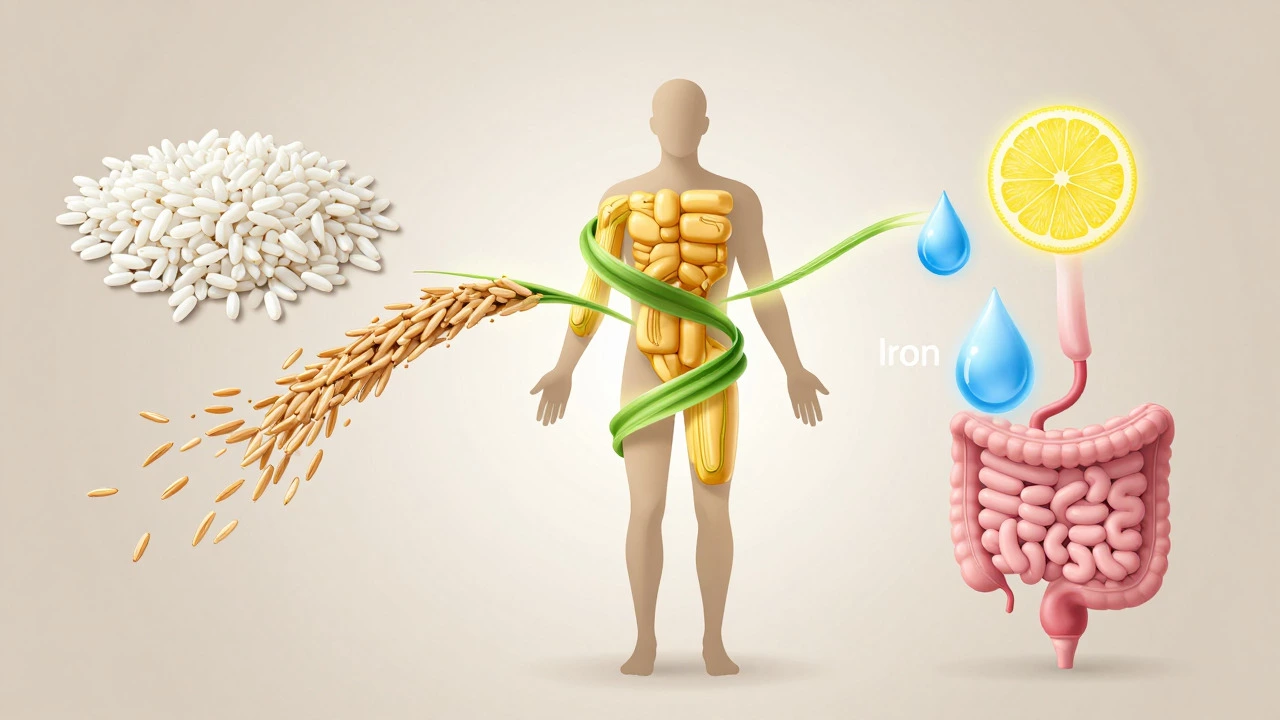
Eating the same thing every day creates blind spots. While rice and beans provide iron, magnesium, potassium, and folate, they lack sufficient amounts of vitamin B12, vitamin D, omega-3 fatty acids, and calcium. Iron from plants (non-heme iron) is also less easily absorbed than iron from meat. To fix this, add a squeeze of lemon or lime juice to your dish. Vitamin C significantly boosts non-heme iron absorption. I learned this trick from my neighbor, who swears her anemia improved simply by adding cilantro and lime to her daily rajma chawal (kidney beans and rice).
Another concern is arsenic. Rice tends to absorb more arsenic from soil than other crops. Long-term exposure to high levels of inorganic arsenic is linked to heart disease and cancer. Varying your grain sources is wise. Try quinoa, millet, or buckwheat a few times a week. If you stick to rice, rinse it thoroughly before cooking, which can remove up to 30% of surface arsenic.
| Combination | Protein (g) | Fiber (g) | Glycemic Load | Best For |
|---|---|---|---|---|
| White Rice + Black Beans | 18 | 12 | High | Quick energy, post-workout |
| Brown Rice + Lentils (Dal) | 20 | 16 | Moderate | Sustained energy, weight management |
| Basmati Rice + Chickpeas | 17 | 14 | Low-Moderate | Diabetics, heart health |
| Quinoa + Kidney Beans | 22 | 10 | Low | Gluten-free, high nutrient density |
Cultural Twists That Boost Health
You don’t have to eat bland boiled beans and rice. Look at global cuisines for inspiration. In India, Rajma Chawal is a popular North Indian dish consisting of red kidney beans curry served with steamed rice. The curry base usually includes onions, tomatoes, ginger, garlic, and spices like turmeric and cumin. Turmeric contains curcumin, an anti-inflammatory compound. Pairing it with black pepper increases its absorption by up to 2000%.
In Brazil, Feijoada uses black beans and pork, but you can make a vegetarian version with smoked paprika for depth. Adding leafy greens like spinach or kale to your pot doesn’t just change the color; it adds vitamin K, calcium, and additional antioxidants. A simple side salad with vinaigrette aids digestion and adds crunch, preventing texture fatigue.
How to Make It Sustainable Daily
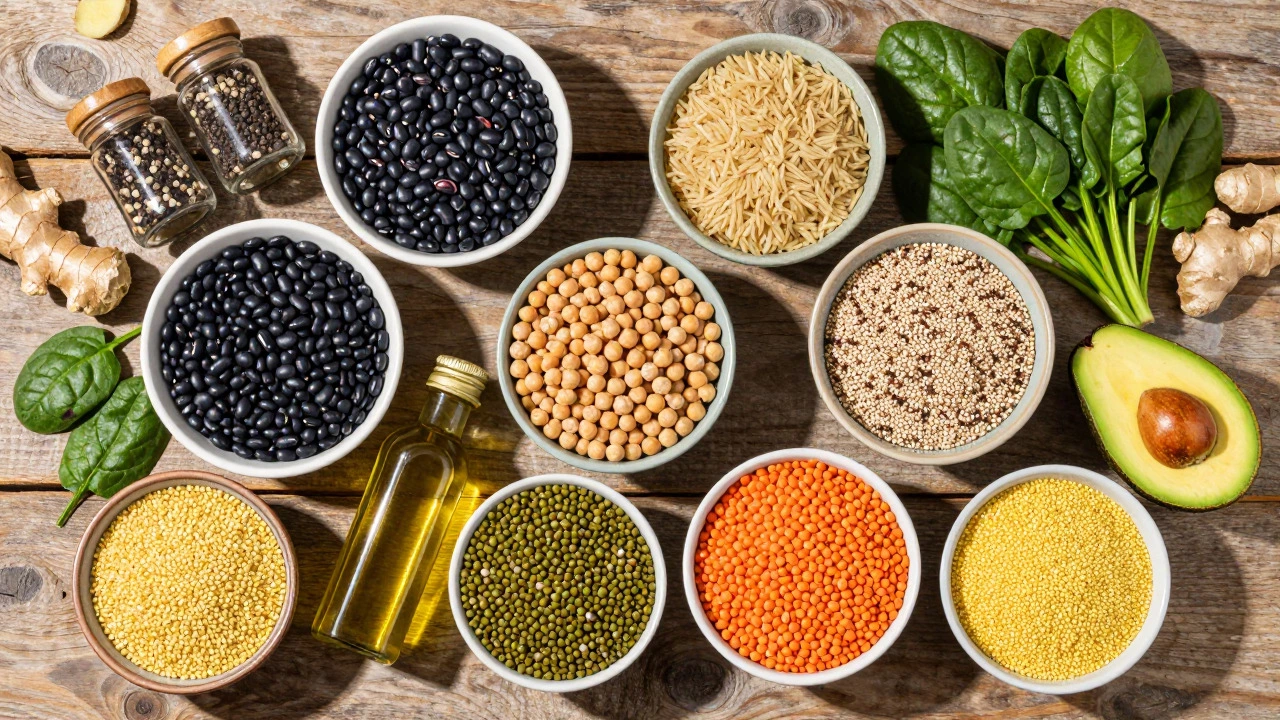
Boredom is the biggest enemy of consistency. If you eat the exact same texture and flavor every day, you’ll eventually crave junk food. Here is a strategy to keep it interesting:
- Vary the beans: Rotate between black beans, pinto beans, chickpeas, lentils, and mung beans. Each has a slightly different micronutrient profile.
- Change the grain: Use brown rice, red rice, cauliflower rice (for low carb), or mixed grains.
- Add healthy fats: Avocado slices, a drizzle of extra virgin olive oil, or a sprinkle of seeds (flax, chia, pumpkin) improve satiety and nutrient absorption.
- Use fresh herbs: Cilantro, parsley, mint, and basil add volume and phytonutrients without calories.
Preparation matters too. Batch cooking saves time. Cook a big pot of beans on Sunday. Store them in glass containers. When you’re ready to eat, heat a portion and stir in fresh ingredients. This prevents the "sad desk lunch" syndrome where you grab processed convenience foods because you’re too tired to cook.
Who Should Be Careful?
Not everyone thrives on a high-bean diet. People with irritable bowel syndrome (IBS) may find the fermentable carbohydrates (FODMAPs) in beans trigger symptoms. If you experience chronic bloating, consider trying low-FODMAP alternatives like tofu or tempeh for protein, or stick to smaller portions of well-cooked lentils, which are generally easier to digest than kidney beans.
Those with kidney issues should monitor potassium and phosphorus intake, as beans are rich in both. Always consult a dietitian if you have specific medical conditions. For most healthy adults, however, this staple is a safe, affordable, and nutritious foundation.
Final Verdict
Is it healthy to eat rice and beans every day? Yes, provided you prioritize whole grains, vary your legume types, and round out the meal with vegetables and healthy fats. It’s not a magic bullet, but it’s far better than the standard Western diet of processed meats and refined sugars. Treat it as a canvas, not a cage. Add color, spice, and variety, and you’ll likely see improvements in energy levels, digestion, and even skin clarity within weeks.
Do rice and beans form a complete protein?
Yes, rice and beans complement each other's amino acid profiles. Rice is low in lysine but high in methionine, while beans are high in lysine but low in methionine. Eating them over the course of the day ensures you get all essential amino acids, though eating them together is still beneficial for immediate muscle synthesis.
Can eating rice and beans every day cause weight gain?
It depends on portion size and preparation. Rice and beans are calorie-dense compared to vegetables. If you eat large portions of white rice with oily sauces, you may consume excess calories. However, the high fiber content promotes satiety, which can help control appetite if portions are managed reasonably.
Which is healthier, brown rice or white rice with beans?
Brown rice is generally healthier due to its higher fiber, magnesium, and vitamin E content. White rice is stripped of the bran and germ. However, white rice digests faster, which can be useful post-exercise. For daily maintenance, brown rice or mixed grains are superior choices.
How much rice and beans should I eat per day?
A typical serving is 1/2 to 1 cup of cooked beans and 1/2 to 1 cup of cooked rice. Adjust based on your activity level. Active individuals may need larger portions for fuel, while sedentary individuals should limit rice portions to manage carbohydrate intake.
Does soaking beans really reduce gas?
Yes, soaking dried beans for 8-12 hours and discarding the soaking water removes some of the oligosaccharides (complex sugars) that cause gas. Adding epazote or ginger during cooking can also aid digestion.