
Curry Spice Ratio Calculator
See how your curry powder compares to authentic Indian curry blends. The article explains that turmeric is not the main spice in curry—it's mostly for color. Real curry relies on coriander (30-40%) and cumin (20-30%) as the base.
Your Curry Blend
When you think of chicken curry, what’s the first color that comes to mind? Yellow. And that’s because of turmeric. But here’s the thing: turmeric isn’t the main spice in curry-it’s just the most visible one. People assume it’s the star because it turns everything bright yellow, but curry is a team sport, not a solo act.
What Actually Makes Curry
Curry isn’t one spice. It’s a blend. And that blend changes depending on where you are in India, Sri Lanka, Thailand, or even Australia. In South India, curry powder might have more coriander and cumin. In the north, it leans into garam masala with cardamom and cloves. In Thai curries, it’s lemongrass and galangal doing the heavy lifting. Turmeric? It’s there, but it’s playing backup.Think of turmeric like food coloring. It gives curry its signature hue, but it doesn’t carry the flavor. If you took turmeric out of your chicken curry, it’d still taste like curry-just a lighter, browner version. But if you left out cumin or coriander? That’s when you’d notice something’s missing. Those are the backbone spices.
The Real Stars of Chicken Curry
Let’s break down the top five spices you’ll find in most authentic chicken curry recipes:- Coriander seeds-ground into powder, they bring a citrusy, earthy base. They’re in nearly every curry blend, often making up 30-40% of the mix.
- Cumin seeds-toasted and ground, they add warmth and a slightly smoky depth. They’re the spice that makes you take a second bite.
- Mustard seeds-especially in South Indian curries, they pop in hot oil and release a nutty bite that ties everything together.
- Black pepper-not just heat. It lifts the other spices, making them brighter and more present.
- Turmeric-yes, it’s here. But it’s usually 5-10% of the blend. Its job is color and a subtle earthiness, not flavor dominance.
Many store-bought curry powders are just turmeric with a sprinkle of other spices. That’s why they taste flat. Real curry powder has balance. You can taste each layer-first the citrus of coriander, then the warmth of cumin, then the peppery kick, and finally, the quiet earthiness of turmeric.
Why People Think Turmeric Is the Main Spice
It’s simple: visibility. Turmeric stains everything. Your fingers, your spoon, your rice-all yellow. It’s dramatic. It’s Instagram-ready. That makes it seem like the star. But in cooking, what you see isn’t always what matters.Imagine a symphony. The violin gets the spotlight, but the double bass holds the rhythm. Turmeric is the violin. Coriander and cumin? They’re the bass. Without them, the music falls apart.
Also, Western grocery stores sell “curry powder” as a single jar, often with turmeric as the first ingredient by volume. That’s not because it’s the most important-it’s because it’s cheap and colorful. It’s marketing, not tradition.
What Authentic Indian Home Cooks Use
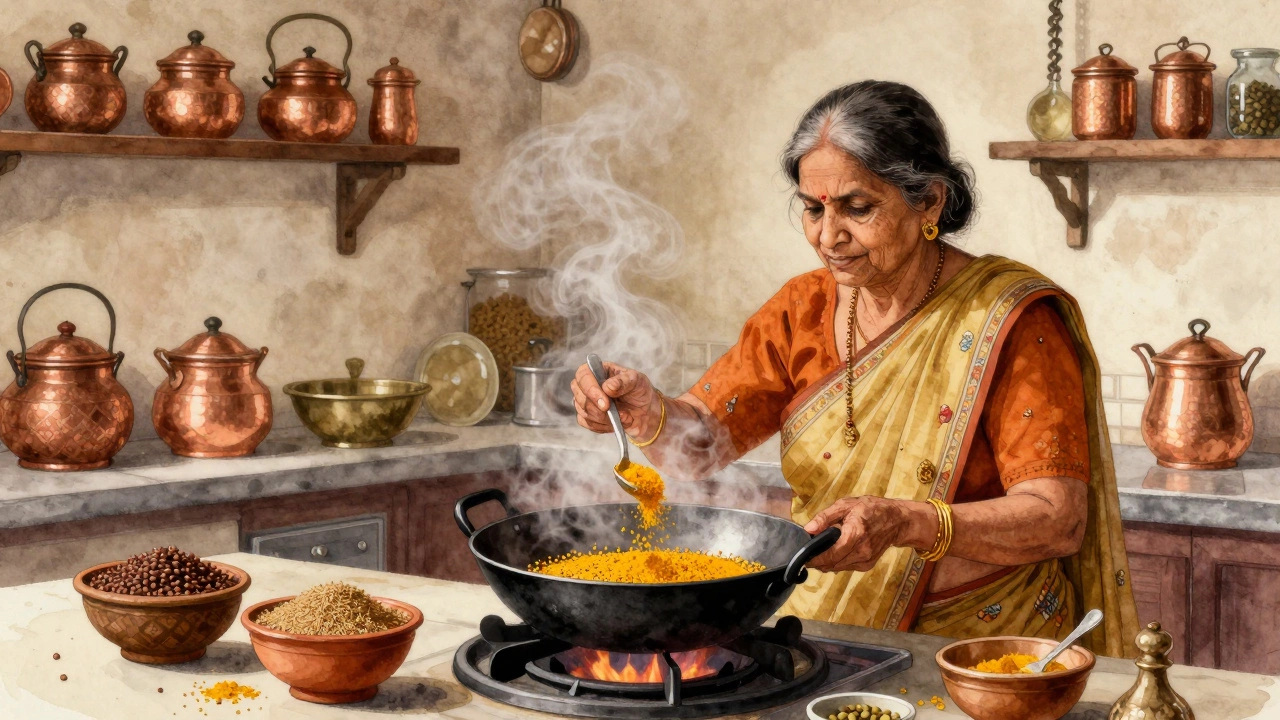
In Indian homes, most people don’t use pre-made curry powder. They toast whole spices fresh every time. A typical chicken curry starts with mustard seeds sizzling in oil, then cumin, dried red chilies, and asafoetida. Garlic and ginger go in next, then ground coriander and cumin. Turmeric comes after, often just a teaspoon. Then tomatoes, yogurt, or coconut milk follow.That’s the real process. Turmeric is added mid-way-not at the start. It’s not the foundation. It’s a seasoning, like salt. You need it, but you don’t taste it alone.
I’ve watched my neighbor in Sydney make chicken curry every Sunday. She keeps a small wooden box with eight different whole spices. She measures them by pinch, not spoon. She doesn’t even have a jar of curry powder. She says, “If you want to know what curry tastes like, stop buying the yellow powder. Start with cumin.”
How to Make Better Chicken Curry
If you want your chicken curry to taste real-not like a restaurant’s takeout-do this:- Buy whole spices, not pre-ground. They lose flavor fast.
- Toast cumin and coriander seeds in a dry pan until fragrant. Let them cool, then grind them.
- Use no more than half a teaspoon of turmeric per pound of chicken. More just makes it bitter.
- Add turmeric after the onions and garlic have softened. Don’t let it burn.
- Finish with a pinch of garam masala. That’s where the magic happens.
Try this: Make two batches of chicken curry. One with store-bought curry powder. One with fresh-ground cumin, coriander, and a little turmeric. Taste them side by side. You’ll taste the difference. The first one tastes like dust. The second one tastes like food.
Where Turmeric Actually Shines
Turmeric isn’t useless. It’s powerful-but in different ways. In Ayurvedic cooking, it’s used for its anti-inflammatory properties. In golden milk, it’s the star. In pickles, it preserves and colors. In rice dishes like pulao, it adds color without overpowering.But in curry? It’s the quiet helper. The one who shows up early, cleans the kitchen, and lets others take the applause.
Final Thought: It’s Not About the Color
Curry isn’t yellow because turmeric is the main spice. It’s yellow because turmeric is cheap, stable, and visually striking. The real flavor comes from the spices you don’t notice-until they’re gone.If you want to cook chicken curry that tastes like it came from a village kitchen in Kerala or a street stall in Delhi, forget the yellow powder. Start with cumin. Then coriander. Then, if you want, add turmeric. Just don’t call it the main spice. That’s not how curry works.
Is turmeric the main ingredient in curry powder?
No, turmeric is not the main ingredient in authentic curry powder. Most traditional blends use coriander and cumin as the base, making up 60-70% of the mix. Turmeric usually accounts for only 5-10%, added mostly for color and mild earthiness, not flavor dominance.
Why is curry powder yellow if turmeric isn’t the main spice?
Curry powder is yellow because turmeric is inexpensive, stable, and gives a bright color that stands out visually. Western manufacturers use it as a coloring agent to make the product look like what people expect. In reality, the flavor comes from coriander, cumin, and other spices that don’t change the color much.
Can I skip turmeric in chicken curry?
Yes, you can skip turmeric without ruining the dish. The core flavors of chicken curry come from cumin, coriander, garlic, ginger, and chilies. Without turmeric, your curry will be lighter in color but still flavorful. Many South Indian recipes use little to no turmeric at all.
What’s the difference between curry powder and garam masala?
Curry powder is a blend used during cooking, usually including coriander, cumin, turmeric, and chili. Garam masala is a warming spice mix added at the end-think cardamom, cinnamon, cloves, and black pepper. They’re not interchangeable. Curry powder builds flavor; garam masala finishes it.
Should I use fresh or ground spices for chicken curry?
Use whole spices and grind them fresh. Pre-ground spices lose their oils and flavor within months. Toasting cumin and coriander seeds yourself and grinding them just before cooking makes a huge difference. Even if you use store-bought powder, buy small jars and replace them every 3-4 months.