Indian Food Popularity Simulator
Discover what Indians really eat. Select a region to see how local favorites change the national ranking.
Popularity Index by Context
Walk into any busy restaurant in Mumbai or Delhi, and the air is thick with the scent of cumin and cardamom. But what actually tops the order list? While tourists might assume it's always spicy curries, the reality is a mix of comfort, convenience, and deep cultural roots. The most ordered food in India isn't just one dish; it’s a category of everyday staples that fuel millions of lives daily. From the humble plate of rice and lentils to the complex layers of a Hyderabadi Biryani, these foods define the Indian culinary landscape.
To understand what Indians really eat, we have to look beyond the fancy fine-dining menus. We need to look at the street stalls, the home kitchens, and the cloud kitchen dashboards. Data from major food delivery platforms like Zomato and Swiggy, combined with traditional consumption habits, reveals a clear hierarchy. It’s not about the most expensive item on the menu, but the one that appears on the most plates.
The Undisputed Champion: Rice and Dal
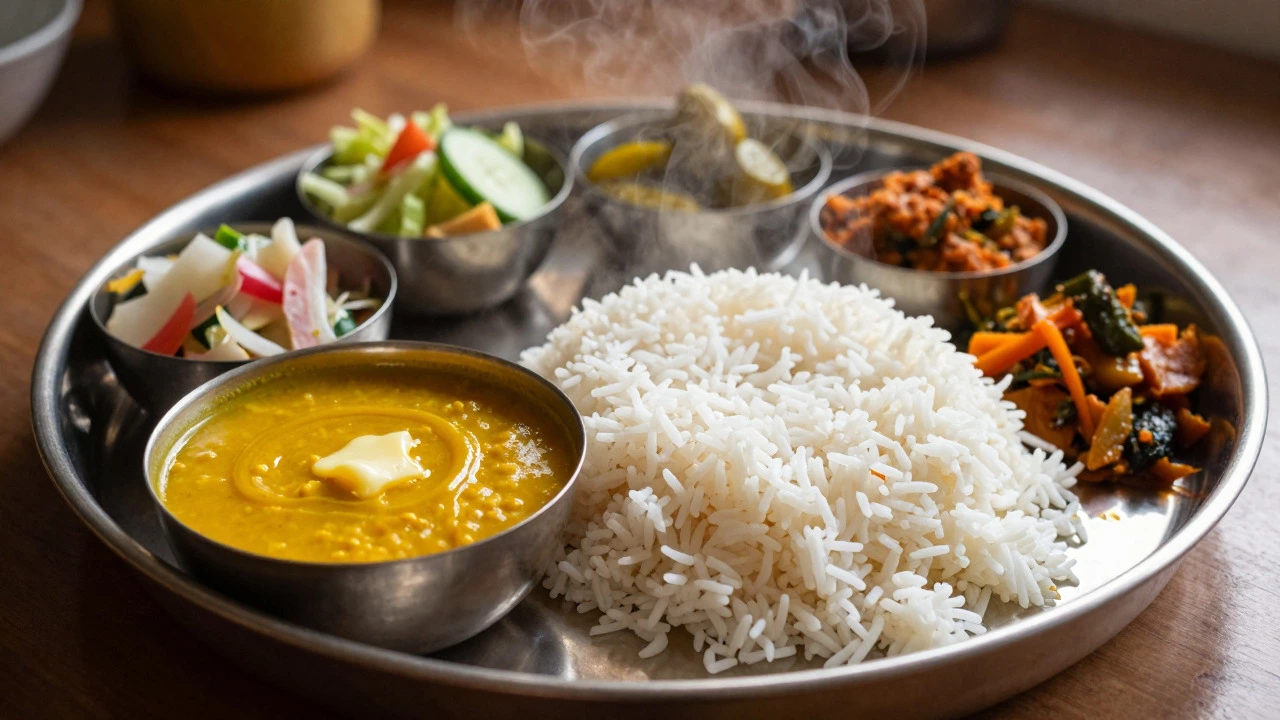
If you want to know the single most consumed meal in India, it’s not a curry. It’s the Thali. Specifically, the combination of steamed white rice and yellow lentil soup (Dal). This pairing is the backbone of the Indian diet. In a country where over 60% of the population eats vegetarian meals at least once a day, this combo is king. It’s cheap, fast to prepare, and nutritionally balanced. For millions of families across North and South India, dinner isn’t a single event; it’s a ritual centered around this simple yet satisfying duo.
Why does it win? Because it’s versatile. You can pair it with a side of vegetable sabzi, a pickle, or a small portion of paneer. It scales from a street-side tiffin center serving students for under $1 to a wedding feast with ten courses. The simplicity is its strength. When you are tired after work, you don’t want to cook a complex gravy. You want hot rice and warm dal. That’s why it remains the top choice for home cooking and casual dining alike.
The Street Food King: Samosas and Chai
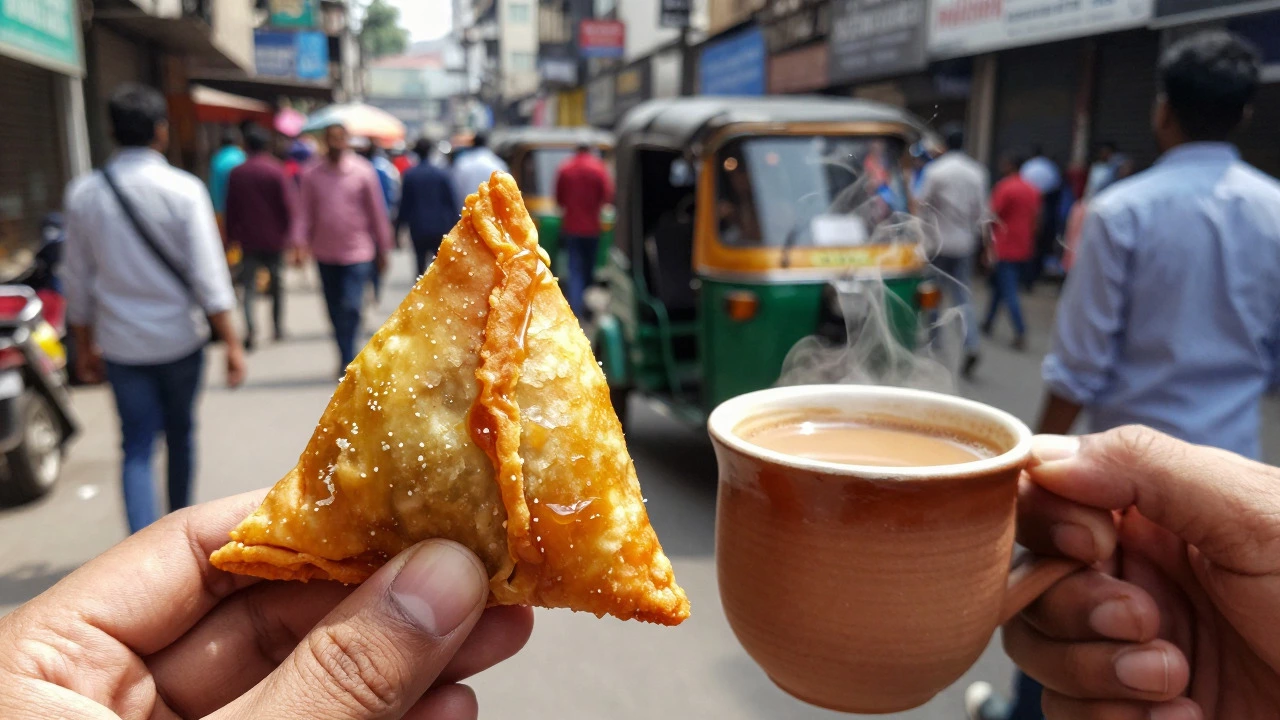
Move away from the family table and onto the sidewalk, and the game changes. Here, the most ordered items are snacks. The Samosa is arguably the most iconic street food snack in the entire subcontinent. A crispy, triangular pastry filled with spiced potatoes and peas, it is sold everywhere from railway stations to office parks. Pair it with a cup of masala chai, and you have the perfect mid-morning or afternoon break. These two items together generate more daily transactions than almost any other food pair in the country.
The appeal here is portability and price. A samosa costs less than a dollar in most cities, making it accessible to everyone. Unlike heavier meals, it requires no utensils. You eat it with your hands, standing up, often while walking. This convenience drives massive volume. If you count every single bite eaten on the go, samosas likely outnumber any other prepared food item in urban India.
Biryani: The Crowd-Pleaser of Cloud Kitchens
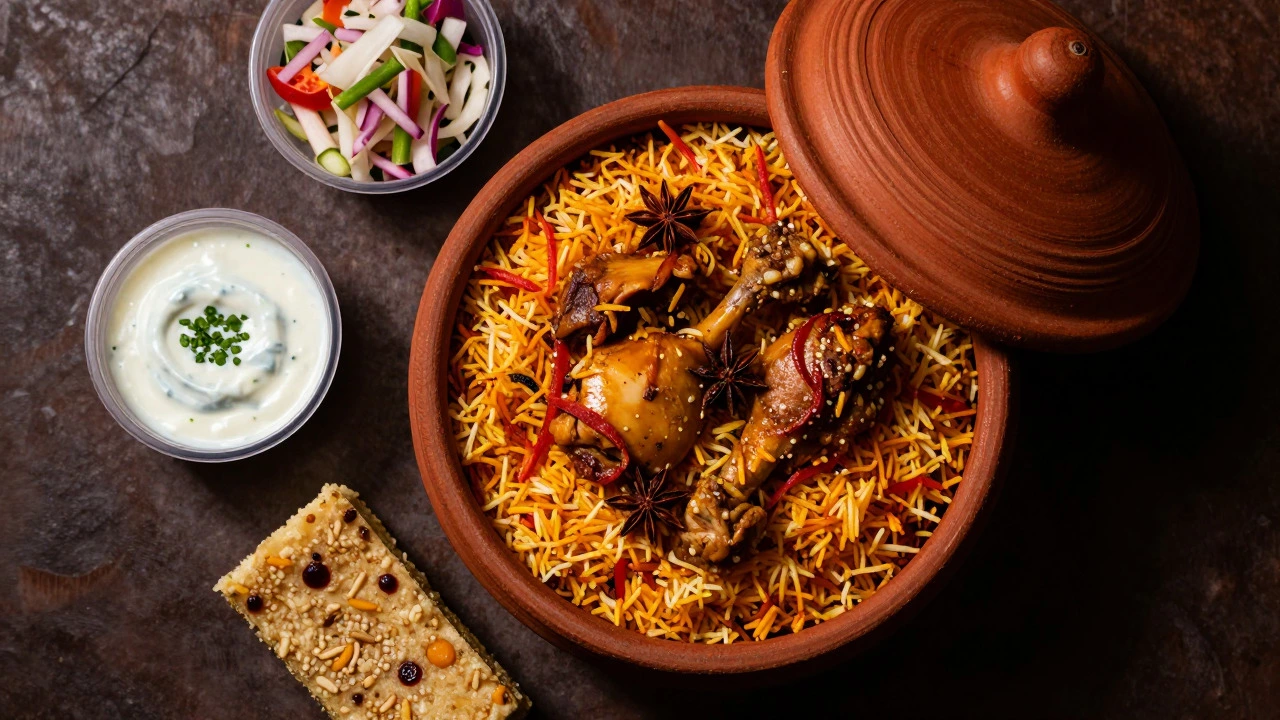
When we talk about food delivery apps, which dish gets ordered the most? Surprisingly, it’s often Biryani. Despite being a labor-intensive dish that takes hours to make traditionally, Biryani has become the default "comfort food" for people ordering online. Why? Because it feels special without requiring effort from the customer. Whether it’s the Hyderabadi Dum Biryani, the Lucknowi Awadhi style, or the simpler Kolkata version, Biryani hits the sweet spot of flavor, portion size, and perceived value.
Data from recent years shows that chicken Biryani consistently ranks in the top three most-ordered dishes on major delivery platforms. It’s a one-pot meal that satisfies hunger deeply. For young professionals living alone or couples who don’t want to cook, Biryani offers a complete experience. It comes with raita, salad, and sometimes even a dessert. It’s a full meal in a box. This convenience factor has pushed it past many traditional curries in terms of pure order volume on digital platforms.
Regional Variations: What Changes by State?
India is vast, and taste preferences shift dramatically as you cross state lines. In Bengal, for instance, the most ordered food might be Mishti Doi (sweet yogurt) for dessert, but for lunch, it’s Alur Dom (potato curry) with rice. In Tamil Nadu, Idli and Vada dominate breakfast and light dinners. These fermented rice and lentil cakes are soft, spongy, and served with coconut chutney and sambar. They are healthier than fried options and easier on the stomach, which keeps them popular year-round.
In Gujarat, the preference leans towards dry preparations. Khichdi, a comforting porridge made from rice and moong dal, is a staple for sick days and cold evenings. Meanwhile, in Maharashtra, Vada Pav holds a legendary status. This potato-filled doughnut wrapped in bread is the ultimate Mumbai street snack. It’s cheap, filling, and incredibly flavorful due to the spicy green chutney and dry red chili powder. Each region has its own champion, but when aggregated nationally, rice-based meals still hold the highest total volume.
What Drives These Orders? Price, Speed, and Comfort
It’s easy to look at the menu and think the most exotic dish wins. But human behavior tells a different story. Three factors drive the most ordered food in India: cost, speed, and emotional comfort.
- Cost: Most Indians prefer meals that cost under $3-$5 per person. This eliminates many protein-heavy curries and pushes demand toward lentils, vegetables, and eggs.
- Speed: In a fast-paced city life, waiting 45 minutes for a fresh curry is a luxury. Quick-prep items like Parathas, Sandwiches, and pre-cooked Biryani boxes win out.
- Comfort: Food is emotional. After a stressful week, people crave familiar tastes. Dal, Rice, and Biryani are the "blanket