Dal Consistency Calculator
Find the perfect water-to-lentil ratio and cooking time for your dal texture based on regional traditions.
Results will appear here after calculation
When you spoon dal onto your plate, should it cling to the spoon like a creamy stew, or should it flow like a light broth? This question comes up in every Indian kitchen - and for good reason. The texture of dal isn’t just about preference. It’s tied to region, tradition, and even the type of lentil you’re using. Get it wrong, and you end up with a bowl that feels off - too heavy, too watery, or worse, both.
There’s No One Right Way
Let’s clear this up first: dal doesn’t have one correct texture. What works in Punjab won’t work in Tamil Nadu, and what your grandmother made might be totally different from what you see on a Mumbai street stall. The truth? Dal can be thick or runny - and both are perfectly right, depending on context.
Take toor dal (split pigeon peas), the most common dal in Indian homes. In North India, it’s often cooked down until it’s thick, almost like a paste, with a spoonful that holds its shape. In South India, the same lentil becomes a light, soupy sambar, meant to be poured over rice. Neither is wrong. One is comfort food. The other is a meal component.
What Makes Dal Thick?
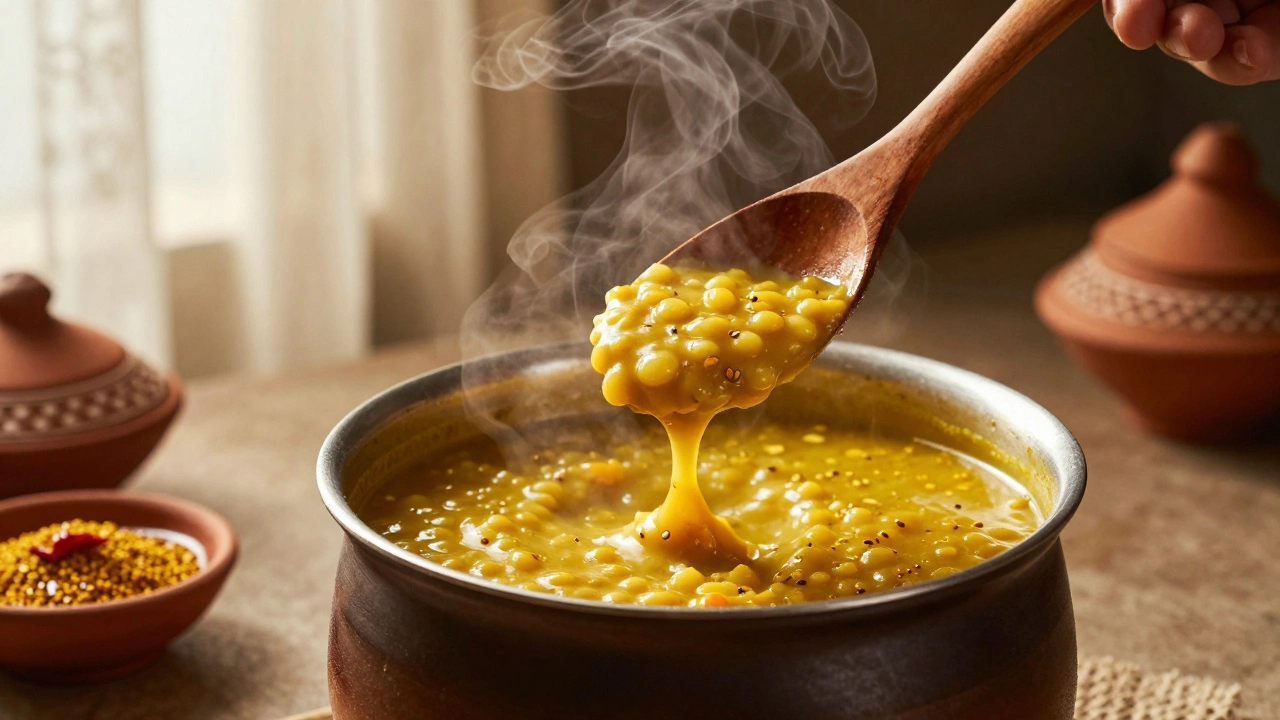
Thick dal happens when you cook lentils long enough to break down completely. The starches release, and the lentils dissolve into the liquid. Add a pinch of baking soda? That speeds it up. Mash it with a spoon at the end? That’s the final seal.
Here’s how it usually goes in a North Indian household:
- Soak toor dal for 30 minutes (optional but helps).
- Boil with turmeric and a pinch of salt.
- Cook on low heat for 45-60 minutes until the lentils fall apart.
- Mash gently with the back of a wooden spoon.
- Add tempered spices - cumin, mustard seeds, garlic, dried red chilies.
- Let it sit for 10 minutes. It thickens as it cools.
This version is called dal tadka - rich, creamy, and meant to be eaten with roti or rice. It’s not soup. It’s a dish that sticks to your spoon.
What Makes Dal Runny?
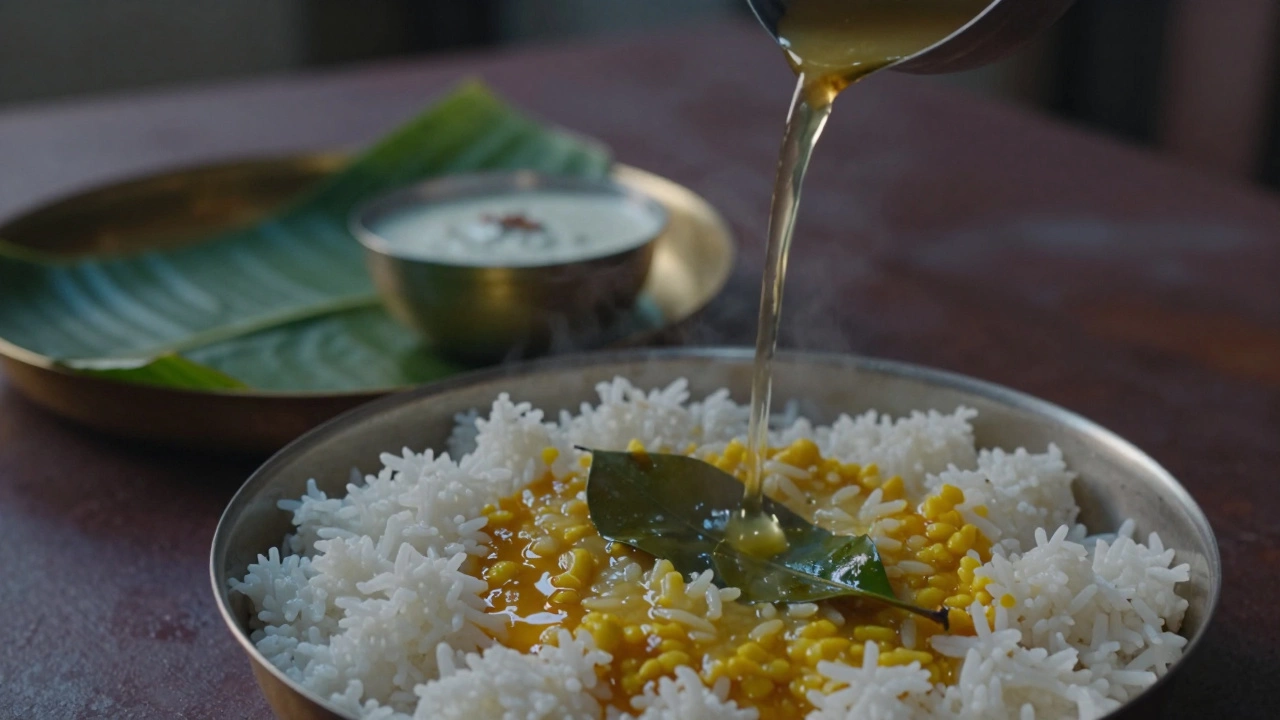
Runny dal isn’t undercooked. It’s intentional. In places like Kerala or Andhra Pradesh, dal is often served as a broth - thin, aromatic, and meant to soak into rice. It’s not a side. It’s the base.
For example, pesarattu upma from Andhra is often paired with a light moong dal broth. Or in Tamil households, paruppu rasam is made by simmering lentils with tamarind, black pepper, and curry leaves until it’s more broth than paste. It’s served hot, with a drizzle of ghee on top.
Here’s how to get that texture:
- Use 4-5 parts water to 1 part dal.
- Don’t mash. Let the lentils stay whole or slightly broken.
- Simmer gently - no more than 25-30 minutes.
- Finish with a tempering of mustard seeds, dried red chilies, and a splash of tamarind water.
The result? A clear, flavorful liquid that tastes like warmth in a bowl. It’s not thin because it’s bad. It’s thin because it’s designed to be sipped.
Why Texture Matters
Texture affects digestion, flavor, and even cultural identity. Thick dal coats your mouth with earthy, creamy richness. It’s satisfying after a long day. Runny dal lets the spices shine - the tang of tamarind, the heat of black pepper, the aroma of cumin. It’s lighter, easier on the stomach, and perfect for hot climates.
Studies from the Indian Institute of Food Processing Technology show that lentils cooked to a thick consistency have higher soluble fiber content - which helps with blood sugar control. But runny dal, when made with minimal oil and no cream, is easier to digest for people with sensitive stomachs.
So if you’re cooking for elders, a thick dal might be better. If you’re cooking for someone recovering from illness or in summer, go runny.
Common Mistakes
Most people mess up dal in three ways:
- Adding water too late - if the dal is thick and you try to thin it out at the end, the flavor doesn’t blend. Always adjust water during cooking.
- Overcooking and burning - thick dal needs patience, not high heat. Burnt dal smells bitter and ruins everything.
- Skipping the tempering - no matter the texture, a hot oil spice mix (tadka) is non-negotiable. It’s what turns plain lentils into dal.
And don’t use a blender. Seriously. Blending dal turns it gluey. Use a spoon. Let nature do the work.
How to Fix It
Got a dal that’s too thick? Add hot water, a splash at a time, and stir. Let it simmer 5 more minutes. The flavor will re-balance.
Got a dal that’s too runny? Simmer uncovered for 10-15 minutes. Stir occasionally. The steam will escape, and it’ll thicken naturally. Or add a spoonful of mashed ripe tomato - it thickens gently without changing flavor.
Pro tip: Taste after 10 minutes of resting. Dal changes texture as it sits. What seems thin at serving time might be perfect after 15 minutes.
Regional Examples
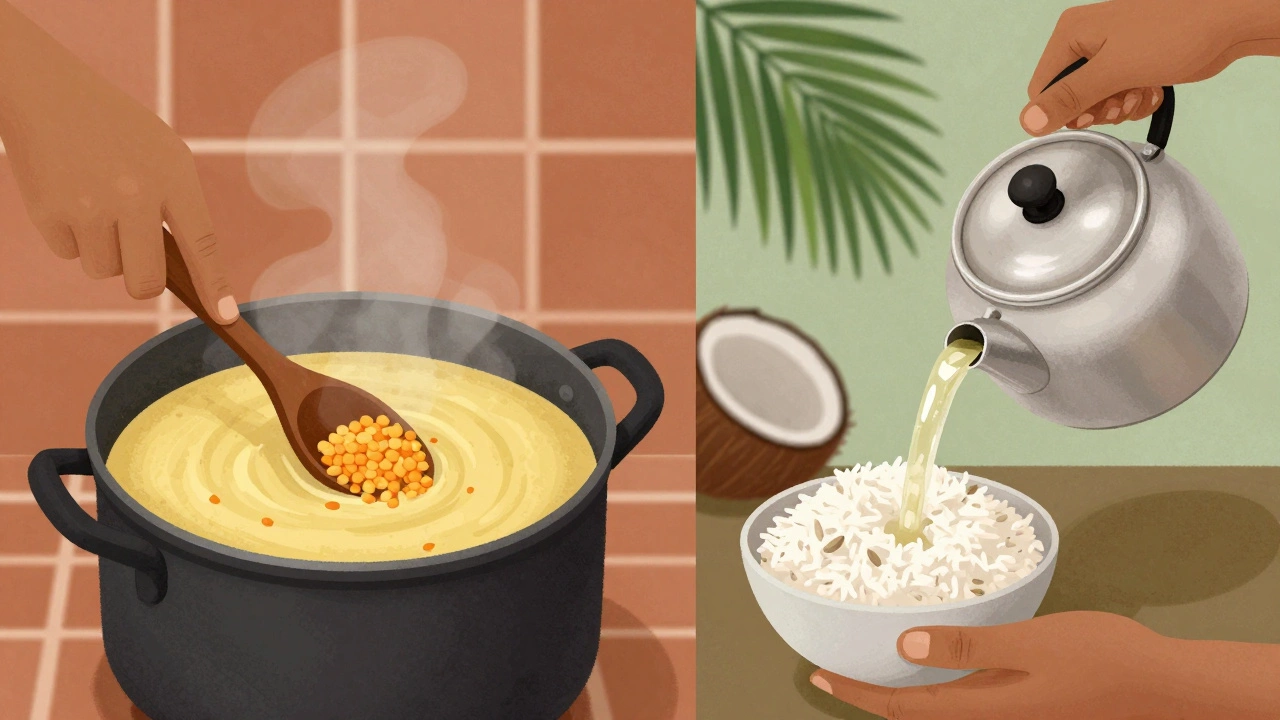
Here’s how texture varies across India:
| Region | Dal Type | Consistency | Typical Use |
|---|---|---|---|
| Punjab | Toor Dal | Thick, creamy | With roti, ghee on top |
| West Bengal | Masoor Dal | Medium-thick | With fish curry |
| Tamil Nadu | Moong Dal | Runny broth | With rice, as rasam |
| Uttar Pradesh | Chana Dal | Thick with chunks | As a side with puri |
| Kerala | Red Lentils | Light, soupy | With appam |
Notice how the same lentil - say, moong - becomes thick in Delhi and thin in Kerala? That’s not a mistake. That’s tradition.
What’s Best for You?
Ask yourself:
- Are you eating this with bread? Go thick.
- Are you eating this with rice? Go runny or medium.
- Is it winter? Thick dal feels like a hug.
- Is it summer? Runny dal feels like a breeze.
- Are you cooking for kids? Thinner is easier to eat.
- Are you cooking for elders? Thicker holds more nutrients.
There’s no universal rule. But there is a personal one: cook it the way it makes you feel at home.
Final Thought
Dal is not a science experiment. It’s a memory. The texture you grew up with - whether it clung to your spoon or danced through your rice - is the right texture. Don’t let anyone tell you otherwise. Experiment. Taste. Adjust. The best dal isn’t the one that matches a book. It’s the one that reminds you of someone you love.
Should dal be thick or runny?
There’s no single answer - it depends on regional tradition and how you’re eating it. Thick dal works well with bread, while runny dal is ideal with rice. Both are correct. The key is matching the texture to the meal and your personal preference.
Why is my dal too runny?
Your dal might be too runny because you used too much water, didn’t cook it long enough, or skipped the step of letting it simmer uncovered. To fix it, simmer it without the lid for 10-15 minutes. You can also add a spoonful of mashed tomato or a pinch of ground lentil flour to thicken it naturally.
Why is my dal too thick?
If your dal is too thick, it likely cooked too long without enough liquid or was mashed too aggressively. Add hot water a little at a time, stir well, and let it sit for 10 minutes. The flavors will blend again, and the texture will soften.
Can I use a blender to make dal thicker?
Avoid blending dal. It turns gummy and loses its natural texture. Instead, use the back of a wooden spoon to gently mash the lentils after cooking. This preserves flavor and gives a smooth, natural thickness without stickiness.
Which lentils make thick dal and which make runny dal?
Toor dal and chana dal break down easily and are ideal for thick dal. Moong dal and masoor dal hold their shape better and are better for runny broths. Red lentils (masoor) cook quickly and turn mushy - great for thick dal. Yellow split peas (chana) need longer cooking but give a hearty, chunky texture.