Dosa Batter Smoothness Calculator
Is Your Batter Smooth?
Calculate the probability of achieving the ideal smooth texture for your dosa batter based on key factors from the article.
Your batter has a 0% chance of achieving ideal smoothness
Ever poured your dosa batter onto the hot griddle only to see it crackle unevenly, stick in patches, or refuse to spread? You’re not alone. And more often than not, the culprit isn’t your pan or your heat-it’s the batter. Specifically, whether it’s too grainy. So, should dosa batter be grainy? The short answer: no. But it’s not as simple as just blending it longer. There’s a science to it, and skipping the right steps is why so many home cooks end up with lumpy, stubborn batter that won’t turn into crisp, golden dosas.
What Graininess in Dosa Batter Really Means
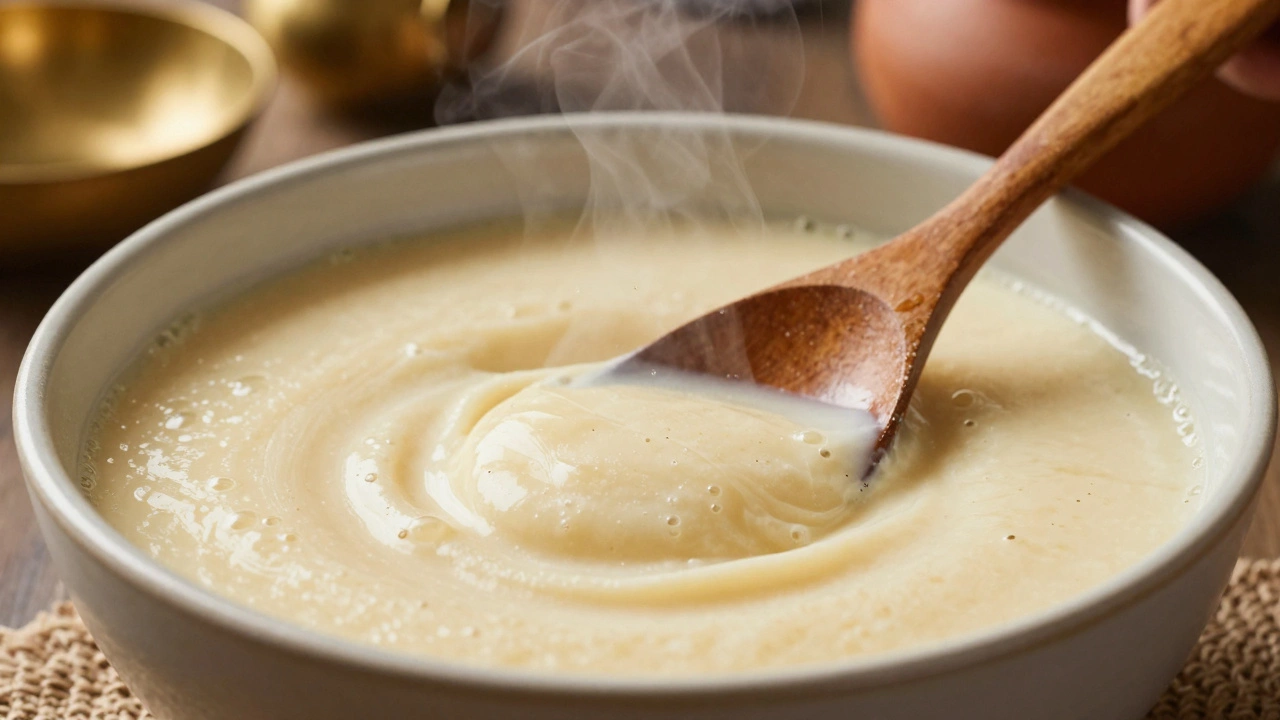
Graininess in dosa batter comes from unground rice or lentils. When you blend urad dal and rice together, the goal isn’t just to mix them-it’s to break down every particle until the batter feels smooth, almost like thick cream. If you can still feel tiny grit between your fingers when you rub a bit between them, that’s graininess. It’s not just unpleasant to the touch-it affects how the batter ferments, how it spreads, and how the dosa cooks.Think of it like pancake batter. You wouldn’t want lumps in your pancakes, right? Same logic applies here. Grainy batter doesn’t spread evenly. It sticks to the pan in thick clumps, burns in spots, and leaves you with a dosa that’s crispy in some places and doughy in others. Worse, it traps air unevenly during fermentation, which means your dosa won’t puff up properly. You’ll get flat, brittle sheets instead of light, slightly bubbled ones.
Why Graininess Happens (And How to Fix It)
Most people make one of three mistakes:- They don’t soak the rice and urad dal long enough
- They use a weak blender or food processor
- They blend too quickly or stop too soon
Soaking isn’t just a suggestion-it’s non-negotiable. Rice needs at least 6 hours, and urad dal needs 8-10. Why? Because dry rice is hard. Even after blending, hard grains won’t break down fully. Soaked rice softens, absorbs water, and turns into a paste. Urad dal swells and becomes gelatinous, which helps bind everything together.
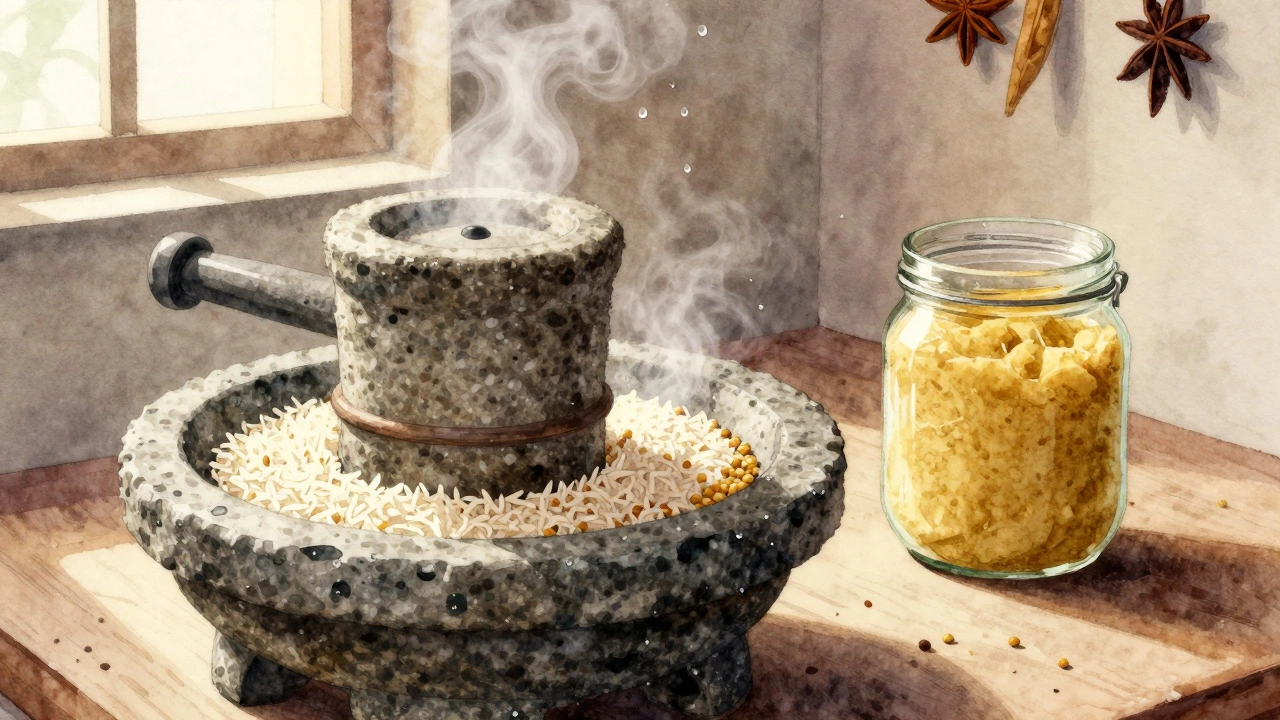
Blending matters too. A cheap blender might spin fast but doesn’t grind well. Indian stone grinders (like the ones used in traditional homes) work slowly and generate less heat, which preserves the batter’s natural fermentation enzymes. If you’re using a high-speed blender, go slow. Blend for 10-15 minutes total, stopping every 3 minutes to scrape down the sides. Add water gradually-not all at once. You want the batter thick enough to hold its shape when you lift the spoon, but still pourable.
Pro tip: After blending, let the batter rest for 15 minutes before fermenting. This lets any remaining starches absorb water and soften further. Then, give it one quick stir with a spatula to smooth out any lingering grit.
The Fermentation Factor
Fermentation turns grainy batter into smooth, airy batter. But if your batter starts off grainy, fermentation won’t magically fix it. Yeast and lactic acid bacteria need a uniform surface to feed on. If there are hard particles, they create uneven pockets. The batter might rise on top but stay dense underneath.Look for signs of good fermentation: bubbles all through the batter, a slight sour smell, and a 50-75% increase in volume. If your batter rises but still feels gritty, it wasn’t blended well enough. No amount of time in a warm kitchen will turn coarse rice grains into silky batter.
Some people swear by adding a pinch of fenugreek seeds during soaking. It helps with fermentation and gives dosas a subtle flavor, but it won’t fix bad blending. It’s a helper, not a fix.
How to Test Your Batter Before Cooking
Don’t just guess whether your batter is ready. Test it.- Take a small spoonful and drop it into a glass of water. If it floats, your batter is well-fermented and aerated.
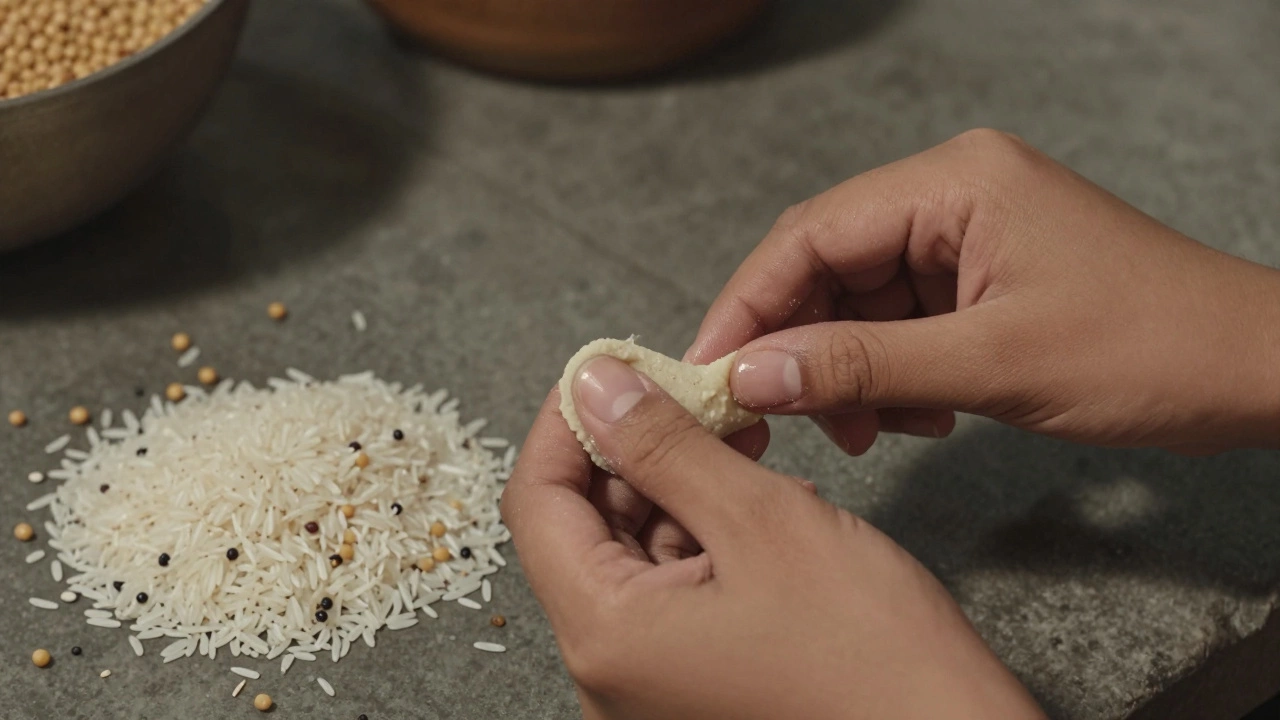
- Rub a tiny amount between your thumb and forefinger. If it feels smooth, you’re good. If it’s gritty, blend again for 2-3 minutes and let it rest another 15 minutes.
- Do a test dosa. Pour a small amount on the pan. If it spreads easily and forms a thin, even layer without cracking, your texture is right.
If your test dosa cracks or sticks, your batter still has too much grain. Don’t waste your whole batch. Go back, blend again, and try once more.
Common Myths About Dosa Batter
There are a lot of myths floating around. Here’s what’s real:
- Myth: The batter should be lumpy for crispier dosas. Truth: Lumpy batter makes uneven, brittle dosas. Smooth batter gives you crisp edges and soft centers.
- Myth: Leftover batter gets smoother over time. Truth: It might ferment more, but the grit won’t disappear. You can’t blend after fermentation.
- Myth: Adding more water makes it smoother. Truth: Too much water makes dosas soggy. Water helps blending, but it doesn’t replace proper grinding.
Real texture comes from grinding, not guessing.
What to Do If Your Batter Is Already Grainy
If you’ve already mixed, soaked, and fermented-and now you’re stuck with a grainy batter-here’s what you can try:- Strain it through a fine-mesh sieve. This won’t fix everything, but it’ll remove the largest particles.
- Use it for uttapam instead of dosa. Uttapam is thicker and forgiving. The graininess won’t matter as much.
- Blend it again with a splash of cold water. Don’t overdo it-just enough to help the blades catch the grit.
But honestly? The best fix is prevention. Start over with properly soaked ingredients and a good blender. One good batch will teach you more than five bad ones.
Perfect Dosa Batter Formula (Tested in Sydney Kitchens)
Here’s a reliable ratio that works whether you’re in Chennai or Sydney:
- 3 cups parboiled rice (idli rice, not long-grain)
- 1 cup whole urad dal (skin-on)
- 1/2 tsp fenugreek seeds (optional, but recommended)
- 1/2 tsp salt (add after fermentation)
- Water as needed for blending
Soak rice and urad dal separately for 8-10 hours. Drain. Blend urad dal first with 1/2 cup water until fluffy and white-this takes 10-12 minutes. Then add rice and blend slowly with another 1/2 cup water until smooth. Let rest 15 minutes. Add salt, then ferment overnight in a warm spot (around 28-30°C). In Sydney’s cooler months, place the bowl near a heater or in an oven with the light on.
That’s it. No shortcuts. No magic. Just patience and precision.
Final Thought: Texture Is Everything
Dosa isn’t just about flavor-it’s about texture. The perfect dosa should be crisp at the edges, tender in the middle, and light enough to fold without breaking. That only happens when the batter is smooth. Graininess isn’t a sign of authenticity-it’s a sign of incomplete prep.Next time you make dosa batter, take the extra 20 minutes to blend it right. Your future self-and your guests-will thank you.
Is it normal for dosa batter to be slightly grainy after soaking?
No, soaking alone won’t make the batter smooth. Soaking softens the grains so they can be ground properly, but if the batter still feels gritty after blending, it wasn’t processed long enough. Always test the texture by rubbing a bit between your fingers-smooth means ready, gritty means blend longer.
Can I use a food processor instead of a blender for dosa batter?
You can, but it’s harder. Food processors tend to chop rather than grind, which leaves more grit. If you use one, blend in very small batches, add water slowly, and run it for at least 15 minutes total. Scrape the sides every few minutes. A high-speed blender gives better, more consistent results.
Why does my dosa stick even when the batter is smooth?
Sticking usually means the pan isn’t hot enough or you didn’t oil it properly. A well-heated cast iron or non-stick griddle should be hot enough that a drop of water sizzles and dances. Use a paper towel to spread a thin layer of oil before pouring the batter. Don’t pour batter on a cold pan-it’ll stick no matter how smooth the batter is.
Can I refrigerate dosa batter if it’s too grainy?
No. Refrigerating won’t fix graininess-it’ll just slow fermentation. If your batter is gritty, you need to blend it again before fermenting. Once it’s fermented, you can’t grind it further. The texture is locked in after the first blend.
Does the type of rice matter for smooth dosa batter?
Yes. Use idli rice or parboiled rice-it’s specifically processed to soften easily when soaked. Long-grain white rice or basmati won’t break down as well and will leave your batter grainy. If you can’t find idli rice, short-grain brown rice soaked longer (12+ hours) can work, but results vary.