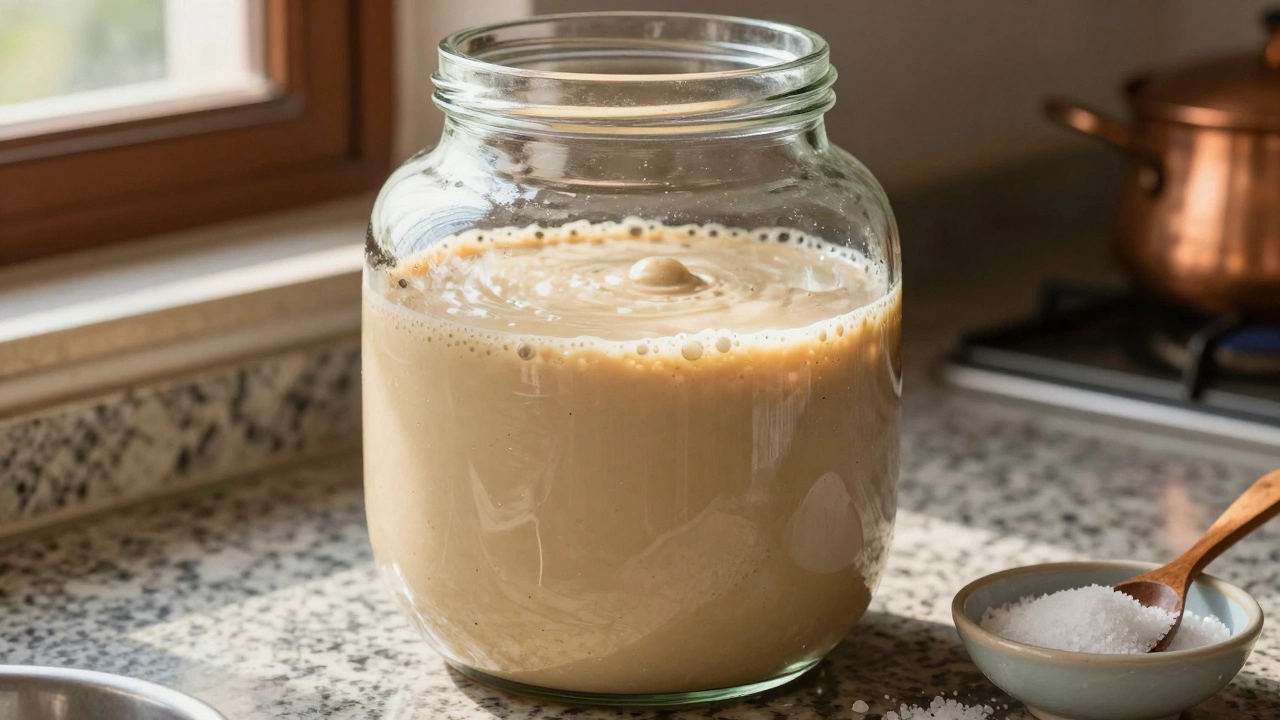
Dosa Batter Salt Calculator
Enter Your Ingredients
Recommended Salt
Enter your ingredients to see the recommendation
Batter Metrics
There is a persistent myth in the world of South Indian cooking that adding salt to dosa batter before fermentation will kill the yeast and prevent rising. If you have ever stood in your kitchen with a bowl of rice and urad dal paste, hesitating over the salt shaker, you are not alone. Many home cooks believe that sodium inhibits the wild lactic acid bacteria responsible for making the batter fluffy. But does the science actually support this fear?
The short answer is no. Adding salt to your batter before fermenting it will not stop it from rising. In fact, many professional chefs and traditional households in Karnataka and Tamil Nadu add salt right at the mixing stage. It simplifies the process, ensures even seasoning, and can actually help control the fermentation rate slightly by creating a more stable environment for the microbes.
The Science Behind Salt and Fermentation
To understand why salt doesn't ruin your dosa, we need to look at what happens during fermentation. When you soak rice and urad dal, you are preparing them for enzymatic breakdown. Once ground into a smooth paste, wild yeasts and lactic acid bacteria present on the grains and in your kitchen air begin to feed on the sugars. This process produces carbon dioxide gas (which creates bubbles) and organic acids (which give dosa its tangy flavor).
Salt is indeed antimicrobial in high concentrations. However, the amount of salt used in dosa batter-typically about 1% to 1.5% of the total weight-is far too low to sterilize the mixture or kill the beneficial bacteria. Instead, salt acts as a mild regulator. It can slow down overly aggressive fermentation in hot weather, preventing the batter from becoming too sour too quickly. This is particularly useful if you live in a warm climate like Sydney or Chennai, where summer temperatures can accelerate fermentation overnight.
| Factor | Salt Added Before Fermentation | Salt Added After Fermentation |
|---|---|---|
| Flavor Distribution | Even throughout the batter | Can be uneven if not mixed thoroughly |
| Fermentation Control | Slightly slower, more controlled rise | Rapid rise, potential for over-souring |
| Convenience | Mix once, cook immediately | Requires second mixing step |
| Risk of Over-Salting | Harder to adjust later | Easy to taste and adjust |
Why Some Cooks Still Wait Until the End
If salt is safe, why do so many recipes insist on adding it only after fermentation? The primary reason is control. By waiting until the batter has risen, you can assess the texture and consistency first. Sometimes, fermented batter needs a splash of water to reach the perfect pouring consistency. If you have already added salt, adding water dilutes the seasoning, requiring you to add more salt and potentially throwing off the balance.
Additionally, some cooks prefer to taste the batter before salting. Fermentation levels can vary wildly depending on the temperature of your kitchen and the age of your starter culture. A batter that ferments for 12 hours in winter might be milder than one that ferments for 6 hours in summer. Adding salt at the end allows you to season according to the final acidity level. Tangier batter often requires slightly less salt to balance the flavor profile, while milder batter may need a pinch more.
How to Add Salt Correctly
If you decide to add salt before fermentation, precision is key. Unlike baking, where grams matter, dosa batter is forgiving but sensitive to ratios. Here is how to get it right:
- Weigh your ingredients: For every 500 grams of combined rice and urad dal, use approximately 5 to 7 grams of fine sea salt. This is roughly 1 teaspoon per cup of dry grain mixture.
- Dissolve completely: Ensure the salt is fully dissolved in the water used for grinding. Undissolved granules can create pockets of high concentration that might locally inhibit bacterial activity, though this is rare.
- Monitor the rise: Check your batter after 8-10 hours. If it looks bubbly and has expanded, it is ready. If it seems dense, let it sit longer. Salt will not stop it from rising, but it might take an extra hour compared to unsalted batter in very warm conditions.
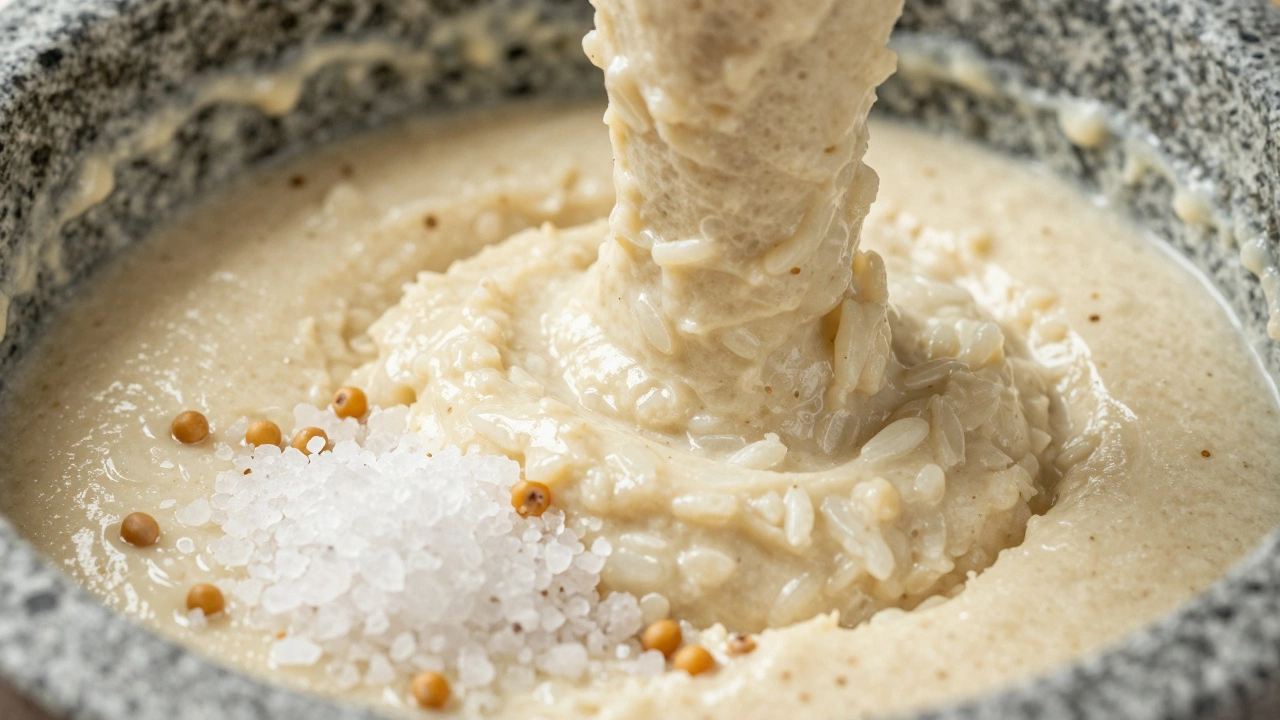
The Impact on Texture and Crispiness
One subtle benefit of pre-salting is the effect on gluten development in the urad dal. While urad dal is technically a legume, it contains proteins that behave similarly to gluten when hydrated and agitated. Salt strengthens these protein networks. A stronger network can trap gas bubbles more effectively during fermentation, leading to a slightly lighter, airier dosa. This translates to better crispiness when cooked on a hot tawa (griddle). The structure holds up better against the heat, allowing the edges to curl and brown without collapsing.
Furthermore, salt enhances the Maillard reaction-the chemical process that gives browned food its distinct flavor. When you spread the batter on the hot pan, the salt helps draw moisture to the surface, facilitating faster evaporation and crisping. This means you might achieve that coveted golden-brown crunch with less oil.
Common Mistakes to Avoid
Even with the correct timing, several factors can ruin your dosa batter. Understanding these pitfalls will help you troubleshoot regardless of when you add salt.
- Using iodized salt: Iodine can sometimes interfere with fermentation enzymes, leading to a duller rise or off-flavors. Opt for non-iodized sea salt or rock salt (sendha namak) for the best results.
- Over-grinding: If you grind the batter too long, it generates heat. Excessive heat can denature the proteins and kill the natural bacteria before fermentation even begins. Grind in short bursts and keep the stone cool with water.
- Incorrect Water Ratio: Too much water makes the batter runny and weak; too little makes it thick and heavy. Aim for a consistency similar to pancake batter-smooth and pourable, but not watery.
- Cold Fermentation: If your kitchen is below 20°C (68°F), fermentation will be sluggish. Place the batter in a warm oven with the light on, or near a heater. Salt cannot compensate for cold temperatures.

Alternative Methods for Perfect Dosas
If you are still hesitant about adding salt early, consider these alternatives that ensure success without compromising flavor or texture:
- The Instant Yeast Method: For quick dosas, you can skip long fermentation by adding a small amount of active dry yeast along with sugar. In this case, always add salt after mixing to avoid any potential inhibition of the commercial yeast.
- Enriched Batter: Adding roasted chana dal or poha (flattened rice) to your batter improves crispiness and fluffiness. These ingredients absorb moisture and provide additional starches for fermentation, reducing reliance on precise salt timing.
- Double Mixing: Mix the batter lightly after fermentation to release large gas bubbles. Then add salt and mix again gently. This ensures even distribution without deflating the batter entirely.
Conclusion: Trust Your Taste
Ultimately, whether you add salt before or after fermentation is a matter of preference and workflow. There is no scientific evidence that pre-salting ruins your dosa. In fact, it can lead to more consistent results and better texture. Experiment with both methods. Start with a small batch, add salt before fermenting, and compare the result to your usual method. You may find that the convenience and enhanced crispiness make pre-salting your new standard.
Remember, the goal of dosa making is not just technical perfection but enjoyment. The aroma of sizzling batter on a hot griddle, the sound of the crackle, and the taste of a perfectly seasoned, crispy crepe are what matter most. Don't let myths hold you back from exploring the nuances of this beloved dish.
Does salt kill yeast in dosa batter?
No, the amount of salt used in dosa batter (1-1.5%) is not enough to kill the wild yeast and bacteria. It may slightly slow down fermentation in hot weather, but it will not prevent rising.
When is the best time to add salt to dosa batter?
You can add salt either before or after fermentation. Adding it before ensures even flavor distribution and can improve texture. Adding it after allows you to adjust seasoning based on the final consistency and acidity.
What type of salt should I use for dosa batter?
Non-iodized sea salt or rock salt is preferred. Iodized salt can sometimes interfere with fermentation enzymes and affect the flavor profile negatively.
How much salt should I add to 1 kg of dosa batter?
For 1 kg of dry rice and urad dal mixture, use approximately 10-15 grams of salt. Adjust to taste if adding after fermentation.
Why is my dosa batter not rising?
Common reasons include cold temperatures, old grains, excessive grinding heat, or using chlorinated water. Ensure your kitchen is warm (above 20°C) and use filtered water for grinding.