Curry Cooking Knowledge Quiz
How Much Do You Know About Curry Chicken?
Test your knowledge of proper chicken preparation for authentic curry flavor. Take this quick quiz to see if you understand the secrets behind restaurant-quality curries.
Your Results
Score: 0/5
Ever thrown raw chicken straight into your curry pot, hoping it’ll cook through while the spices simmer? You’re not alone. But here’s the truth: cooking chicken before adding it to curry isn’t just a suggestion-it’s what separates a bland, rubbery dish from one that’s rich, tender, and deeply flavorful.
Why raw chicken in curry often fails
Adding raw chicken directly to a curry sauce sounds efficient. You toss it in, stir, wait, and call it done. But here’s what actually happens: the chicken releases water as it heats up, diluting your carefully balanced spice paste. The result? A watery sauce that never thickens properly, and chicken that’s either undercooked in the center or overcooked on the outside from sitting too long in liquid.Indian home cooks and professional chefs alike have known this for generations. The trick isn’t just about safety-it’s about control. When you sear or brown chicken first, you lock in moisture and build layers of flavor through the Maillard reaction. That’s the fancy term for the browning process that turns simple proteins into something complex and aromatic.
Think about it: when you fry onions until golden, you’re not just softening them-you’re creating flavor. Same with chicken. Skip browning, and you lose half the soul of your curry.
How to properly brown chicken for curry
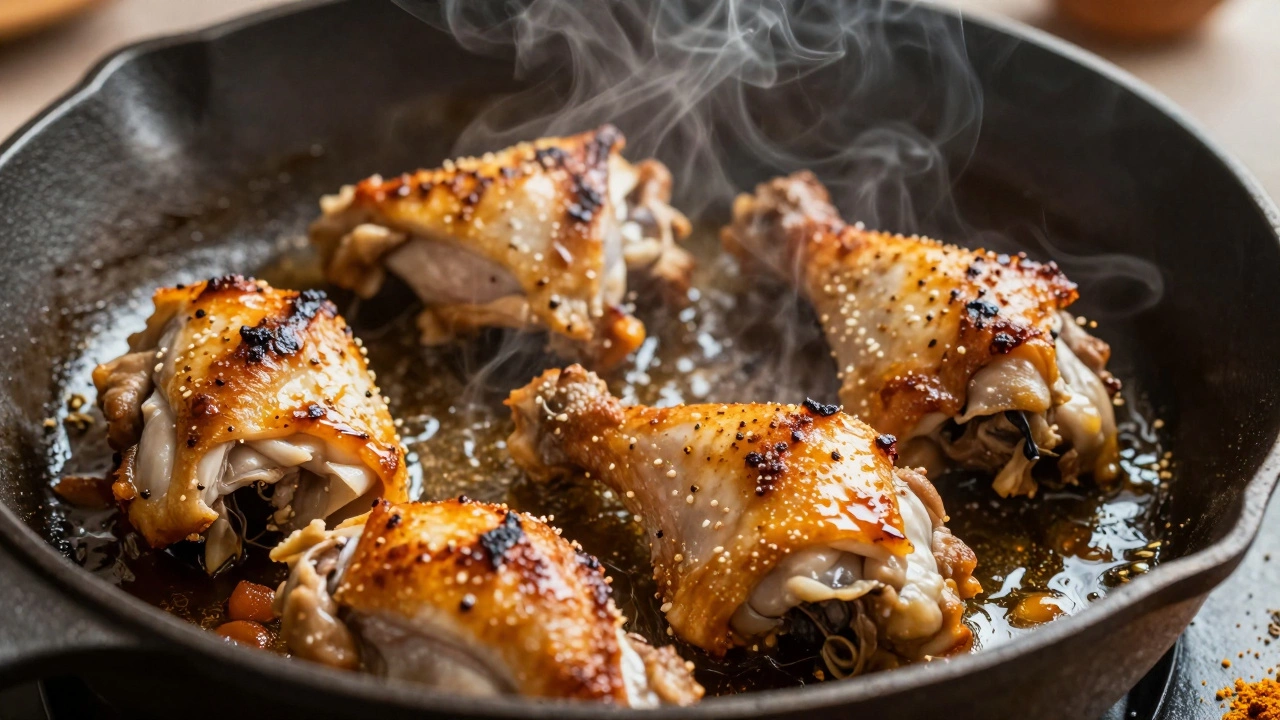
You don’t need fancy equipment. A heavy-bottomed pan or Dutch oven works best. Here’s how to do it right:- Pat the chicken pieces dry with paper towels. Wet chicken won’t brown-it steams instead.
- Cut chicken into even-sized pieces. Uniform size means even cooking.
- Heat 1-2 tablespoons of oil over medium-high heat until it shimmers.
- Add chicken in a single layer. Don’t crowd the pan. If it’s too tight, cook in batches.
- Let it sit undisturbed for 3-4 minutes until deeply golden on one side.
- Flip and brown the other side. You want a crust, not just pale spots.
- Remove chicken and set aside. Now add your spices to the same pan.
The browned bits stuck to the bottom of the pan? That’s gold. Deglaze it with a splash of water or tomato puree when you add your spice paste. Those caramelized bits dissolve into the sauce and become the backbone of your flavor.
What happens if you skip browning?
You might still end up with edible chicken curry-but it’ll lack depth. The meat will taste mostly of steam and sauce, not spice. It’ll also be tougher. Without that initial sear, the proteins don’t contract and lock in juice the same way. You’ll notice the texture is stringier, drier, and less satisfying.And here’s a hidden issue: raw chicken takes longer to cook through than you think. If you add it at the start of your curry, you risk overcooking the onions, tomatoes, and spices while waiting for the chicken to reach 74°C (165°F). That’s why many recipes call for adding chicken halfway through. Browning first cuts that cooking time in half.
Regional differences in practice
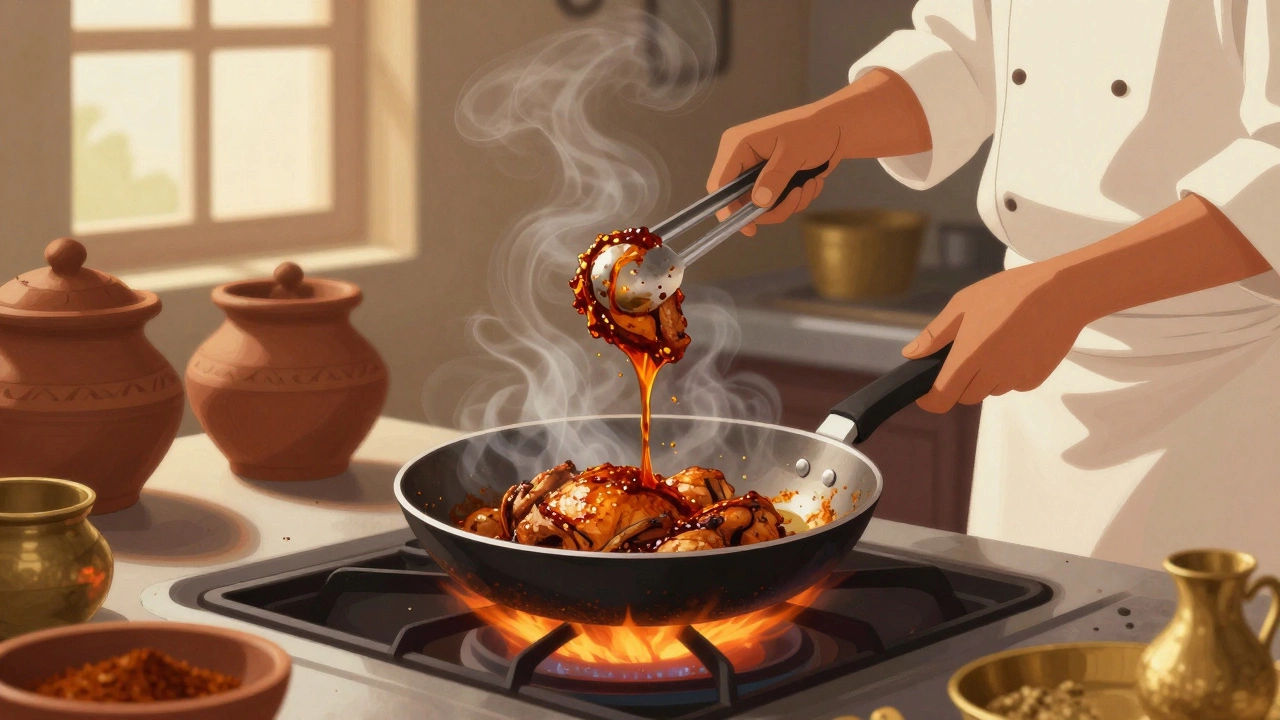
In North India, especially in Punjabi-style curries like Butter Chicken or Chicken Tikka Masala, chicken is always marinated and grilled or fried before being added to sauce. The char from the tandoor or pan adds smokiness that’s impossible to replicate otherwise.In South India, you’ll find recipes where chicken is lightly fried in coconut oil before being simmered in tamarind-based gravies. Even in Kerala or Tamil Nadu, where curries are often lighter, the chicken gets a quick sear first.
Even in British-Indian restaurants, where people assume everything is boiled together, the best ones still brown the chicken separately. That’s why their curries taste richer than the ones you get at chain restaurants.
Alternative methods: pressure cooker and slow cooker
If you’re using a pressure cooker, you can skip browning if you’re short on time-but you’ll lose flavor. The pressure will cook the chicken fast, but without browning, the sauce will taste flat. A better compromise: brown the chicken quickly in the pot before adding liquid and sealing the lid.Slow cookers are trickier. Raw chicken in a slow cooker for 6-8 hours might be safe, but it turns to mush. The texture becomes unappetizing. If you’re using a slow cooker, brown the chicken first, then transfer it in. You’ll get tender meat with structure, not a soggy mess.
Marinating before browning: does it help?
Yes-but not the way you think. Marinating chicken in yogurt, lemon, or spices doesn’t tenderize it deeply. It mainly adds surface flavor. The real magic happens when you brown that marinated chicken. The spices caramelize on the surface, sticking to the meat and creating a crust that holds flavor.Don’t rinse off the marinade before browning. That’s a common mistake. The yogurt and spices help with browning. Just pat the chicken dry so it doesn’t steam.
How much time does browning add?
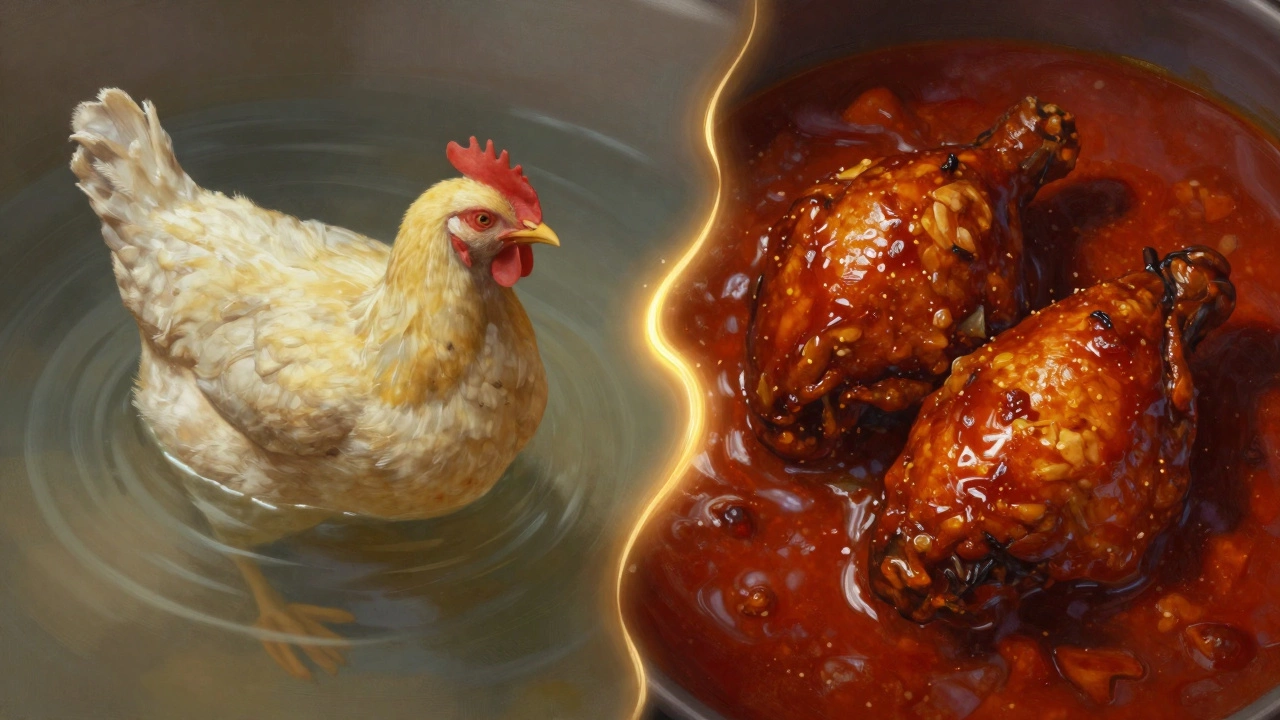
About 10-12 minutes total. That’s less than the time it takes to chop an onion. The payoff? A curry that tastes like it simmered for hours, even if it only cooked for 20 minutes after adding the chicken.Think of it like this: browning is the foundation. Everything else-spices, tomatoes, cream-is built on top. Skip the foundation, and your whole dish feels shaky.
Pro tip: use the same pan for everything
Don’t wash the pan after browning the chicken. Leave those browned bits in there. When you add your ginger-garlic paste and spices, they’ll sizzle in the same oil and absorb those caramelized flavors. It’s the secret behind restaurant-style depth. That’s why your home curry never tastes like the one from your favorite Indian spot-they’re using the same pan for every step.Final verdict: yes, brown your chicken
There’s no shortcut that gives you the same result. You can skip browning if you’re in a rush, but you’ll know the difference. The chicken will be safe to eat-but it won’t be delicious.For the best chicken curry you’ve ever made, treat the chicken like a star ingredient. Give it a proper sear. Let it develop flavor. Then let it soak up the sauce. That’s how you get tender, juicy pieces with a deep, spicy crust that melts into the gravy.
It’s not about being fancy. It’s about being intentional.
Can you add raw chicken to curry without browning it?
Yes, you can add raw chicken to curry without browning it, and it will cook through safely if simmered long enough. But the result will be less flavorful, paler in color, and often tougher. The chicken won’t develop a crust, and the sauce may become watery as the meat releases moisture. Browning adds depth and texture that raw cooking can’t replicate.
How long should you brown chicken before adding to curry?
Brown chicken for about 3-4 minutes per side over medium-high heat, until deeply golden and no longer pink on the surface. You don’t need to cook it through at this stage-just get a good crust. The chicken will finish cooking in the curry sauce. Total browning time is usually 8-12 minutes depending on the size of the pieces.
Does browning chicken make it more tender?
Browning doesn’t make chicken more tender by itself-it actually firms up the surface. But it helps retain moisture inside the meat by sealing in juices. When the chicken later simmers in the curry sauce, it absorbs flavor and stays juicier than if it had been boiled from the start. The real tenderness comes from slow cooking after browning, not the browning alone.
Should you marinate chicken before browning for curry?
Yes, marinating chicken before browning adds extra flavor to the surface. Yogurt, lemon juice, garlic, ginger, and spices in the marinade help the chicken absorb taste and improve browning. Don’t rinse the marinade off-pat the chicken dry instead. The sugars and acids in the marinade help create a better crust when seared.
Can you brown chicken in the same pan as your curry spices?
Yes, and you should. After browning the chicken, remove it and leave the browned bits in the pan. When you add your spice paste (ginger-garlic, cumin, coriander, etc.), it will sizzle in the leftover oil and caramelized bits. This step, called deglazing, builds a deep flavor base that carries through the entire curry. Washing the pan loses this critical layer of taste.