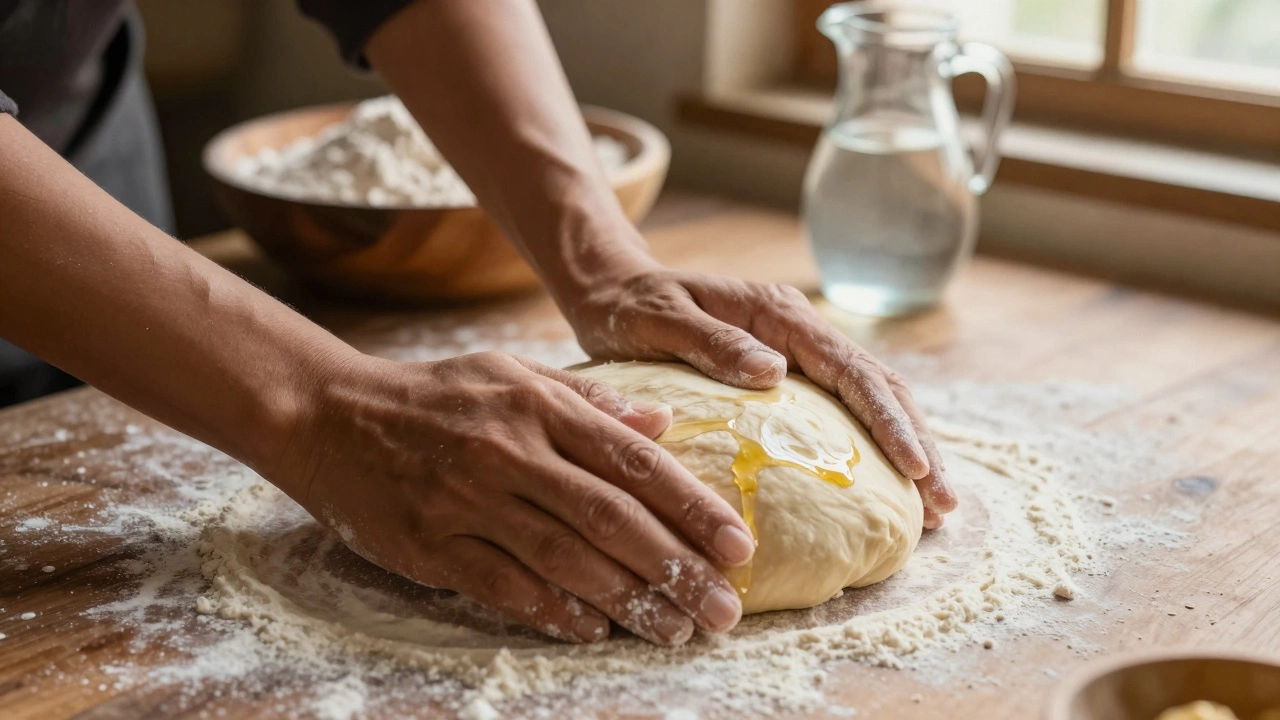
1. Dough Base & Hydration
2. Softness Boosters
Select an optional additive for the dough:
Detailed scientific explanation will appear here.
Key Takeaways for Soft Roti
- Overcooking is the primary cause of hardness; too much heat evaporates the internal moisture.
- The secret to softness lies in the kneading process and the hydration of the dough.
- Storing roti in an airtight container or a cloth-lined casserole prevents them from drying out.
- Using a pinch of oil or milk in the dough can keep them soft for hours.
The Science of Why Roti Hardens
To fix the problem, we need to understand what is happening inside the dough. When you make roti, you are working with Wheat Flour, also known as Atta, which is a stone-ground whole wheat flour containing bran and germ. This flour contains proteins that, when mixed with water, create Gluten. Gluten is a network of proteins that gives the dough its elasticity and structure.
When you cook a roti, the water inside the dough turns into steam, which makes the roti puff up. If you cook it for too long, or on too low a heat, that moisture escapes completely. Once the water is gone, the gluten network tightens and hardens. This process is essentially dehydration. If the roti stays on the heat too long, you aren't just cooking it; you are drying it out. This is why a roti that is slightly under-browned often stays softer than one with deep brown spots.
The Role of Dough Hydration
If your dough is too dry from the start, there is no chance the roti will stay soft. Many people make the mistake of adding too much flour during the rolling process. Every time you dust your board with extra flour, that flour gets absorbed into the dough, making it drier. This is a common pitfall that leads to those tough, leather-like rotis.
The texture of your dough should feel like soft clay or play-dough. If it sticks slightly to your fingers, it is actually closer to the ideal consistency. A common pro tip is to let the dough rest. Resting allows the gluten to relax and the moisture to distribute evenly across the flour particles. If you roll the dough immediately after kneading, the gluten is too "tight," and the roti will shrink or turn out hard.
| Ingredient Added | Effect on Texture | Why it Works |
|---|---|---|
| Warm Water | Soft and Pliable | Helps gluten develop more smoothly |
| Milk | Velvety and Rich | Fats in milk interfere with gluten bonds |
| Ghee / Oil | Supple and Long-lasting | Creates a barrier that locks in moisture |
| Yogurt | Very Soft / Tangy | Acid breaks down tough protein chains |
Cooking Techniques That Prevent Hardening
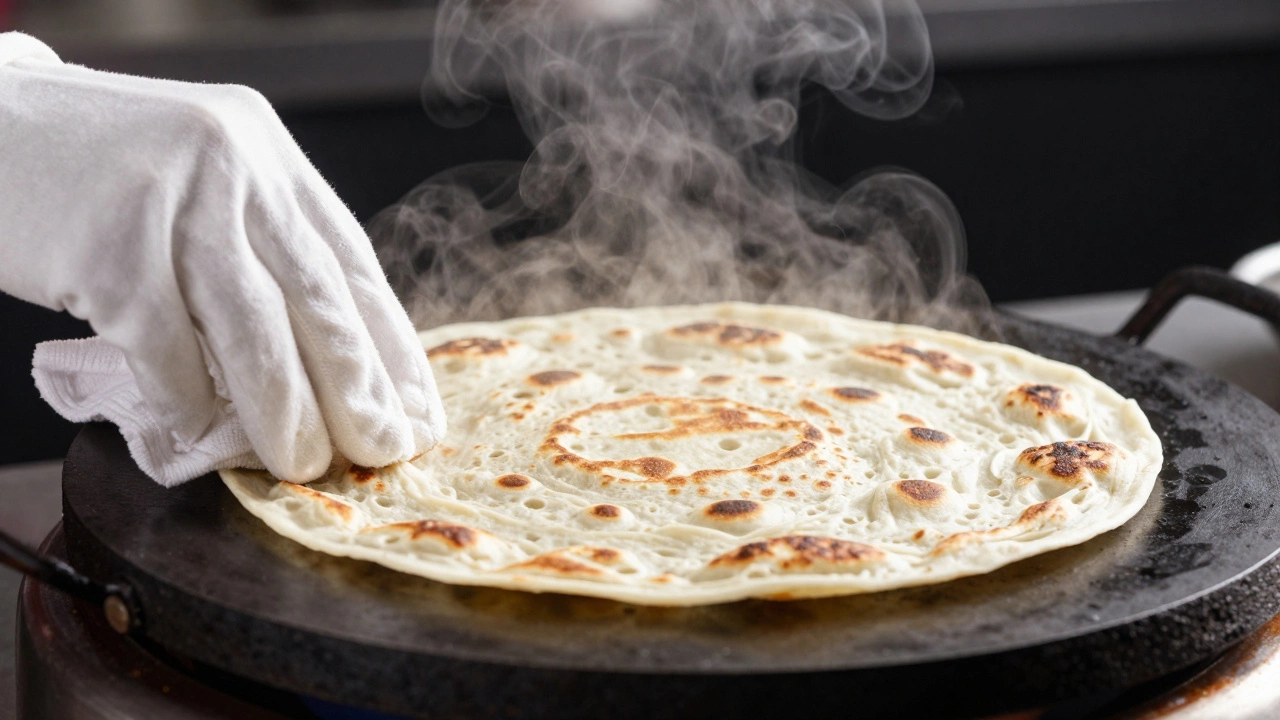
How you use your Tawa (a flat or concave iron griddle used in Indian cooking) makes a massive difference. If the tawa isn't hot enough, the roti spends too much time on the heat, losing moisture slowly. If it is too hot, the outside burns before the inside is cooked.
The goal is high, consistent heat. Place the rolled roti on the tawa and wait for tiny bubbles to appear. Flip it quickly. The second flip is where most people fail. Instead of leaving it to brown slowly, use a clean cloth or a spatula to gently press the edges of the roti. This forces the steam to move around and creates those characteristic air pockets that keep the bread light and fluffy. If you press too hard or too long, you squeeze out the air and moisture, resulting in a dense, hard flatbread.
Storage Secrets for Long-Term Softness
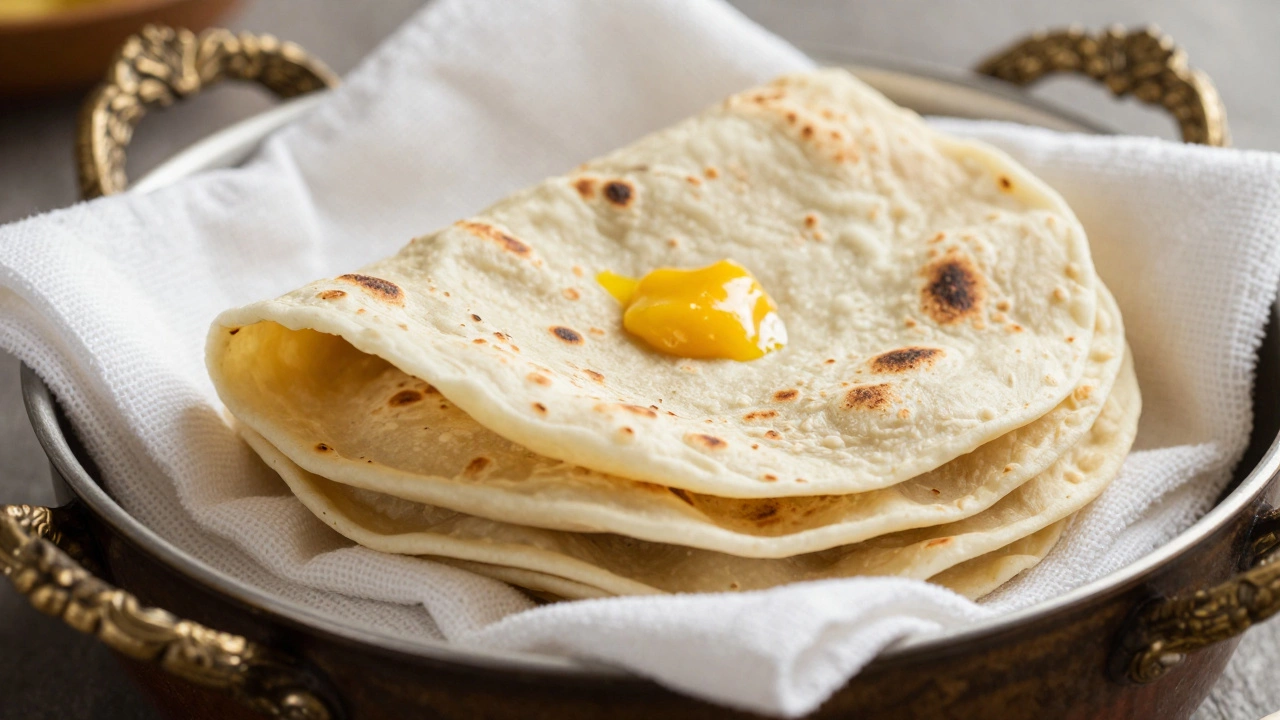
Even a perfectly cooked roti will turn hard if left exposed to the air. Air is the enemy of softness. As soon as the roti comes off the heat, it needs to be protected. Many families use a Casserole (a double-walled insulated container used to keep food warm), but the method matters. If you stack hot rotis directly on top of each other without a barrier, the steam from the bottom ones makes the middle ones soggy, and the top ones dry out.
Line your container with a clean, cotton kitchen towel. The towel absorbs a small amount of the excess steam while keeping the ambient heat high. This prevents the surface of the roti from drying out. Another trick is to lightly brush each roti with a tiny bit of ghee or butter immediately after cooking. This creates a fat barrier that stops water molecules from escaping into the air.
Common Mistakes and How to Fix Them
Are you using too much flour while rolling? Try using a tiny drop of oil on your palms instead of dusting the dough with flour. This keeps the dough hydrated. Also, check your flour. If you are using a brand of wheat flour with very high protein content, you will need more water to keep it soft. Not all Whole Wheat Flour is created equal; some are coarser than others, which can affect the final texture.
Another issue is the "cooling shock." If you move a steaming hot roti from a hot pan to a cold plate, the temperature drop can cause the structure to tighten. Always move them into a pre-warmed container or wrap them in a towel immediately. If you are packing rotis for a lunchbox, let them cool for just one minute before wrapping them in foil. If you wrap them while they are piping hot, the condensation will make them mushy, and once they cool, they often become rubbery.
Can I add something to the dough to keep it soft overnight?
Yes. Adding a tablespoon of vegetable oil or melted ghee during the kneading process helps coat the gluten strands, which prevents them from tightening too much. For even softer results, replace half of the kneading water with warm milk. The fats in the milk act as a tenderizer, keeping the roti soft for a much longer period.
Why does my roti become like a cracker if I cook it on low heat?
Cooking on low heat causes a slow evaporation of moisture. Instead of a quick burst of steam that puffs the roti, the water slowly leaks out. By the time the roti is cooked through, there is no moisture left inside, which turns the bread into a hard, crisp cracker rather than a soft flatbread.
Does the type of water used for kneading matter?
Absolutely. Using lukewarm water is generally better than cold water. Warm water helps the flour absorb moisture more efficiently and relaxes the gluten faster, leading to a softer dough that is easier to roll and results in a more tender final product.
How long should I let the dough rest?
For the best results, let your dough rest for at least 20 to 30 minutes. If you have time, an hour is even better. During this period, the flour fully hydrates and the gluten network relaxes, which prevents the rotis from shrinking and helps them stay soft after cooking.
What is the best way to reheat hard rotis?
Don't just throw them in the microwave, as that often makes them even tougher. Instead, sprinkle a few drops of water on the roti and heat it on a hot tawa for a few seconds on each side. Alternatively, steam them in a steamer for a minute to reintroduce moisture before a quick sear on the pan.
Troubleshooting Your Roti Texture
If you are still struggling, try this simple test: pinch a piece of your raw dough. If it springs back instantly and feels tight, you need more water and more resting time. If it is too sticky to handle, add flour one teaspoon at a time-not in large handfuls. The balance between moisture and flour is a delicate one, and even a small change in the humidity of your kitchen can affect how your dough behaves.
Remember that soft roti tips are all about managing moisture. From the moment the water hits the flour to the moment the roti hits the container, your only goal is to keep that water from escaping. Once you master the "warm water, long rest, high heat" trifecta, you will never have to deal with cardboard rotis again.