Aromatic Rice: How Spices and Techniques Create India's Most Beloved Rice Dishes
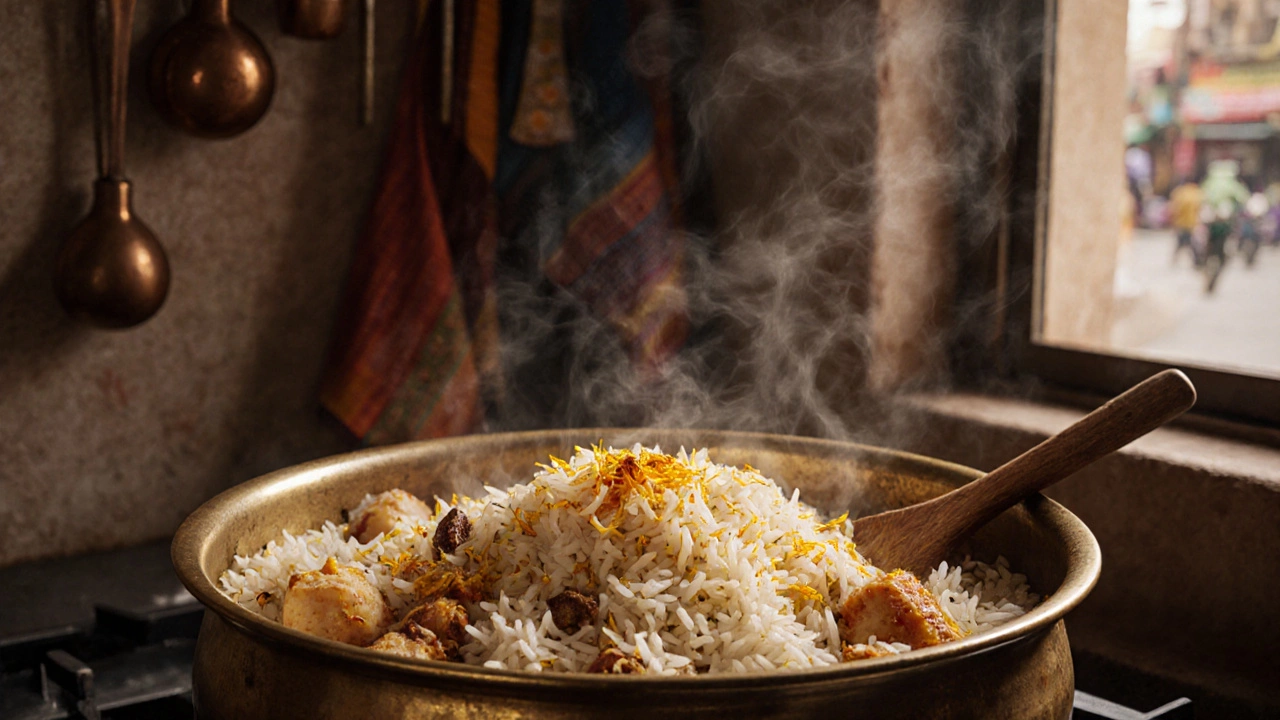
When you think of aromatic rice, rice infused with spices, herbs, and slow-cooked flavors that fill the kitchen with warmth and depth. Also known as perfumed rice, it’s the foundation of meals that feel like celebration, not just dinner. It’s not just about the grain—it’s about how it’s treated. Basmati rice, aged and long-grained, is the star, but what turns it into something unforgettable is the layering of cumin, cardamom, cloves, bay leaves, and sometimes saffron soaked in warm milk. This isn’t magic. It’s technique.
biryani, a layered rice dish where meat or vegetables are cooked with spiced rice and sealed to steam slowly is the most famous example of aromatic rice in action. But you don’t need a fancy recipe to get there. Even simple basmati rice, a long-grain rice native to the Indian subcontinent, known for its nutty aroma and fluffy texture when cooked properly can become aromatic if you toast the spices in ghee before adding water. The key is patience—letting the spices bloom, the rice absorb slowly, and the steam carry the flavor deep into each grain. Skip the rush, and you’ll taste the difference.
People often confuse aromatic rice with plain white rice, but they’re worlds apart. One is fuel. The other is memory. That scent of cardamom and fried onions rising from a pot? That’s your grandmother’s kitchen. That’s the smell of Eid, weddings, Sunday dinners. It’s not just flavor—it’s culture packed into every grain. And the posts below show you how to recreate that at home, whether you’re making a full biryani, fixing store-bought rice that tastes flat, or learning why rinsing rice matters more than you think.
You’ll find real answers here: how to pick the right rice, why soaking matters, what spices to use and when, and how to avoid the common mistake of overcooking the grains. No fluff. No guesswork. Just what works.