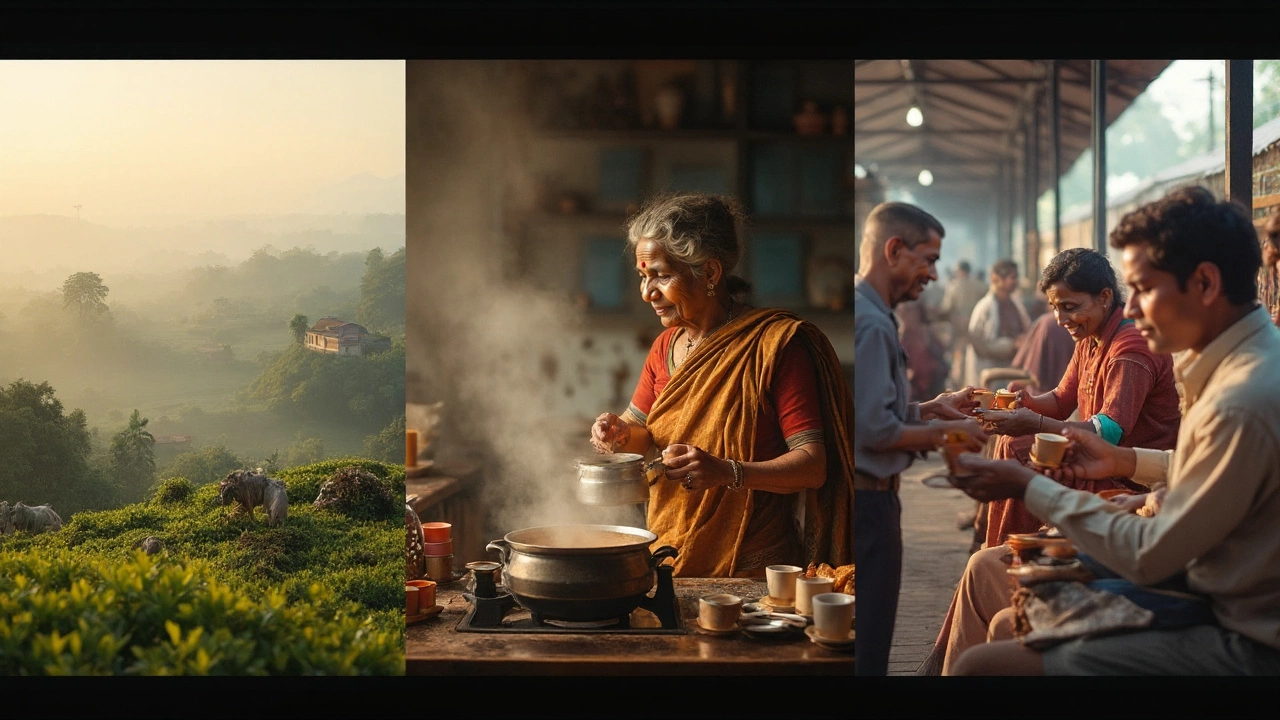
Assam Tea: The Bold, Malty Black Tea from India's Northeast
When you think of strong, hearty black tea, you're likely thinking of Assam tea, a full-bodied black tea grown in the Brahmaputra River valley of Assam, India, and prized for its malty richness and deep amber brew. Also known as Assam black tea, it’s the backbone of many breakfast blends worldwide—from English Breakfast to Irish Breakfast—because it stands up to milk and sugar without losing its character. Unlike delicate green teas or floral oolongs, Assam tea delivers a punch. It’s not subtle. It’s not light. It’s the kind of tea that wakes you up, not just warms you up.
This tea doesn’t just come from a region—it comes from a climate. Assam’s hot, humid weather, heavy monsoon rains, and fertile soil create the perfect conditions for the Camellia sinensis var. assamica, a large-leafed tea plant native to India’s northeast, distinct from the Chinese variety used in most green and white teas. This plant grows tall and fast, producing leaves that are thick, broad, and packed with tannins. When processed into black tea, those tannins turn into bold, malty flavors that linger on the tongue. You won’t find this profile in Darjeeling tea, which is lighter and floral, or in Nilgiri tea, which is more brisk. Assam is the heavyweight. And while many tea drinkers associate it with morning cups, it’s also the go-to base for masala chai in India, where its strength balances the spices perfectly.
What makes Assam tea so widely used isn’t just flavor—it’s consistency. Plantations across Assam harvest multiple times a year, with the second flush (late spring to early summer) considered the best. That’s when the leaves are most aromatic and the liquor has that signature honeyed maltiness. Even if you’ve never visited Assam, you’ve probably tasted it. If you’ve ever had a strong cuppa with milk, chances are it was Assam.
Below, you’ll find real, practical posts that cut through the noise. Learn how to brew it right, why some Assam teas are cheaper than others, how it compares to other Indian teas, and whether it’s safe to drink daily. No fluff. Just facts from people who know tea—not just talk about it.