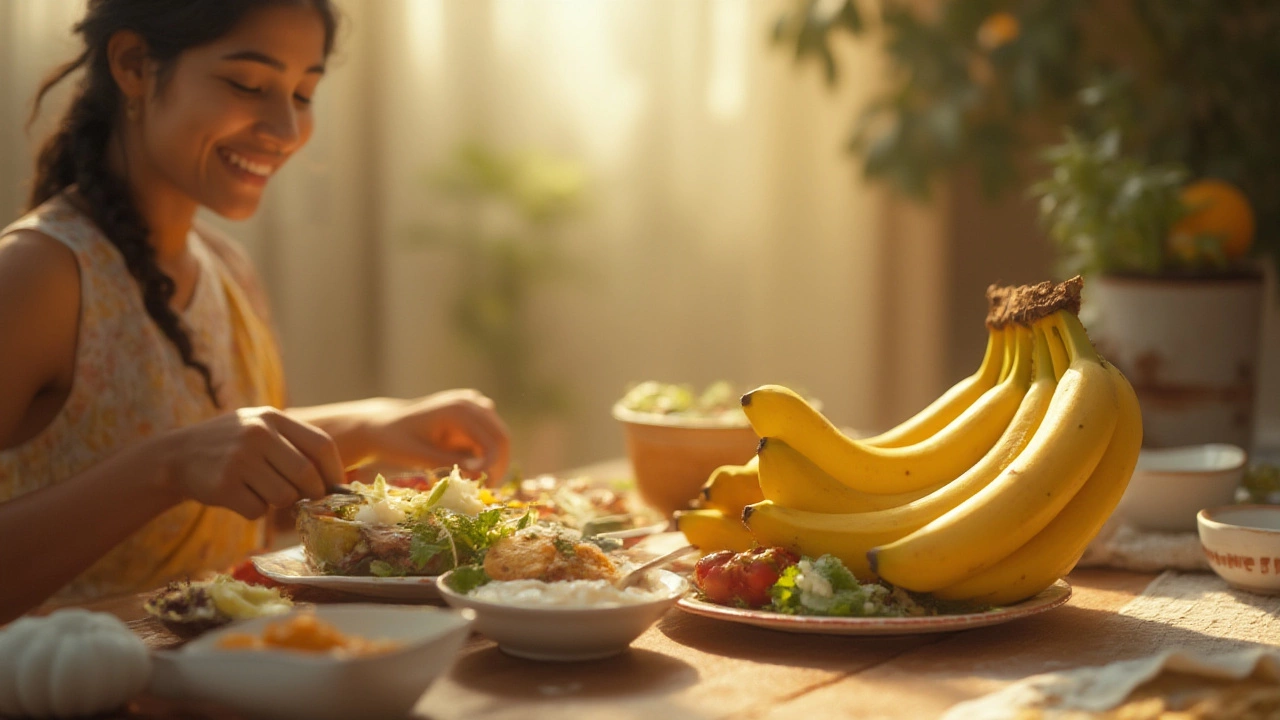
Bananas in Indian Cooking: Uses, Benefits, and Traditional Recipes
When you think of bananas, a tropical fruit widely used in Indian households for both snacks and cooking. Also known as kela, it's not just a quick energy boost—it's a key ingredient in everything from sweet desserts to savory street food. Unlike in Western kitchens where bananas are mostly eaten raw, in India they’re fried, steamed, mashed, and even turned into flour. You’ll find them in temple offerings, monsoon snacks, and festive sweets like kela ka halwa or banana fritters sold by roadside vendors.
What makes bananas so common in Indian cooking? They’re affordable, shelf-stable, and grow everywhere—from Kerala to Uttar Pradesh. ripe bananas, soft, sweet, and easy to mash. Also known as mature kela, they’re the go-to for desserts and baby food. Meanwhile, unripe green bananas, starchy and firm, used like potatoes in curries and chips. Also known as kachcha kela, they’re boiled, fried, or ground into flour for gluten-free breads. Even the flower and peel get used—banana flower in stir-fries, peels in compost or as animal feed. The whole plant has purpose.
Indian recipes don’t treat bananas as a side—they make them central. Think of bananas in banana curry with coconut milk, or how they’re wrapped in banana leaves to steam rice and lentils. In South India, ripe bananas are mashed into dosa batter for extra sweetness and softness. In Bengal, they’re fried with jaggery and cardamom into a breakfast treat. Even in Punjab, dried banana chips are a common snack during festivals. And yes, you can use overripe bananas to make quick, no-bake sweets without adding sugar.
There’s a reason bananas show up in so many of our posts—from digestion-friendly meals to gut-healthy snacks. They’re easy to digest, rich in potassium, and pair well with spices like cumin, cinnamon, and cardamom. Whether you’re looking for a quick breakfast, a dessert that doesn’t need an oven, or a way to use up soft fruit, Indian kitchens have already solved it.
Below, you’ll find real recipes and practical tips from home cooks who use bananas every day—not as an afterthought, but as a staple. Whether you’re frying them, baking them, or turning them into flour, there’s a method here that fits your kitchen.