Best Lentils for Health: Top Types, Benefits, and How to Use Them
When it comes to lentils, a category of nutrient-dense legumes widely used in Indian cooking. Also known as dal, they’re one of the most practical superfoods you can keep in your pantry. Unlike fancy supplements, lentils deliver protein, fiber, iron, and folate without the price tag or processing. They’re not just for vegetarians—they’re for anyone who wants to eat well without spending hours in the kitchen.
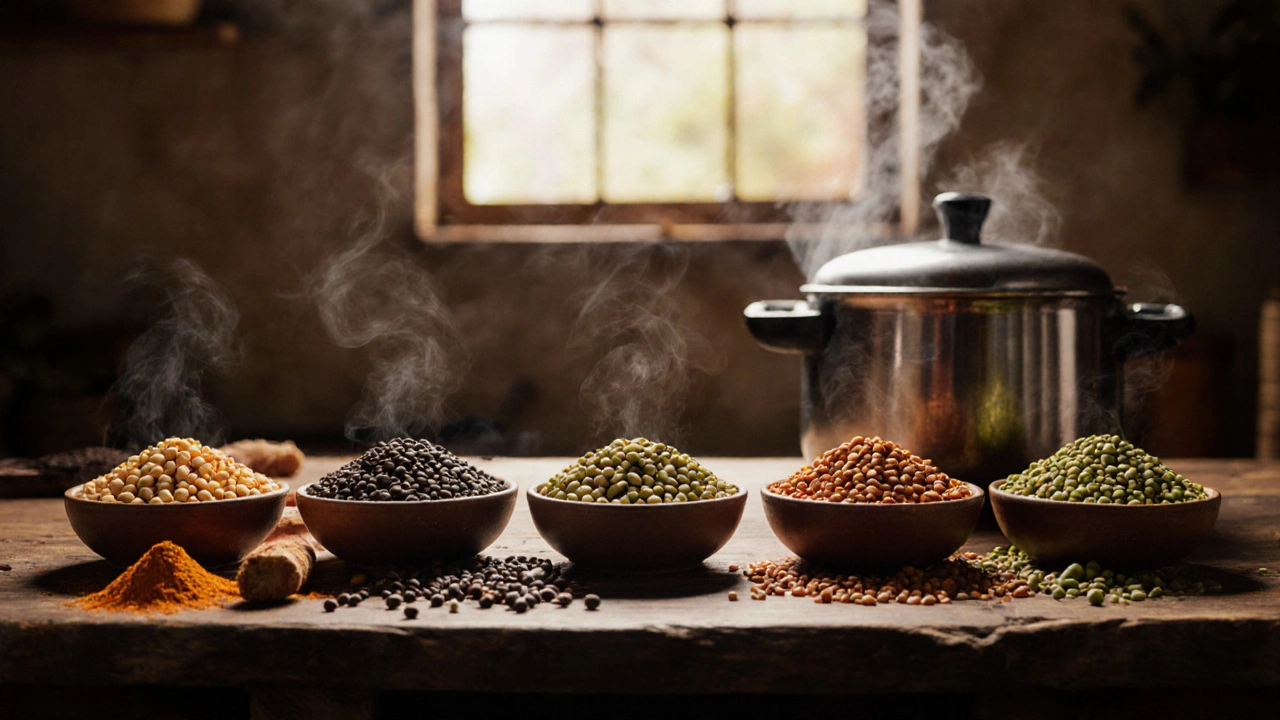
Not all lentils are the same. moong dal, yellow lentils that cook fast and are easy on the stomach, are great for kids and seniors. toor dal, the golden split pigeon pea used in sambar, packs more protein and holds up well in soups. Then there’s masoor dal, red lentils that break down into creamy texture, perfect for quick dals and baby food. Each has a different nutrient profile, and choosing the right one matters if you’re aiming for better digestion, steady energy, or lower cholesterol.
Why do some people say lentils cause gas? It’s not the lentils—it’s how they’re treated. Soaking them for even 4 hours cuts down on compounds that bloat your gut. Sprouting them for a day boosts digestibility and adds vitamins. And rinsing them? Always do it. Store-bought lentils often carry dust or tiny stones, and skipping this step ruins the flavor and safety. You don’t need fancy tools—just a bowl, water, and 10 minutes.
Want to make lentils work for weight loss? Swap out rice for a bowl of moong dal khichdi. Swap out processed snacks for roasted chana dal. Replace sugary breakfasts with a simple dal paratha. The trick isn’t eating less—it’s eating smarter. Lentils fill you up longer, stabilize blood sugar, and don’t spike insulin like refined carbs. That’s why traditional Indian households eat them daily, even if they’re not trying to be healthy.
And here’s the real secret: the healthiest lentil dish isn’t the one with the most spices—it’s the one you actually eat regularly. A simple toor dal with turmeric and cumin, cooked with just enough water, tastes better than any fancy recipe if you make it without stress. That’s the Indian way: simple, consistent, and grounded in what works for your body.
Below, you’ll find real kitchen tips on rinsing dal, soaking pulses, cooking ratios, and how to avoid common mistakes that make lentils hard to digest. No fluff. No theory. Just what actually helps—tested by home cooks who make these dishes every day.