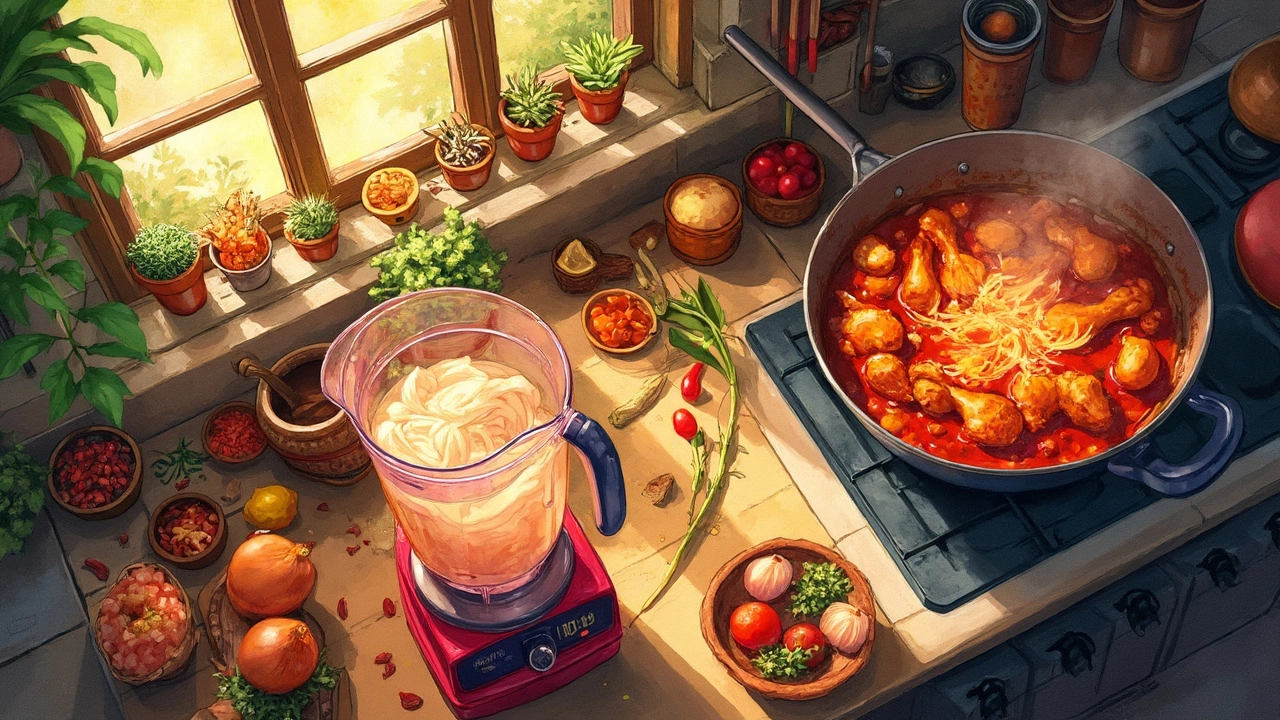
Blend Onions: How to Master This Key Step in Indian Cooking
When you blend onions, a foundational technique in Indian kitchens that turns raw bulbs into a smooth, caramelized base for curries, dals, and biryanis. Also known as onion paste, it’s not just chopping—it’s the first layer of flavor that holds the whole dish together. Skip this step, and your curry tastes flat. Do it right, and even simple ingredients become rich, deep, and unforgettable.
Blending onions isn’t about speed—it’s about control. You want them soft enough to disappear into the oil but not burnt, sweet enough to balance spices but not sugary. In Indian cooking, this base is the silent hero behind dishes like chicken curry, a staple where onions form the backbone of the gravy, biryani, where layered spices cling to a tender onion-and-tomato foundation, and even dal, where a whisper of blended onion adds body without overpowering the lentils. Store-bought onion paste? It lacks the fresh sweetness and texture you get from blending your own. And no, you don’t need a fancy blender—just a food processor or even a mortar and pestle if you’re patient.
The trick isn’t just blending—it’s what you do after. Heat oil, wait for it to shimmer, then add the blended onions slowly. Let them sizzle, stir often, and don’t rush. Let them turn golden, then deep brown if you want that signature North Indian depth. Add garlic and ginger next, then spices. That’s the sequence that builds complexity. If you dump everything in at once, you’ll get mush, not flavor. This is why restaurant curries taste different—they build layers, not piles.
You’ll find this technique repeated across dozens of recipes here—from how to make paneer taste creamy to why soaking dal matters. It’s the same principle: small steps, done right, create big results. Whether you’re making a quick weeknight curry or a weekend biryani, getting your blended onions perfect means you’re already halfway there. The rest? Just spices, time, and a little patience.
Below, you’ll find real recipes and tips from home cooks who’ve mastered this step—not just the theory, but the mistakes they made, the fixes they found, and the dishes that turned out better because they got the onions right.