Chutney Etymology: The Real Story Behind India's Favorite Condiment
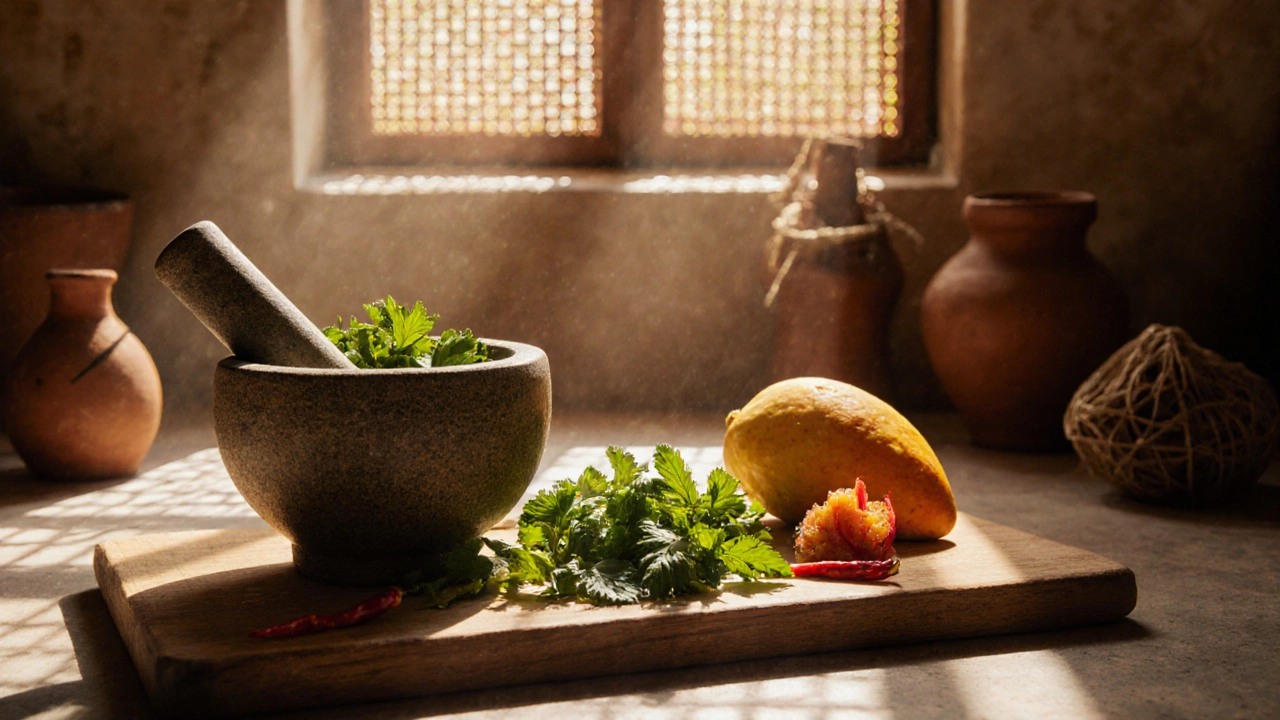
When you think of chutney, a spicy, tangy Indian condiment made from fruits, herbs, or vegetables and traditionally ground fresh. Also known as chatni, it's not just a side—it's the flavor engine behind countless Indian meals. The word itself comes from the Hindi word chātnī, which traces back to the Sanskrit chatni, meaning "to lick" or "to taste." This isn’t just linguistic trivia—it tells you everything you need to know. Chutney was never meant to sit on a shelf. It was made fresh, eaten fast, and designed to wake up the palate.
Chutney’s roots run deep in India’s regional kitchens, where every village had its own version. In the south, coconut and green chili chutney danced with dosa batter. In the north, tamarind and jaggery chutney balanced the heat of spicy samosas. And in Maharashtra, peanut chutney turned simple snacks into something unforgettable. These weren’t recipes passed down from cookbooks—they were lived-in traditions, shaped by what grew nearby and what kept well in the heat. The British didn’t invent chutney, but they did bottle it. They took the idea, added vinegar and sugar, and turned it into a shelf-stable export. That’s why today, you’ll find sweet, vinegary versions abroad—but the real thing? It’s still made by hand, without preservatives, and often fermented for that gut-friendly kick.
Modern chutney still follows the same rules: texture matters, freshness wins, and balance is everything. A good chutney shouldn’t be sweet or sour alone—it needs both, plus a punch of spice and a whisper of aroma from cumin, mustard, or curry leaves. That’s why store-bought jars rarely compare. Homemade chutney isn’t just about taste—it’s about timing. You make it when the mangoes are ripe, when the coriander is fresh, when the tamarind pods are plump. It’s seasonal. It’s local. It’s alive.
You’ll find this truth echoed in the posts below. Some break down how tamarind chutney became a street food staple. Others reveal why fermented coconut chutney is better for your gut than probiotic drinks. There are guides on making mango chutney without sugar, tips on storing it without refrigeration, and even why some families never use a blender—they still grind it with stone. This isn’t just a collection of recipes. It’s a look at how a simple condiment carries centuries of culture, science, and flavor wisdom—all still alive in kitchens across India today.