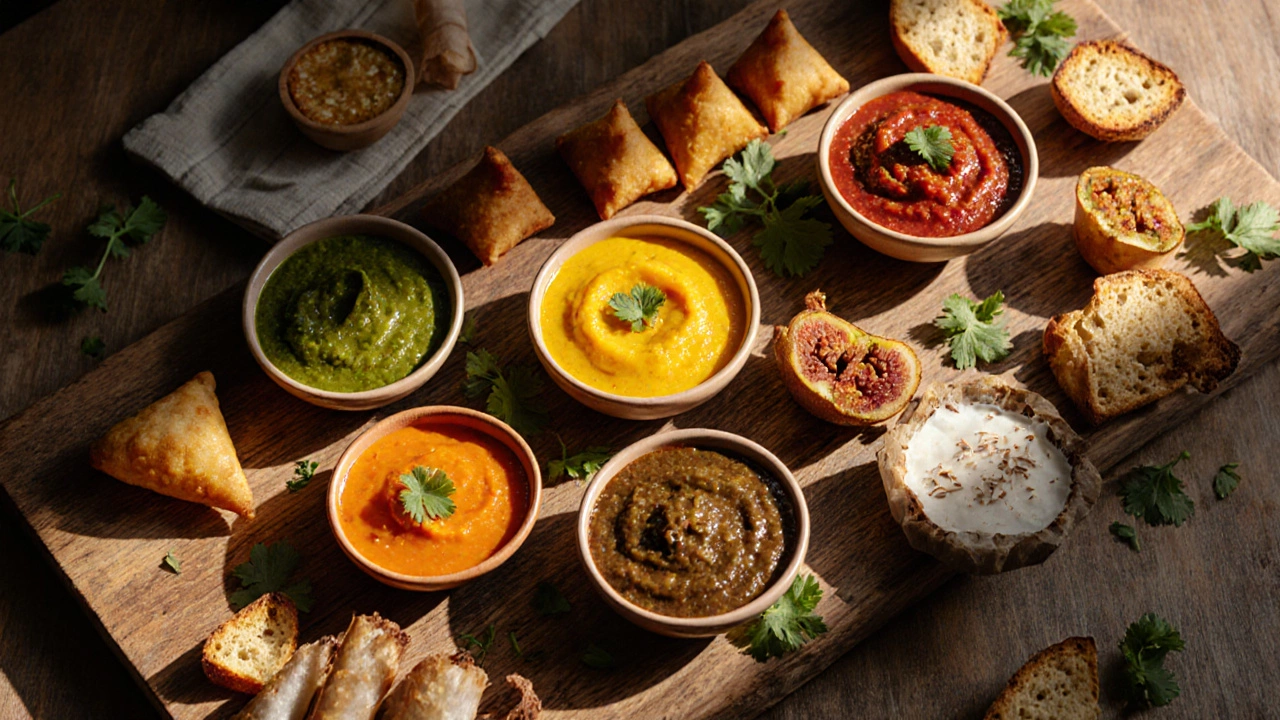
Chutney Pairings: Best Matches for Indian Flavors
When you think of chutney, a tangy, spicy, or sweet condiment made from fruits, herbs, or vegetables, often fermented or freshly ground. Also known as chatni, it's not just a side—it's the flavor engine behind so many Indian meals. A good chutney doesn’t just sit on the plate. It wakes up bland food, cuts through richness, and ties together different textures. Whether it’s the sharp bite of tamarind with fried snacks or the cooling creaminess of coconut with spicy curries, chutney pairings turn a simple meal into something memorable.
Not all chutneys are made the same, and that’s why pairing matters. mango chutney, a sweet-tart condiment made from ripe mangoes, sugar, vinegar, and spices works magic with grilled meats or cheese toasties, but it’s also classic with samosas and pakoras. Then there’s tamarind chutney, a sour-sweet blend often thickened with jaggery and spiked with ginger and cumin—it’s the go-to for chaat, vada pav, and even as a dip for roasted vegetables. And let’s not forget coconut chutney, a creamy, mildly spicy paste made from fresh coconut, green chilies, and roasted lentils, which is the perfect cooling counterpoint to hot, fried dosas and idlis. These aren’t random combos—they’re tried-and-true matches that balance heat, sweetness, acidity, and texture.
Store-bought chutneys often skip the real stuff—too much sugar, preservatives, or artificial flavors. Homemade versions? They’re alive with probiotics, fresh herbs, and real spice. That’s why they don’t just taste better—they help your gut too. The right chutney pairing can make a dish feel complete, like salt on popcorn or butter on toast. You don’t need fancy tools or hours of prep. Just a blender, some fresh ingredients, and a little curiosity.
Below, you’ll find real recipes and practical tips on how to match chutneys with the foods people actually eat every day—from breakfast idlis to weekend curries. No fluff. Just what works.