Chutney Translation: What It Really Means and How It's Used in Indian Cooking
When you hear the word chutney, a spicy, tangy, or sweet condiment from Indian cuisine, often made with fruits, herbs, or vegetables and used to balance meals. Also known as chatni, it's not just a side—it's the flavor anchor of a meal. The English word "chutney" comes from the Hindi word "chaṭnī," which itself comes from the Sanskrit "cāṭnī," meaning "to lick" or "to taste." That’s the key: chutney isn’t meant to sit quietly on the plate. It’s meant to wake up your tongue, cut through richness, and tie together flavors that otherwise wouldn’t speak to each other.
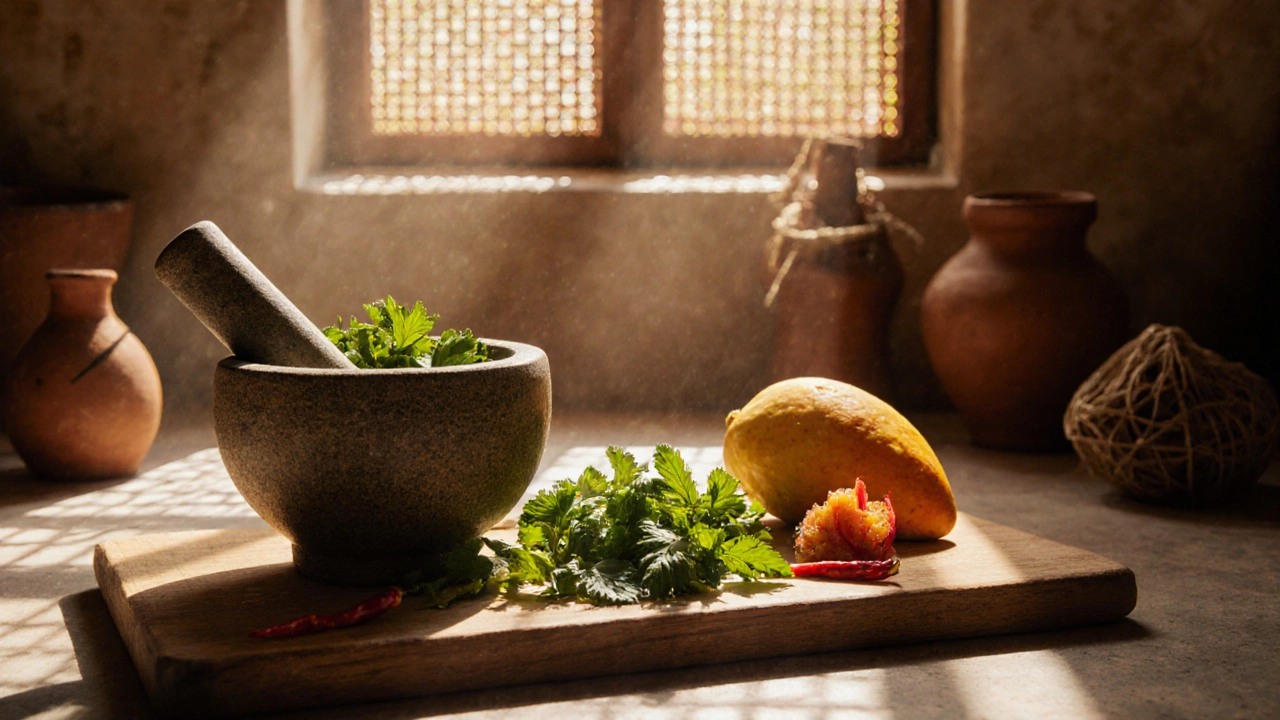
Think of mango chutney, a sweet-tart condiment made from raw or ripe mangoes, sugar, vinegar, and spices, often used with curries and snacks on a plate of samosas, or tamarind chutney, a sour-sweet paste made from tamarind pulp, jaggery, and spices, commonly paired with chaat and street food drizzled over pani puri. These aren’t just recipes—they’re regional identities. In South India, coconut chutney with curry leaves and roasted lentils is as essential as rice. In the North, mint-coriander chutney cuts through the fat of kebabs. And in Maharashtra, peanut chutney turns simple bhakri into something unforgettable. Each one is made fresh, often daily, and rarely cooked for long. That’s why store-bought versions taste flat—they’re pasteurized, shelf-stable, and stripped of live enzymes and probiotics.
Chutney isn’t just about taste. It’s tied to digestion. Homemade versions, especially those with raw garlic, ginger, or fermented ingredients, support gut health. That’s why you’ll find it served with dal, rice, or even breakfast idlis. It’s not an afterthought—it’s medicine in a spoon. And while some people think chutney is just "Indian salsa" or "Indian relish," that’s like calling curry a soup. It’s a whole category of its own, shaped by climate, harvests, and centuries of kitchen wisdom.
What you’ll find in the posts below isn’t just a list of recipes. It’s the real talk about how chutney works—why it’s made the way it is, what happens when you skip fermentation, how to tell if your mango chutney is still good, and why the tamarind version you bought at the supermarket doesn’t even come close. You’ll learn how to fix bland chutney, what spices to toast, when to add sugar, and why some families never refrigerate theirs. This isn’t theory. It’s what people actually do in kitchens across India, every single day.