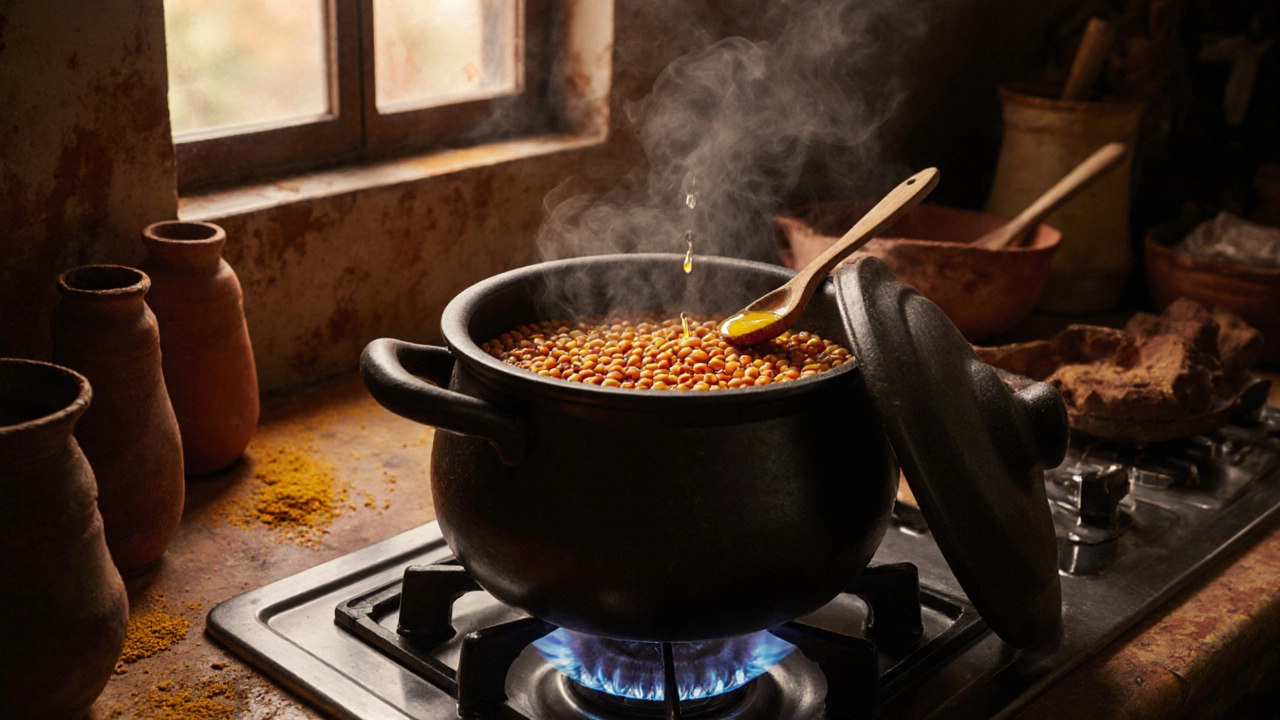
Cook Dal Covered or Uncovered: What Really Makes a Difference
When you cook dal, a general term for dried, split pulses like moong, toor, or chana lentils used in Indian cooking. It's one of the most basic, yet most misunderstood steps in the kitchen: lentils are simmered for 20 to 40 minutes, but whether you leave the lid on or off changes everything. It’s not just about speed—it’s about texture, flavor absorption, and even how easy it is to digest. Cook dal covered, and you trap steam, which softens the lentils faster but can make them mushy if you’re not careful. Leave it uncovered, and the water evaporates slowly, concentrating the spices and giving you a thicker, more flavorful consistency.
Most Indian households cook dal covered at first to bring it to a boil quickly, then uncover it to let the liquid reduce. That’s the sweet spot. If you keep it covered the whole time, especially with too much water, your dal turns into a soup. If you leave it uncovered from the start, you risk burning the bottom or ending up with undercooked lentils. The right method depends on the type of dal you’re using. Moong dal, a yellow lentil that cooks fast and breaks down easily benefits from a covered lid for most of the time. But toor dal, a heartier, tan-colored lentil with a nutty flavor needs more evaporation to develop its signature richness. And if you’re making a tadka dal with tempering at the end, you’ll want less liquid—so you’ll need to cook it uncovered longer.
It’s not just about the lid. Water ratio matters too. Too much water? You’ll end up diluting the spices. Too little? The dal won’t soften properly. Most recipes say 1:3, but that’s just a starting point. If you soaked your dal, you might need less water. If you didn’t soak it, you’ll need more. And if you’re using a pressure cooker, forget the lid debate—pressure changes everything. The real question isn’t just covered or uncovered—it’s when to cover and when to uncover. That’s the trick passed down in kitchens, not written in cookbooks.
What you’ll find in the posts below are real, tested answers from home cooks who’ve learned this the hard way—burnt pots, watery dal, and mushy disasters. You’ll learn how to fix hard dal, why rinsing matters before cooking, how soaking affects texture, and what happens if you skip the tempering step. No fluff. No theory. Just what works on your stove, in your kitchen, with the ingredients you already have.