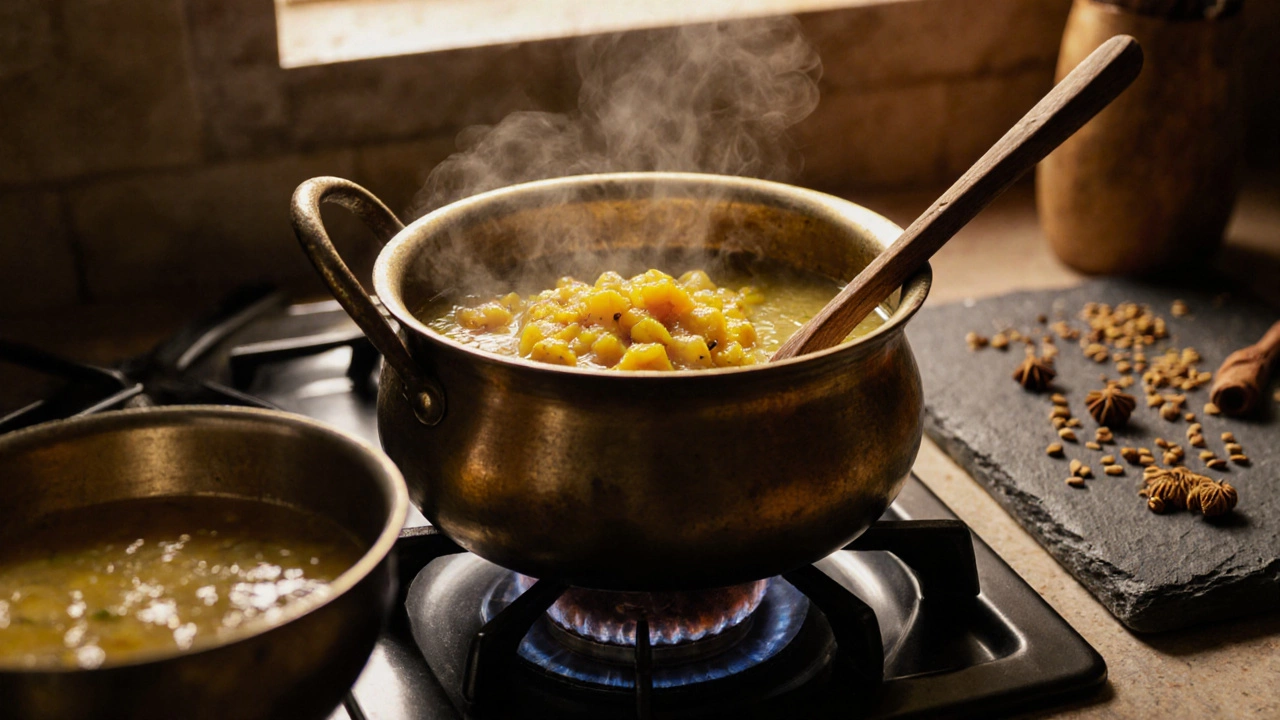
Cooking Dal: Simple Tips for Perfect Lentils Every Time
When you're cooking dal, a staple Indian lentil dish made from split pulses like toor, masoor, or moong. Also known as lentil curry, it's one of the most common meals in Indian homes—simple, filling, and packed with protein. But even something this basic can go wrong if you skip the small details. You might rinse it too much, cook it covered when you shouldn’t, or pick the wrong type and wonder why it’s still hard after an hour.
The truth? Cooking dal isn’t about following a rigid recipe. It’s about understanding the lentil you’re working with. Not all dals are the same. moong dal, a quick-cooking, mild lentil often used in soups and baby food breaks down fast and turns creamy. toor dal, the backbone of sambar and a favorite in South India holds its shape better and needs more time. Then there’s chana dal, a nutty, protein-rich split chickpea that’s great for curries but needs soaking. Each one behaves differently, and knowing that changes everything.
And it’s not just about the lentil. The way you prep it matters too. Do you need to rinse dal? Sometimes yes, sometimes no. If it’s dusty or has debris, rinse it once. But if it’s clean from a trusted brand, skipping it keeps the natural starches that help thicken your dal. Should you cover it while cooking? Cover it after it comes to a boil to lock in heat and speed things up—but leave the lid slightly ajar so it doesn’t foam over. And if you’re worried about gas? Soak it for a few hours or sprout it overnight. It’s not magic—it’s just science.
People ask why dal gives you bloating. It’s not the dal—it’s how it’s treated. Undercooked pulses, skipping soaking, or cooking with too much salt early on all make digestion harder. But fix those steps, and dal becomes one of the easiest, most nutritious meals you can make. It’s cheap, it’s fast, and it’s got more protein than chicken per gram. You don’t need fancy ingredients. Just a pot, some spices, and a little patience.
That’s why this collection of posts exists—not to overwhelm you with 50 dal recipes, but to answer the real questions you have. Why does store-bought dal taste flat? Can you cook dal without soaking? Is it okay to eat dal at night? What’s the healthiest dal for daily meals? You’ll find clear, no-fluff answers here, based on what actually works in home kitchens across India. No theory. No fluff. Just what to do, when to do it, and why it matters.