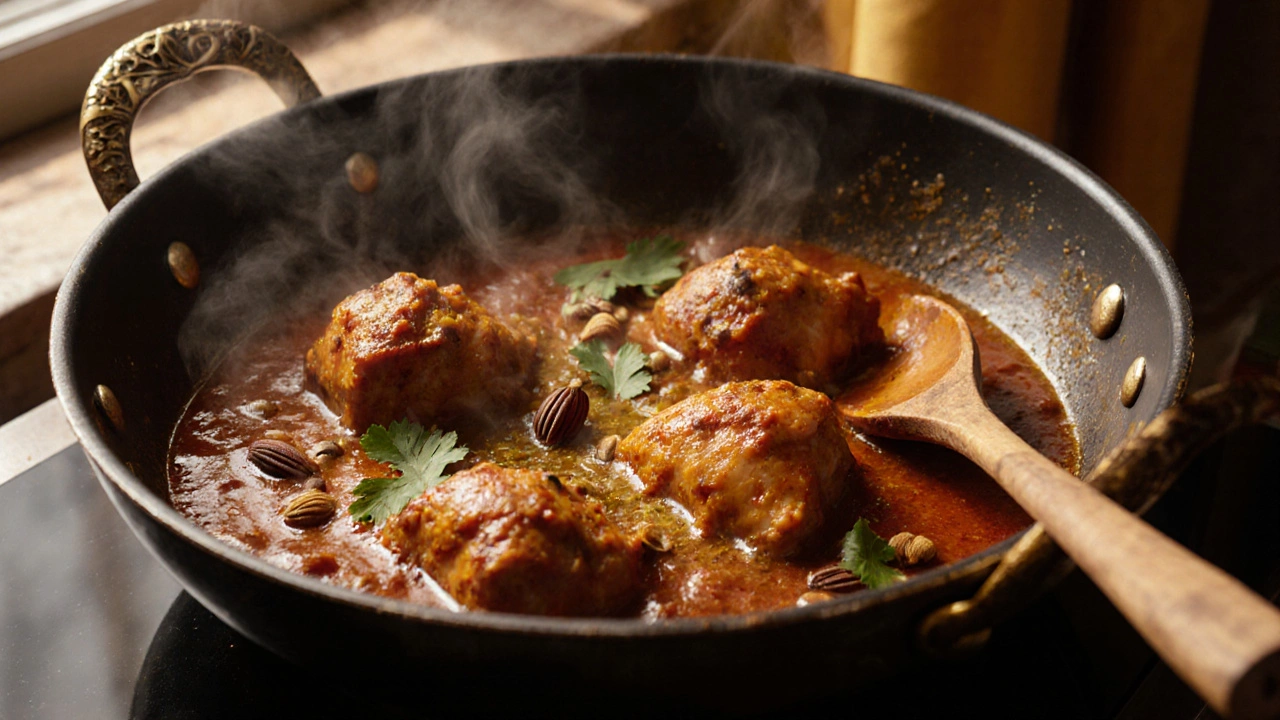
Curry Simmering Tips: How to Get Rich, Flavorful Indian Curries Every Time
When you're making curry, a slow-cooked Indian dish built on layered spices, tender meat or vegetables, and a rich sauce. It's not just mixing ingredients and boiling—it's about letting flavors marry over time. Many people rush this step, thinking a 10-minute simmer is enough. But real depth? That comes from patience. A well-simmered curry isn’t just hot—it’s alive with taste, where every bite tells a story of toasted cumin, caramelized onions, and spices that have softened into the sauce.
Simmering, the gentle, low-heat cooking process that allows liquids to reduce and flavors to concentrate without boiling over is the secret behind why restaurant curries taste so much deeper than home versions. It’s not the spices alone—it’s how long they’ve had to dance with the oil, the tomatoes, the garlic, and the meat. If you skip the simmer, you’re missing the transformation. The spices don’t just sit on top—they sink in. The meat doesn’t just cook—it becomes tender from the inside out. And the sauce? It thickens naturally, clinging to every grain of rice.
Here’s what actually matters: cover or uncover, a decision that controls moisture and intensity in your curry. Leave the lid off if you want a thicker, more concentrated sauce—let the steam escape so the liquid reduces. Put the lid on if you’re worried about drying out chicken or veggies. And don’t stir too much. Let the bottom layer caramelize slightly—that’s where the flavor builds. A good simmer takes 20 to 45 minutes, depending on what you’re cooking. Chicken? 25 minutes. Lamb? 40. Lentils? Even longer. This isn’t a suggestion—it’s the rule.
Heat level matters too. A low bubble, not a rolling boil. If your curry is bubbling hard, you’re evaporating too much liquid too fast, and you’ll end up with a gritty, over-reduced mess. You want a slow, steady wobble. That’s when the magic happens. And don’t add water to fix a thin sauce halfway through. Instead, let it reduce. If it’s too thick, add a splash of broth or coconut milk—not plain water. It keeps the flavor intact.
And what about the spices? You’ve toasted them, ground them, fried them in oil—now give them time to bloom in the sauce. That’s the simmer. It’s when the raw edge of chili powder fades, when garam masala becomes warm instead of sharp, when turmeric stops tasting like dirt and starts tasting like earthy sweetness. This is where your curry stops being a recipe and starts being a dish.
You’ll find posts here that show you how to brown chicken before adding it to curry, why covering dal matters, and how to fix store-bought paneer so it doesn’t turn rubbery in your sauce. They all tie back to one thing: control over time and heat. Curry isn’t about speed. It’s about listening—to the sizzle, to the thickening, to the way the aroma changes as the minutes pass. If you get this right, you don’t need fancy ingredients. Just patience, a good pot, and a little trust in the process.