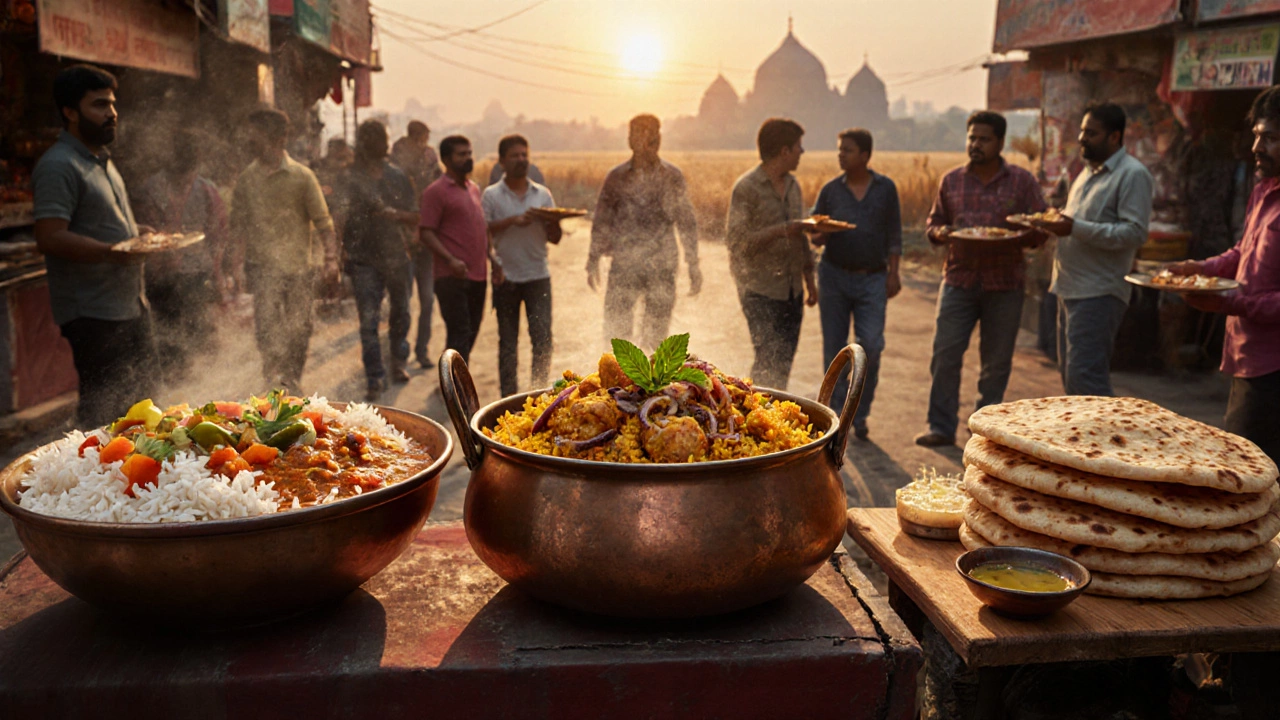
Dal Bhat: The Simple Meal That Feeds a Nation
When you think of dal bhat, a traditional South Asian meal of lentils and rice, often served daily in Nepal and eastern India. Also known as dal bhaat, it’s the kind of food that doesn’t need fancy ingredients or long prep—it just works. This isn’t a restaurant dish. It’s what people eat every single day, morning or night, across villages and cities alike. You won’t find it on gourmet menus, but you’ll find it in every home where people cook for survival, not just flavor.
Dal bhat is built on two core things: dal, lentils cooked simple, with turmeric, cumin, and garlic, and rice, usually plain, steamed, and fluffy. That’s it. No cream, no butter, no fancy garnish. But here’s the secret: the magic isn’t in the ingredients—it’s in the rhythm. People eat this meal because it’s digestible, filling, and keeps energy steady all day. It’s the reason why farmers start work at 5 a.m. and keep going until sunset. It’s the reason why students study late into the night without crashing. And yes, it’s also why some people avoid eating dal at night—because digestion matters, even if you’re not thinking about it.
What you’ll find in the posts below isn’t a single recipe. It’s the whole world around dal bhat. You’ll learn why you should rinse dal before cooking, how much water to use, which lentils are healthiest, and why soaking them makes a difference. You’ll see how dal causes gas—and how to fix it. You’ll even find out what happens if you skip soaking pulses entirely. This isn’t just about flavor. It’s about understanding the science behind every spoonful. Whether you’re trying to make dal bhat for the first time or you’ve been eating it your whole life, these posts give you the real, no-fluff answers that actually change how you cook.