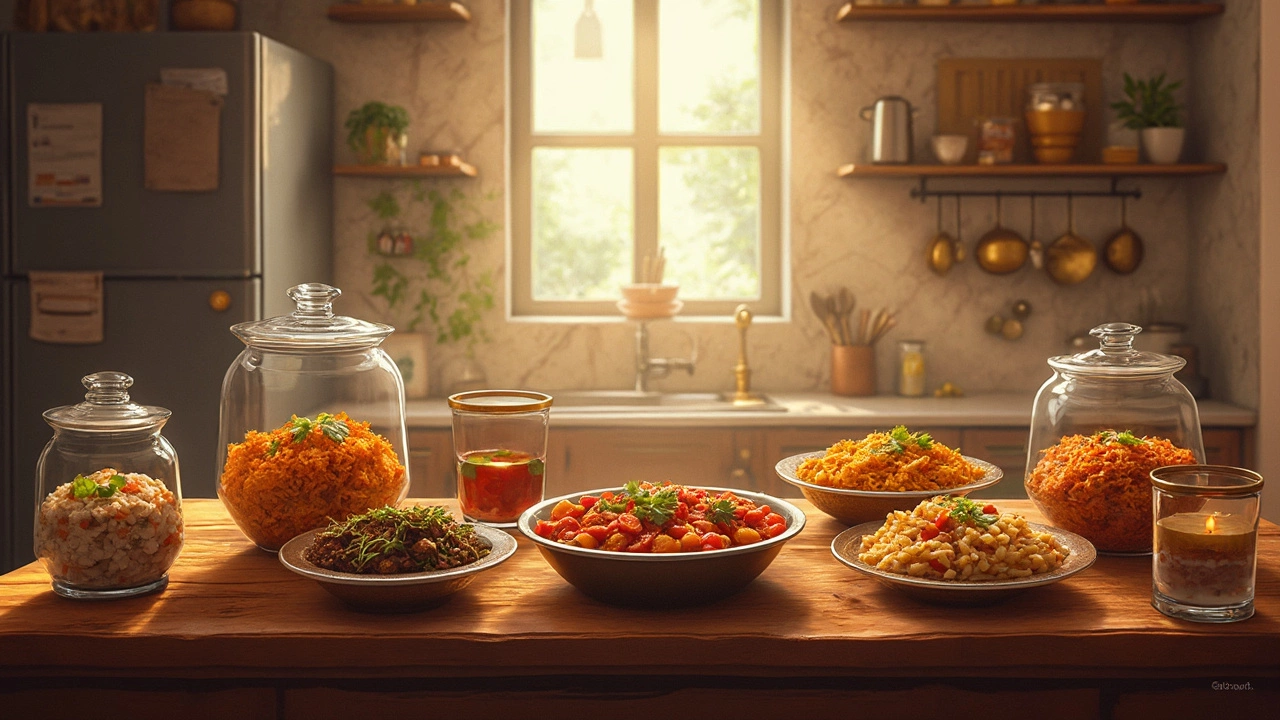
Fridge Storage: How to Keep Indian Ingredients Fresh Longer
When it comes to fridge storage, the way you store Indian ingredients directly affects how long they last, how they taste, and whether they’re safe to eat. Also known as refrigerator preservation, proper fridge storage isn’t just about putting food in a cold box—it’s about understanding how each ingredient behaves under chill.
Take paneer, a fresh Indian cheese that spoils fast if not stored right. Also known as Indian cottage cheese, paneer lasts only 5 to 7 days in the fridge when kept submerged in water and sealed tightly. Store it dry, and it turns hard. Leave it uncovered, and it picks up odors from other foods. The same goes for chutney, a tangy, fermented condiment that can last weeks if stored in airtight glass jars. But if you use a plastic container or leave the lid loose, mold creeps in faster than you think. Then there’s dal, cooked lentils that need to cool down before going in the fridge. Pile hot dal straight into the fridge and you raise the internal temperature, risking bacterial growth. Let it sit out for more than two hours? That’s a food safety risk.
It’s not just about what goes in the fridge—it’s about how you organize it. Store raw meat below ready-to-eat foods. Keep wet items like pickles on the bottom shelf. Place dairy and chutneys in the coldest part, not the door. And never store spices in the fridge—humidity turns them clumpy and dulls their punch. The key is matching the storage method to the ingredient’s natural behavior. For example, dosa batter ferments best at room temperature, but once fermented, it needs cold storage to slow down the process. Leftover biryani? Cool it fast, then seal it in shallow containers so heat escapes quickly. This isn’t guesswork. It’s science wrapped in tradition.
Many people think spoiled paneer looks obvious—it doesn’t. A slight sour smell, slimy surface, or off-color spots are the real signs. Same with dal: if it smells sour or the water looks cloudy, toss it. Don’t rely on expiration dates. Indian kitchens don’t use them. They use their nose, their eyes, and their experience. And that’s what this collection is built on: real, tested ways to store food so it stays safe, tasty, and waste-free. Below, you’ll find posts that break down exactly how to handle paneer, dal, chutney, and more—no fluff, no theory, just what works in a real Indian kitchen.