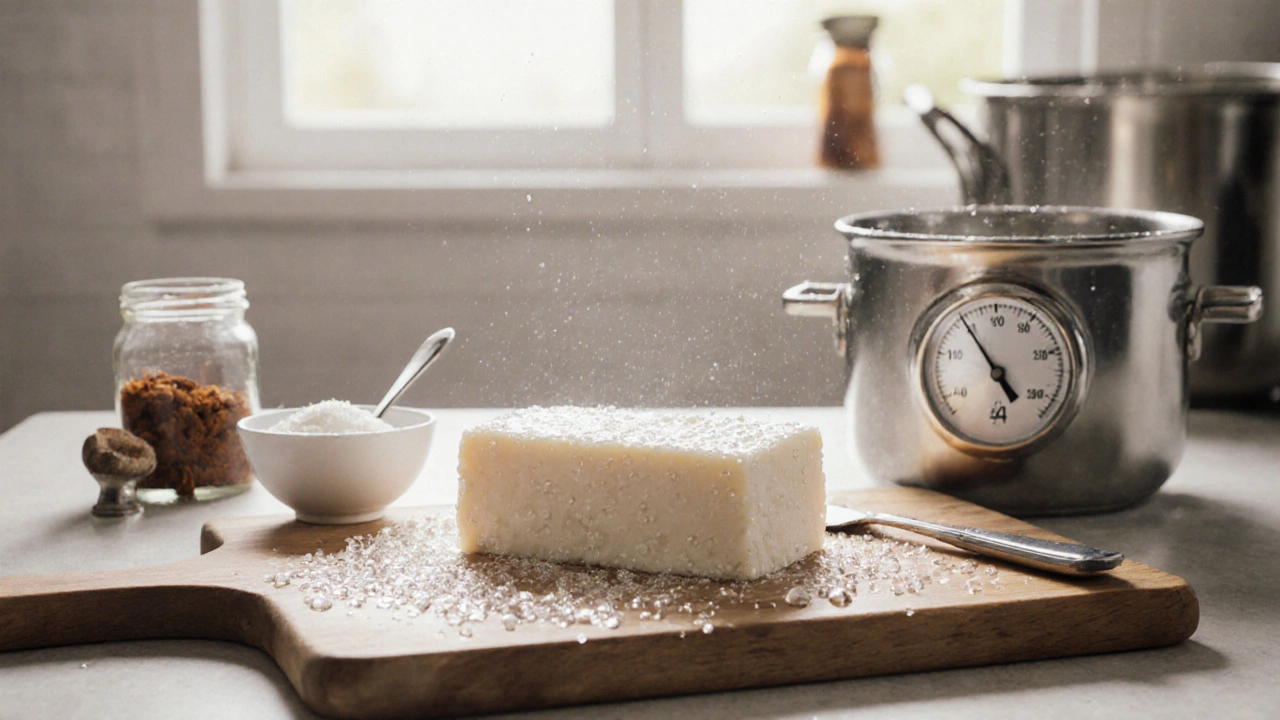
Homemade Paneer Shelf Life: How Long It Lasts and How to Store It Right
When you make homemade paneer, a fresh, unaged Indian cheese made by curdling milk with acid. It's softer, tastier, and more versatile than store-bought versions. But once you press it into blocks, the big question isn't just how to use it—it's how long it stays good. Unlike processed cheeses, paneer doesn't have preservatives, so its shelf life, how long a food stays safe and tasty before spoiling depends on how you handle it from the moment it cools.
Left at room temperature, homemade paneer starts to sour within 6 to 8 hours, especially in warm climates. Refrigerated in an airtight container with a little water, it lasts 3 to 5 days. That water isn't just for moisture—it slows down bacterial growth by keeping the surface from drying out and forming a crust. If you skip the water, your paneer turns rubbery faster. For longer storage, freeze it. Wrap it tightly in plastic, then place it in a zip-top bag. Frozen paneer keeps for up to 3 months. Thaw it overnight in the fridge—never microwave it straight from frozen, or it'll turn grainy and crumbly.
How do you know if your paneer has gone bad? Look for a sour smell, not just tangy but sharp and off. A slimy surface or visible mold—green, white, or gray spots—are clear signs to toss it. Even if it looks fine but tastes sour or bitter, don't risk it. Spoiled paneer can cause stomach upset, especially if you're not used to eating fresh dairy without preservatives. Some people try storing paneer in saltwater to extend freshness, but that changes the flavor and texture. Stick to plain, cold water. If you're making paneer in bulk, portion it before storing. That way, you only thaw what you need.
There's a myth that paneer lasts longer if you soak it in milk. It doesn't. Milk adds sugars that feed bacteria faster. Others swear by adding lemon juice to the storage water. That’s not helpful either—it can make the paneer too acidic and break down its structure. The simplest method works best: cool, clean water, sealed container, fridge. And if you're using it in curries or fried dishes, always cook it right after taking it out of storage. Heat kills surface bacteria and restores texture.
When you make paneer at home, you're not just saving money—you're controlling what goes into it. No additives, no preservatives, no weird textures from long transport. But that purity means you need to treat it with care. Its freshness, the state of being recently made and not spoiled is its biggest advantage. That’s why so many Indian households make paneer every few days, not once a week. It’s not about convenience—it’s about flavor and safety.
Below, you’ll find real advice from people who’ve made paneer for years—how to tell if it’s still good, what to do if it’s slightly off, and how to fix hard or dry paneer without wasting it. You’ll also learn how spoiled milk can still make good paneer if handled right, and why store-bought versions often last longer but taste flat. This isn’t just about storage—it’s about getting the most out of your homemade cheese every single time.