India National Dish: What It Really Is and Why It’s Not What You Think
There’s no such thing as an India national dish, a single food officially recognized by the government as representing the entire country’s cuisine. Also known as India’s culinary symbol, the idea of one dish standing for India is a myth—but it’s a powerful one. The truth? India’s food is too vast, too regional, too diverse for any single plate to carry that weight. You’ll hear biryani called the national dish. Or dal. Or curry. But none of them are official. And that’s the point.
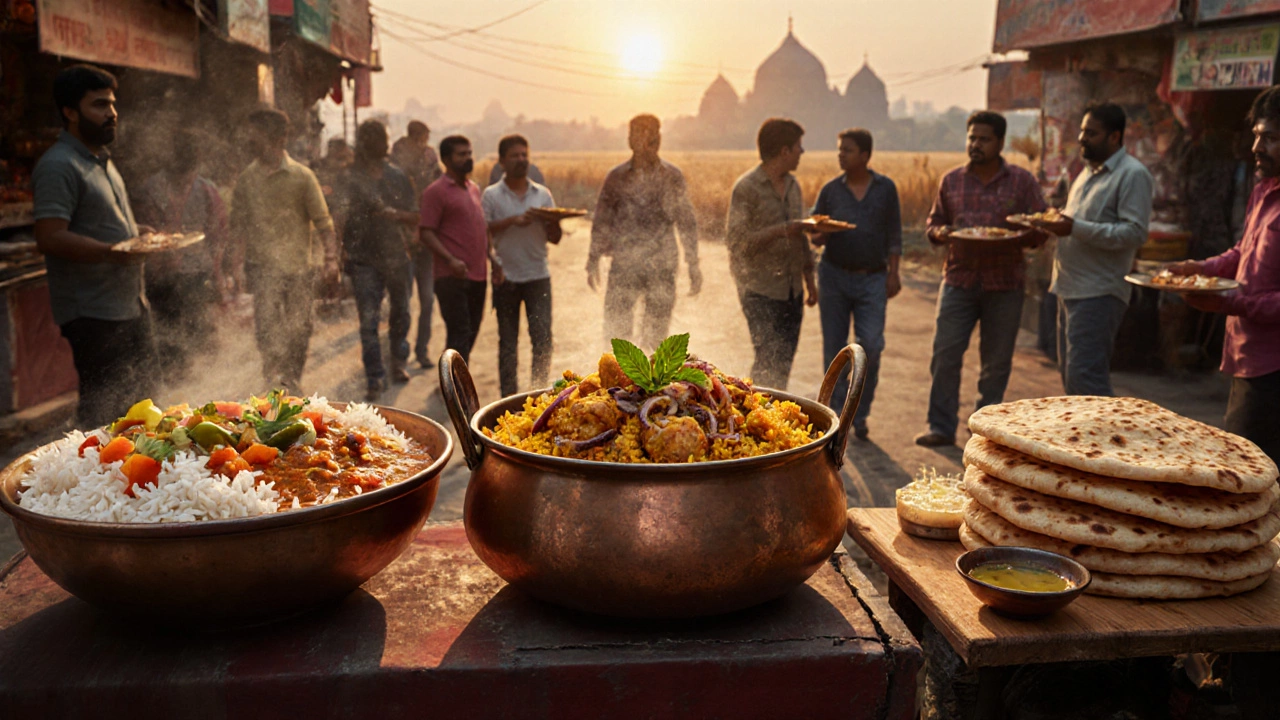
What you’re really seeing is a cultural shorthand. When people say biryani, a layered rice dish with meat, spices, and saffron, slow-cooked to perfection, they’re thinking of celebration, richness, and complexity. It’s the dish served at weddings, festivals, and family gatherings across North and South India. But in Tamil Nadu, it’s dosa with sambar. In Punjab, it’s makki di roti with sarson ka saag. In Bengal, it’s fish curry with rice. Each region has its own anchor dish, and none of them are interchangeable. dal, a simple lentil stew that’s eaten daily by over a billion people, is the real unsung hero. It’s not flashy. It doesn’t make headlines. But it’s on every table, every day. It’s the quiet foundation of Indian meals. And then there’s curry, a broad term outsiders use for any spiced Indian stew, but one that doesn’t exist as a single dish in India. It’s not a recipe—it’s a category. Like saying "soup" for every soup in the world.
What ties these together isn’t a government decree. It’s the rhythm of Indian cooking: spices layered, grains simmered, lentils softened, chutneys chopped fresh. The real national dish isn’t one thing—it’s the habit of eating well, adapting, and sharing. You’ll find that in the recipes below: how to make biryani that smells like a street vendor’s stall, how to cook dal so it’s creamy without cream, why curry isn’t one thing but dozens. These aren’t just recipes. They’re stories of how India eats—day after day, home after home, region after region.