Indian Spice Mix: Essential Blends, Uses, and How They Define Indian Food
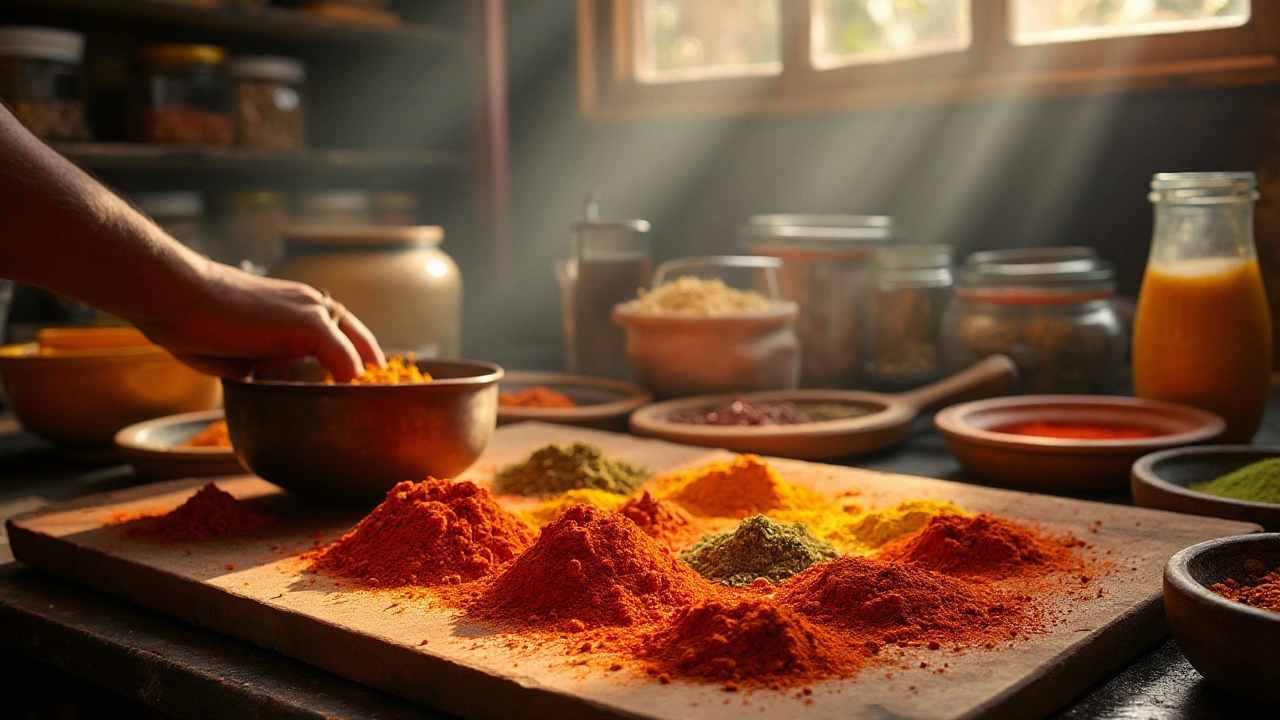
When you think of Indian food, you’re really thinking of Indian spice mix, a carefully balanced blend of ground spices that forms the foundation of flavor in countless dishes. Also known as masala, it’s not just a seasoning—it’s the soul of the kitchen. Unlike pre-made curry powders from other countries, Indian spice mixes are often freshly ground at home, tailored to the dish, and layered with heat, earthiness, and aroma that can’t be replicated by a single powder. You won’t find one universal mix—every region, family, and cook has their own version. Some are warm and sweet, like garam masala with cinnamon and cardamom. Others are bold and smoky, like the mustard-seed-heavy blends of South India. And then there’s the golden base: turmeric, cumin, coriander, and chili, the building blocks you’ll find in nearly every curry, dal, or vegetable stir-fry.
These blends don’t just add flavor—they transform ingredients. A pinch of asafoetida turns lentils into something comforting. Roasted cumin seeds bloomed in hot oil make potatoes sing. Garam masala stirred in at the end gives chicken curry its final lift, while a dash of fenugreek seeds deepens the richness of a tomato-based sauce. You don’t need to buy fancy jars—most Indian spice mixes are made with five or six common spices you can find at any grocery store. The trick is in the timing: toast whole seeds before grinding, add ground spices at the right moment, and never skip tempering (tadka). That’s where the magic happens.
And here’s the thing: most store-bought spice mixes are stale, over-processed, or loaded with fillers. The ones you find in plastic packets? They lose their punch in weeks. Freshly ground spices? They stay vibrant for months if stored right. That’s why so many of the recipes on this site focus on making your own mixes—because once you taste the difference, you won’t go back. You’ll start noticing how garam masala, a warm, aromatic blend typically including cinnamon, cloves, cardamom, and black pepper is added at the end of cooking, not the start. You’ll understand why curry powder, a colonial-era invention often confused with Indian masalas isn’t the same as the ones used in home kitchens across India. You’ll even start seeing how turmeric, the bright yellow spice with anti-inflammatory properties isn’t just for color—it’s a flavor anchor.
What you’ll find below isn’t just a list of recipes. It’s a collection of real, tested ways Indian home cooks use spice mixes every day. From how to fix a bland curry with a quick toast of cumin, to why you shouldn’t rinse your spices before using them, to what makes a good chutney taste like it’s been simmered for hours—when you understand the spice mix, you understand the dish. These posts don’t just tell you what to do—they show you why it matters. And that’s the difference between cooking and creating flavor.