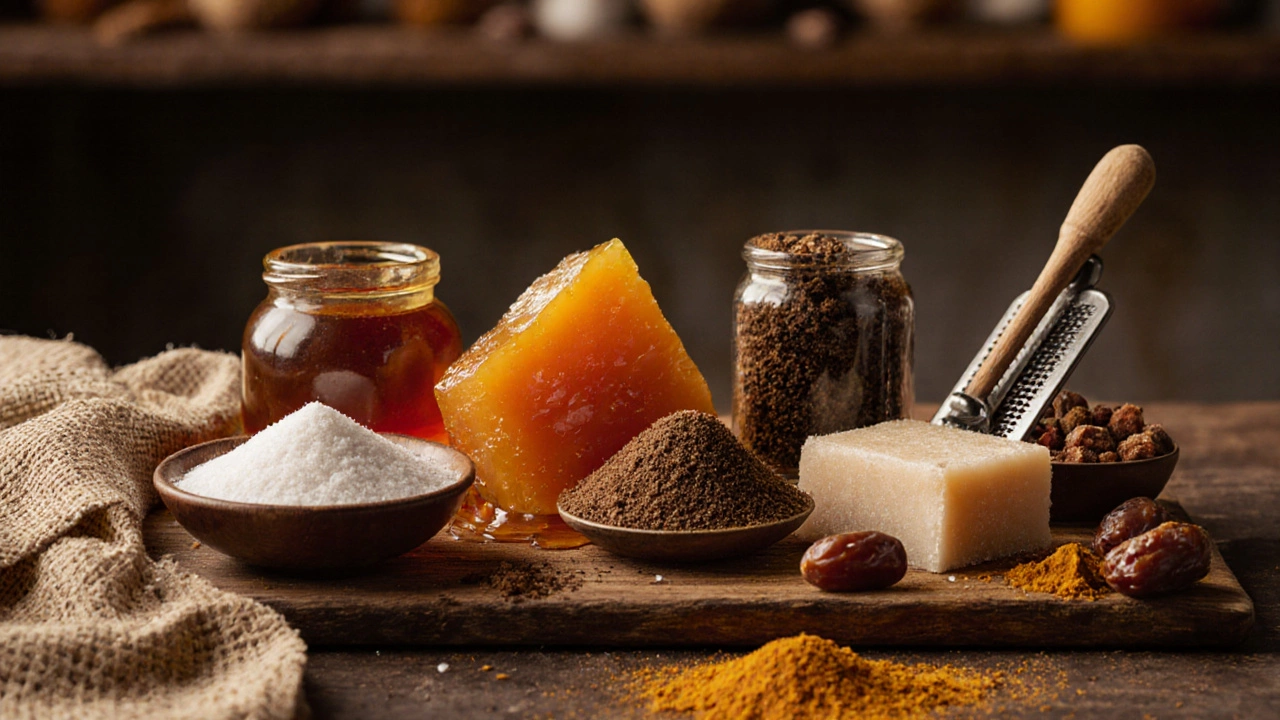
Indian Sweets Sweetener: Natural Alternatives and Traditional Choices
When you think of Indian sweets sweetener, the natural ingredients used to sweeten traditional Indian desserts like jalebi, barfi, and laddoo. Also known as traditional Indian sugar substitutes, it's not just about adding sweetness—it's about flavor, texture, and cultural heritage. Most people assume white sugar is the default, but for generations, Indian kitchens relied on what the land provided: jaggery, honey, khandsari, and even date paste. These aren’t just alternatives—they’re the original ingredients that gave Indian sweets their deep, earthy richness.
The real difference shows up in how these sweeteners behave. Jaggery, an unrefined cane sugar made by boiling sugarcane juice until it solidifies. Also known as gur, it adds a molasses-like depth that white sugar can’t match. It’s what gives gulab jamun its caramelized edge and makes chikki crunchy with a hint of smokiness. Honey, used in South Indian sweets like holige and payasam. Also known as madhu, it brings floral notes and helps retain moisture, keeping sweets soft longer. Even in modern kitchens, many home cooks still prefer jaggery over sugar because it doesn’t just sweeten—it enhances. And unlike refined sugar, jaggery contains trace minerals like iron and magnesium, making it a slightly smarter choice for everyday use.
But here’s the catch: not all sweeteners work the same in every recipe. You can’t swap honey for jaggery in a barfi without changing the texture—it won’t set right. And while store-bought Indian sweets often use cheap, refined sugar for consistency, homemade versions still lean on tradition. That’s why you’ll find recipes in our collection that explain how to adjust cooking times when using raw sugar, why some sweeteners caramelize faster, and how to avoid grainy textures when using powdered jaggery. You’ll also see why some people skip sugar entirely and use dates or coconut sugar, especially for kids’ desserts or diabetic-friendly versions.
What ties all these together is the idea that sweetness in Indian cooking isn’t just a flavor—it’s a technique. The choice of sweetener affects color, shelf life, mouthfeel, and even digestion. That’s why our posts don’t just list recipes—they break down the science behind why certain sweeteners work better in rasgulla versus halwa. Whether you’re trying to cut down on sugar, looking for authentic flavors, or just curious why your grandmother’s sweets tasted different, you’ll find clear, practical answers below.