Jaggery: The Natural Sweetener in Indian Cooking and Its Health Benefits
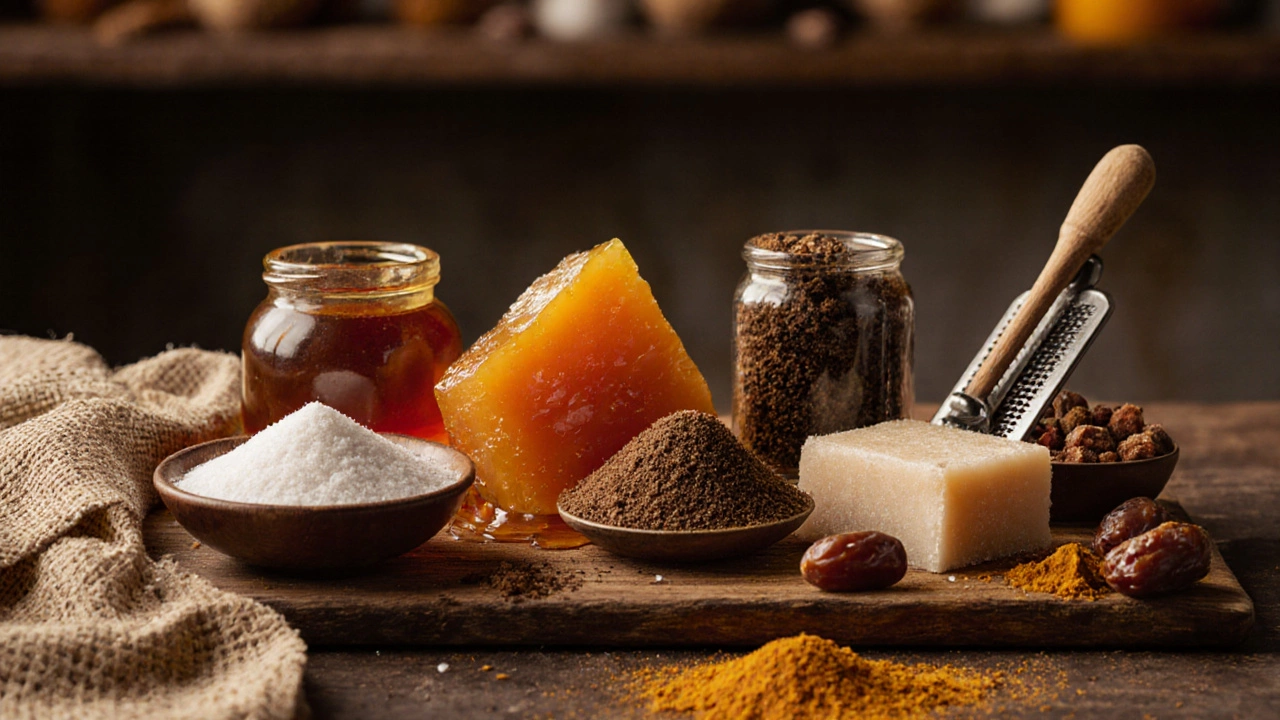
When you think of sweeteners in Indian kitchens, jaggery, an unrefined sugar made from sugarcane or palm sap, used widely across South Asia for its rich, molasses-like flavor and traditional health claims. Also known as gur, it’s not just a sugar substitute—it’s a cultural staple. Unlike white sugar, jaggery keeps its minerals like iron, magnesium, and potassium because it’s never stripped through heavy processing. That’s why it shows up in everything from sweet snacks to savory curries and even Ayurvedic remedies.
Jaggery isn’t just about sweetness—it’s tied to how food works in Indian households. You’ll find it in Indian sweets, traditional desserts like gur ki roti, gur ka halwa, and til laddoo, often served during festivals and winter months because it’s believed to warm the body. It’s also added to dal, chutneys, and even spice blends to balance heat and acidity. In rural kitchens, jaggery is often the only sweetener available, and many still prefer it over refined sugar for its deeper taste and slower energy release. It’s not a miracle food, but compared to white sugar, it’s a more complete form of sweetness—with trace nutrients and less of the sharp spike in blood sugar.
People often ask if jaggery is healthier than sugar. The answer isn’t simple. It’s still sugar—calories count. But because it’s less processed, it doesn’t cause the same crash-and-burn effect. Many Indian families use it in morning tea, replace sugar in rice puddings, or chew small pieces after meals to aid digestion. It’s also common in postpartum diets and cold-weather recipes. You won’t find it in every modern recipe, but if you’re looking for authentic flavor and a touch of tradition, jaggery brings something no granulated sugar can.
What you’ll find in the posts below are real, practical ways jaggery shows up in everyday Indian cooking—from how it’s made at home to why it’s used in certain dishes instead of sugar. You’ll see how it pairs with spices, how to substitute it in recipes, and what science actually says about its benefits. No fluff. Just clear, usable info from kitchens that still use jaggery every day.