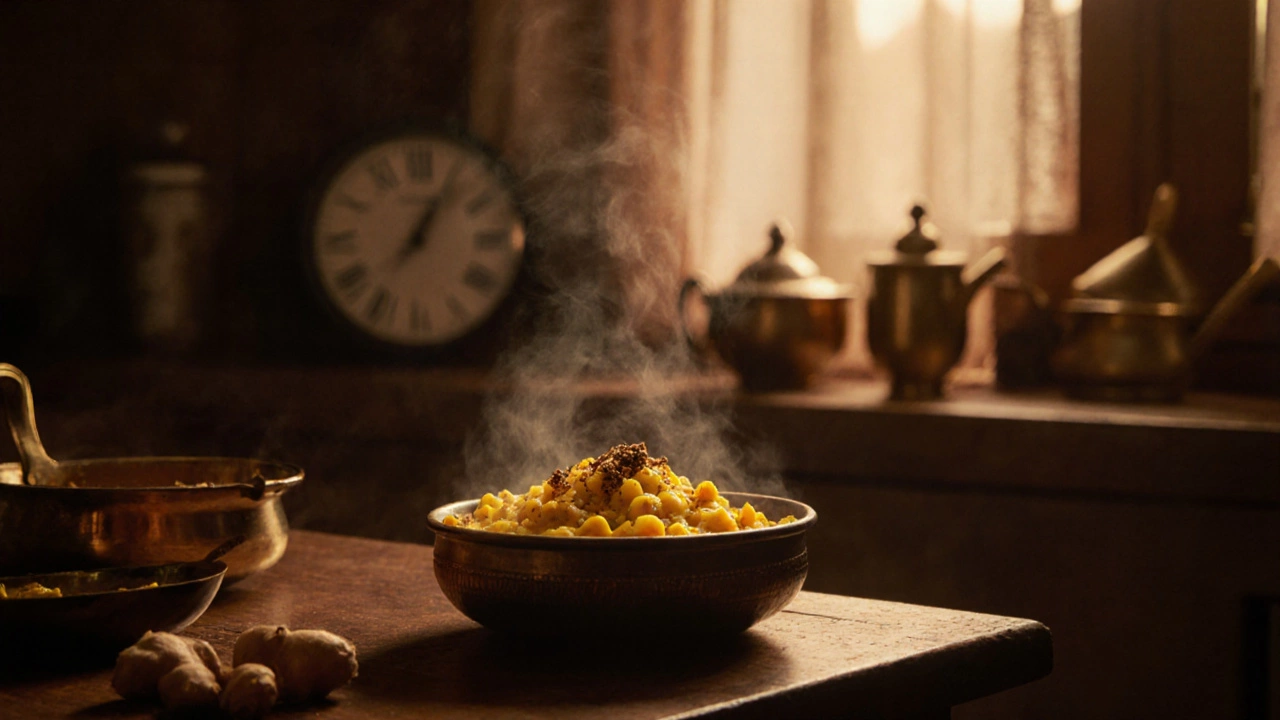
Lentils Bedtime: What You Need to Know About Eating Dal at Night
When you think of lentils bedtime, the practice of consuming lentil-based meals in the evening. Also known as nighttime dal, it's a common habit in Indian households where dal is a daily staple. But does eating lentils before bed help you sleep—or hurt your digestion? The answer isn’t simple. It depends on the type of dal, how it’s cooked, and your body’s tolerance.
Not all lentils are the same. moong dal, a light, easily digestible lentil often used in soups and khichdi, is a top choice for nighttime meals. It’s low in fiber compared to others and breaks down quickly. On the other hand, chana dal, a dense, protein-rich split chickpea, can sit heavy in your stomach if eaten late. Then there’s urad dal, a black lentil known for its rich flavor but also its tendency to cause bloating. Many people avoid it at night for good reason.
Why does this matter? Because digestion slows down while you sleep. If your body is still working hard to break down tough lentils, it can lead to discomfort, gas, or even disrupted sleep. But here’s the twist: soaking and pressure-cooking dal properly can make a huge difference. In fact, many Indian grandmothers soak dal overnight and cook it with a pinch of hing (asafoetida)—a trick that reduces gas and improves digestibility. You don’t need to skip dal at night. You just need to choose the right kind and cook it right.
There’s also the question of portion size. A small bowl of well-cooked moong dal with rice or roti is fine. A large plate of heavy toor dal with lots of oil? That’s asking for trouble. The key isn’t to avoid lentils after dark—it’s to make them work for you, not against you.
What you’ll find below are real, tested tips from Indian kitchens. We’ll show you which dals are safest to eat at night, how to cook them so they don’t bloat you, and what to pair them with for better digestion. No myths. No fluff. Just what works.