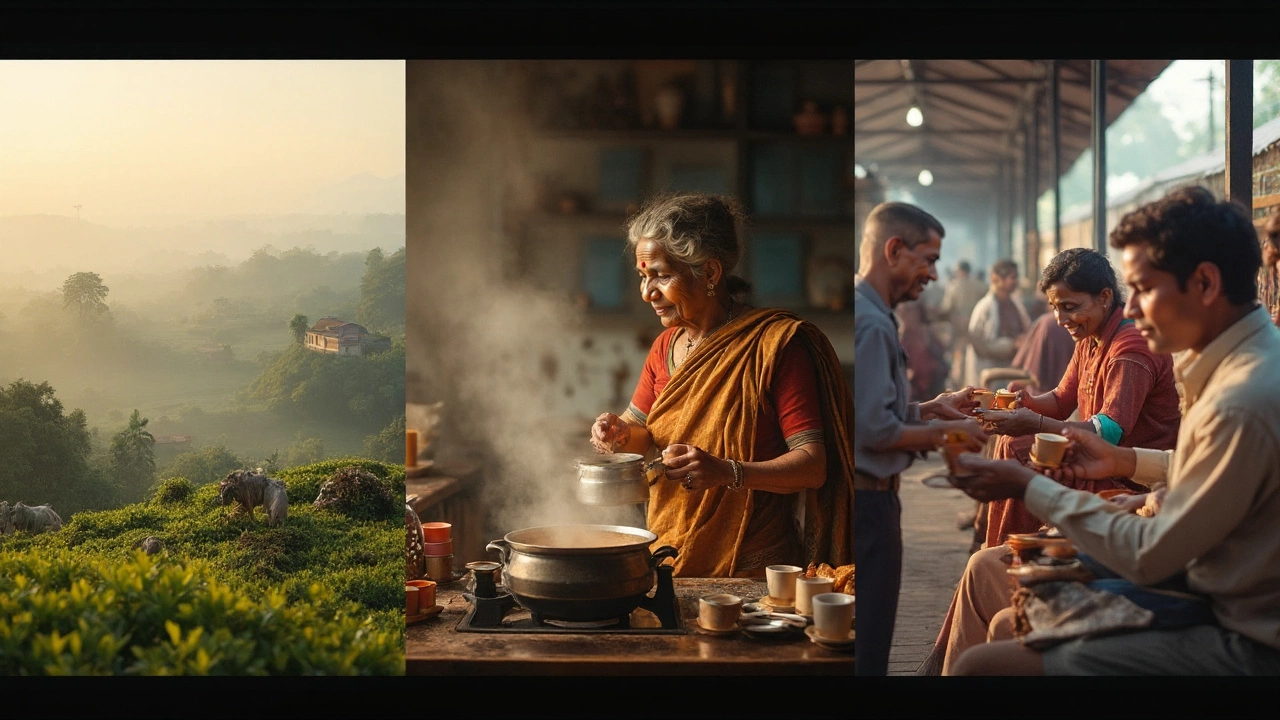
Masala Chai: The Spiced Tea That Powers India's Daily Ritual
When you think of masala chai, a fragrant, spiced black tea brewed with milk, sugar, and a blend of warming Indian spices. Also known as chai, it’s not just a drink—it’s the heartbeat of Indian mornings, afternoons, and late-night chats. Unlike plain tea, masala chai isn’t about simplicity. It’s about layers—cardamom cracking open in hot water, ginger biting back, cinnamon swirling in, cloves adding depth, and black pepper whispering warmth. This isn’t tea you sip. It’s tea you feel.
The magic of masala chai doesn’t come from one ingredient. It’s the chai spices, a traditional mix of cardamom, ginger, cinnamon, cloves, and sometimes black pepper or fennel that turn simple tea into something alive. These aren’t just flavorings—they’re functional. Cardamom aids digestion, ginger reduces inflammation, and cinnamon helps balance blood sugar. That’s why millions drink it daily—not because it’s trendy, but because it works. And while you might find bottled versions in supermarkets, the real stuff is made fresh, often in a small pot on a stove, boiled slowly until the spices release their oil and the tea turns thick and golden.
What makes masala chai different from Western tea culture isn’t just the spices—it’s the ritual. No one in India drinks it with a lemon wedge. No one uses tea bags unless they’re in a rush. It’s brewed with loose leaves, milk, and sugar, boiled together until it’s strong enough to stand up to the spices. The result? A drink that warms you from the inside out, whether you’re rushing to work, taking a break after lunch, or sitting with family after dinner. Even in cities where coffee shops line every corner, masala chai still wins. Why? Because it’s not just a beverage. It’s comfort in a cup.
You’ll find variations everywhere—from the sweet, milky version in Mumbai street stalls to the stronger, less sugary brew in South India. Some add star anise. Others use ajwain. Some boil it for five minutes. Others let it simmer for twenty. There’s no single recipe, but there’s one truth: if it doesn’t smell like a spice market and taste like a hug, it’s not masala chai.
Below, you’ll find real stories from people who make it, fix it, and live by it. Whether you’re trying to understand why your chai tastes flat, wondering how to make it without milk, or just curious about what’s in those little spice packets, you’ll find answers here. No fluff. No theory. Just what works.