National Dish of India: What It Really Is and Why It Matters
There is no official national dish of India, a term often used to describe a food that represents the country’s culinary identity. Also known as India’s signature dish, this idea is more cultural than legal—because India doesn’t have one. Instead, it has dozens of dishes that millions eat daily, each tied to region, religion, and tradition.
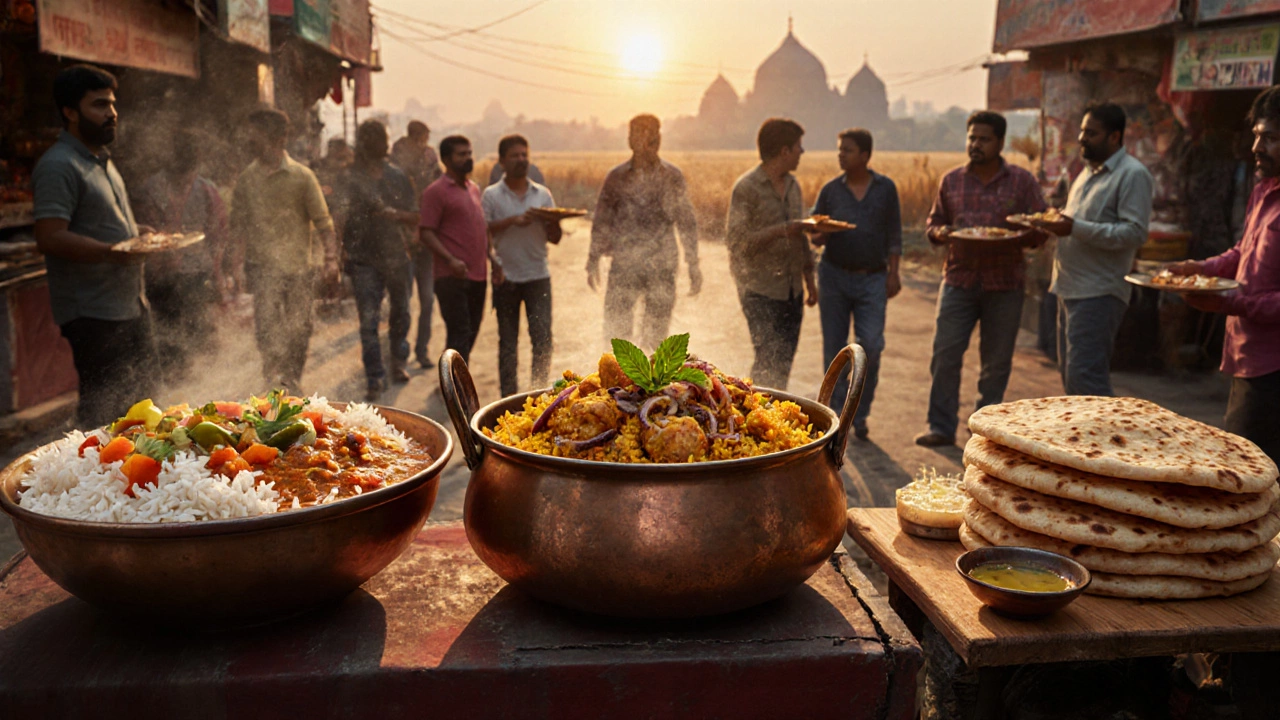
When people say biryani, a layered rice dish with meat, spices, and saffron, cooked slowly to lock in aroma, they’re talking about a dish that travels from Hyderabad to Kolkata with different flavors but the same soul. Others point to dal, a simple lentil stew that’s a daily staple from Punjab to Tamil Nadu, eaten with rice or roti by over 80% of households. Then there’s paneer, a fresh, non-melting cheese made from curdled milk, central to North Indian curries and snacks. These aren’t just recipes—they’re routines, rituals, and sometimes, the only meal someone eats all day.
Why does this matter? Because calling one dish the national dish ignores how diverse India is. A Bengali breakfast of poha and jalebi is nothing like a Gujarati thali with dhokla and kadhi. A Punjabi chicken curry isn’t the same as a Kerala fish curry with coconut. The real story isn’t about picking a winner—it’s about understanding the layers. You’ll find posts here that explain how biryani gets its smell, why dal can cause gas, how to make paneer from sour milk, and why store-bought paneer turns hard. These aren’t random recipes. They’re answers to real questions people have while cooking Indian food at home.
What you’ll see below isn’t a list of the "best" dishes. It’s a collection of honest, practical guides about what Indians actually eat—and why. Whether you’re trying to fix a bland curry, understand why your dal won’t soften, or figure out if tikka masala counts as curry, you’ll find the truth here—not myths, not marketing, just what works in real kitchens across India.