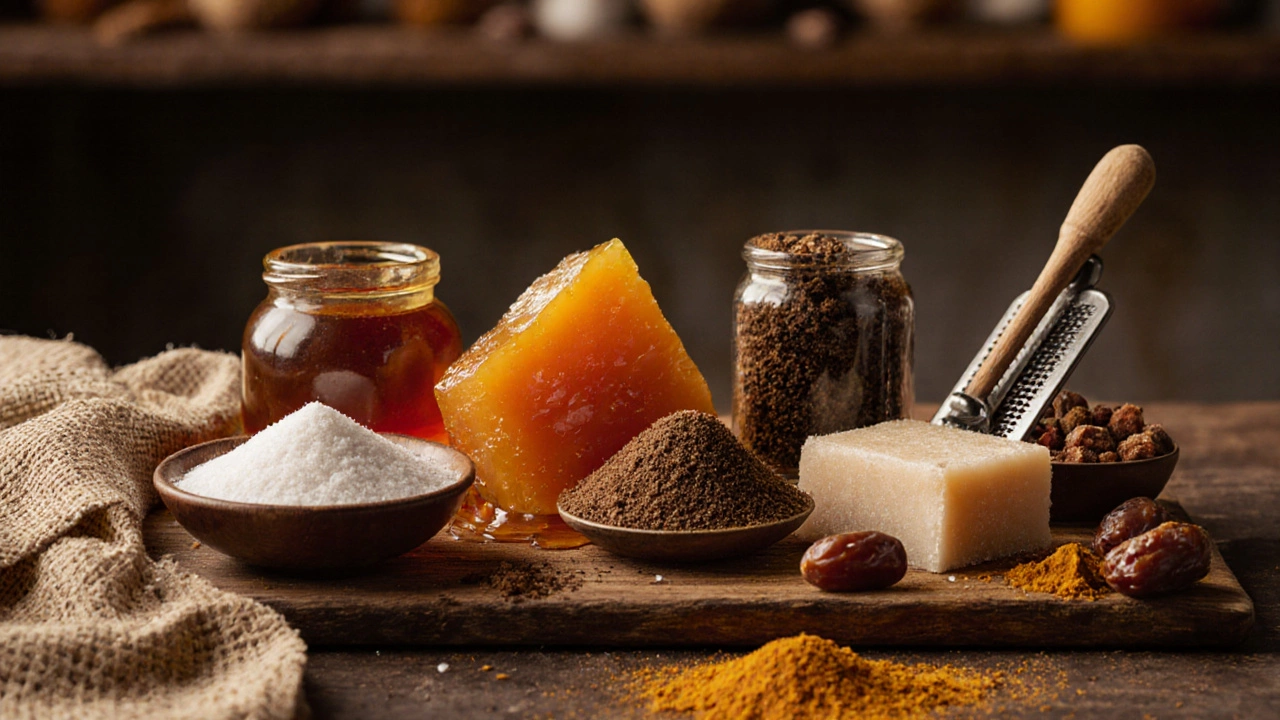
Natural Sweeteners: Healthy Alternatives to Sugar in Indian Cooking
When you think of natural sweeteners, plant-based alternatives to refined sugar that add flavor without artificial chemicals. Also known as unrefined sweeteners, they’ve been part of Indian kitchens for centuries—not as diet fixes, but as everyday ingredients that taste better and work better with your body. Think of jaggery melting into chai, honey drizzled over yogurt, or dates blended into ladoos. These aren’t trendy swaps—they’re traditions with science behind them.
Not all natural sweeteners are the same. jaggery, unrefined cane sugar made by boiling sap, rich in minerals and slow-digesting gives depth to sweets like gur ki roti and balances spice in chutneys. honey, a natural preservative and probiotic carrier, often used in Ayurvedic remedies and breakfast porridges works best in warm drinks, not high-heat baking. Then there’s dates, a fiber-rich, caramel-like sweetener ground into pastes for energy balls and dessert fillings. Even stevia, a zero-calorie leaf extract gaining ground in modern Indian households, is now being mixed into sugar-free lassi and homemade granola. Each has a different sweetness level, texture, and impact on digestion—so choosing the right one matters.
The real question isn’t whether to use them—it’s how to use them right. Many people swap sugar for jaggery thinking it’s a free pass, but it still spikes blood sugar. Others use honey in hot tea, killing its enzymes. And stevia? Too much leaves a bitter aftertaste. The posts below show you exactly which sweetener to pick for which dish: how to make soft paneer sweets with dates instead of sugar, why jaggery works better than honey in poha, and how to cut sweetness without losing flavor in traditional desserts. You’ll also find tips on storing these sweeteners, spotting fake versions in markets, and blending them for the perfect balance. No guesswork. Just real results—whether you’re making a quick morning snack or a festival treat.