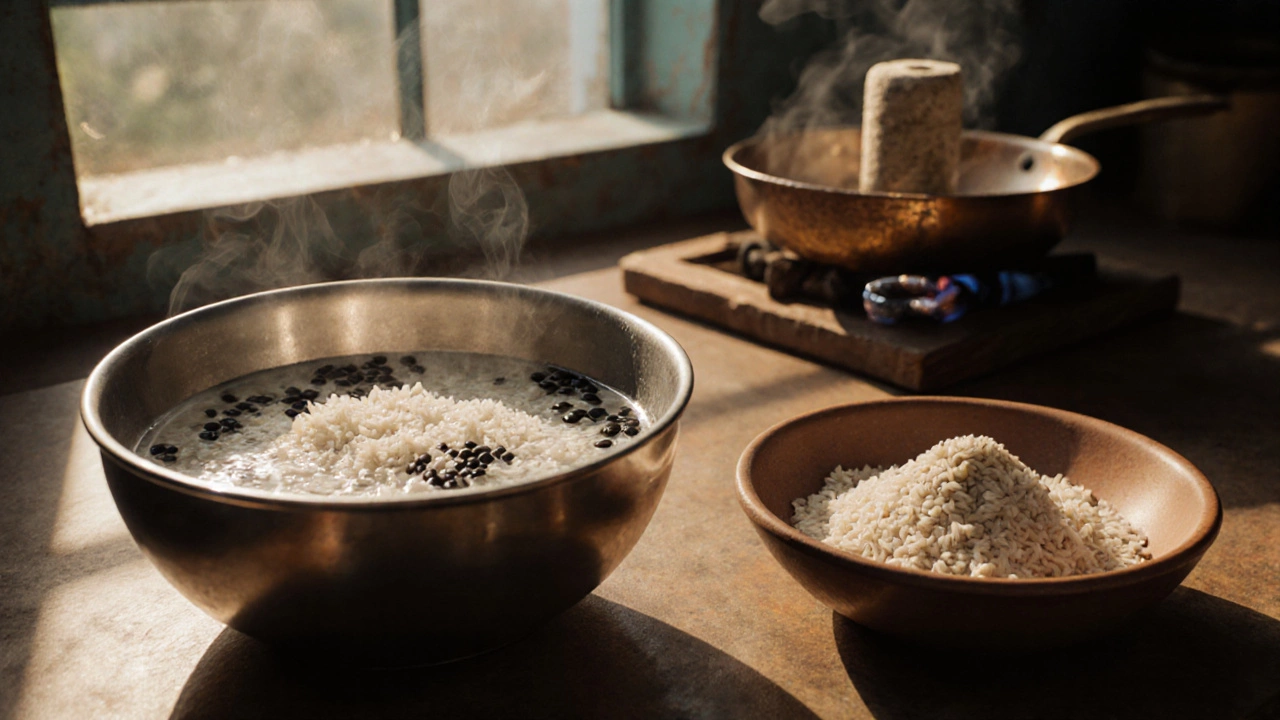
No Fermentation Dosa: Easy Dosa Recipes Without Overnight Soaking
When you want dosa but don’t have time to soak rice and lentils overnight, no fermentation dosa, a quick version of the classic South Indian crepe made without waiting for natural souring. Also known as instant dosa batter, it’s a game-changer for busy mornings, office lunches, or when your pantry runs low on prepped batter. This isn’t a compromise—it’s a smart hack that still gives you crisp edges, soft centers, and that unmistakable dosa flavor, all in under an hour.
You don’t need a fermentation starter, yogurt, or a warm corner of your kitchen. Instead, you use simple ingredients like rice flour, urad dal flour, baking soda, and a splash of vinegar or lemon juice to mimic the tang and lift that fermentation usually provides. The science is straightforward: baking soda reacts with acid to create bubbles, just like yeast does over hours. The result? A batter that puffs up slightly when cooked, stays crispy, and doesn’t taste flat. Many home cooks in Tamil Nadu and Karnataka have been using this method for decades, especially during monsoons when fermentation fails. It’s not new—it’s just not talked about enough.
Related to this are rice flour, a finely ground powder made from raw or parboiled rice, commonly used in quick dosa and uttapam recipes, and urad dal flour, a protein-rich powder made from ground black gram, essential for texture and crispiness. Together, they form the backbone of no-fermentation batter. You can buy them pre-mixed at Indian grocery stores, or make your own by grinding soaked and dried rice and urad dal. Skip the whole soaking-and-grinding step entirely, and you’ve got a pantry staple that works in minutes.
Don’t confuse this with store-bought dosa mixes that are full of preservatives. Homemade no-fermentation batter uses just five ingredients: rice flour, urad dal flour, salt, baking soda, and water. Add a teaspoon of vinegar or lemon juice, let it rest for 20 minutes, and you’re ready to cook. It’s foolproof. No more throwing away sour batter. No more guessing if it’s ready. Just mix, pour, flip, and eat.
And yes, it works with any rice—no need to hunt down special idli rice. Regular basmati or even short-grain rice flour works fine. The trick is the ratio: 3 parts rice flour to 1 part urad dal flour. Too much dal, and it gets sticky. Too little, and it won’t hold together. A pinch of baking soda is all you need—no more, no less. Overdo it, and you’ll taste metal. Underdo it, and the dosa stays flat.
This method is perfect for people who don’t have time to plan meals ahead, parents making breakfast before school, or anyone who’s ever stared at a jar of batter wondering if it’s spoiled. It’s also great for travelers, students, or anyone living outside India where fermentation-friendly temperatures aren’t guaranteed. You can make a batch, store it in the fridge for three days, and cook as needed. No waste. No stress.
What you’ll find below are real recipes and tips from people who’ve tested this method over and over. You’ll learn how to fix runny batter, how to get that perfect crisp without oil, why some people add semolina, and how to make it gluten-free without sacrificing texture. There’s no magic—just clear, tested steps that work every time. Whether you’re new to dosa or just tired of waiting, these posts give you the tools to make it fast, right, and delicious.