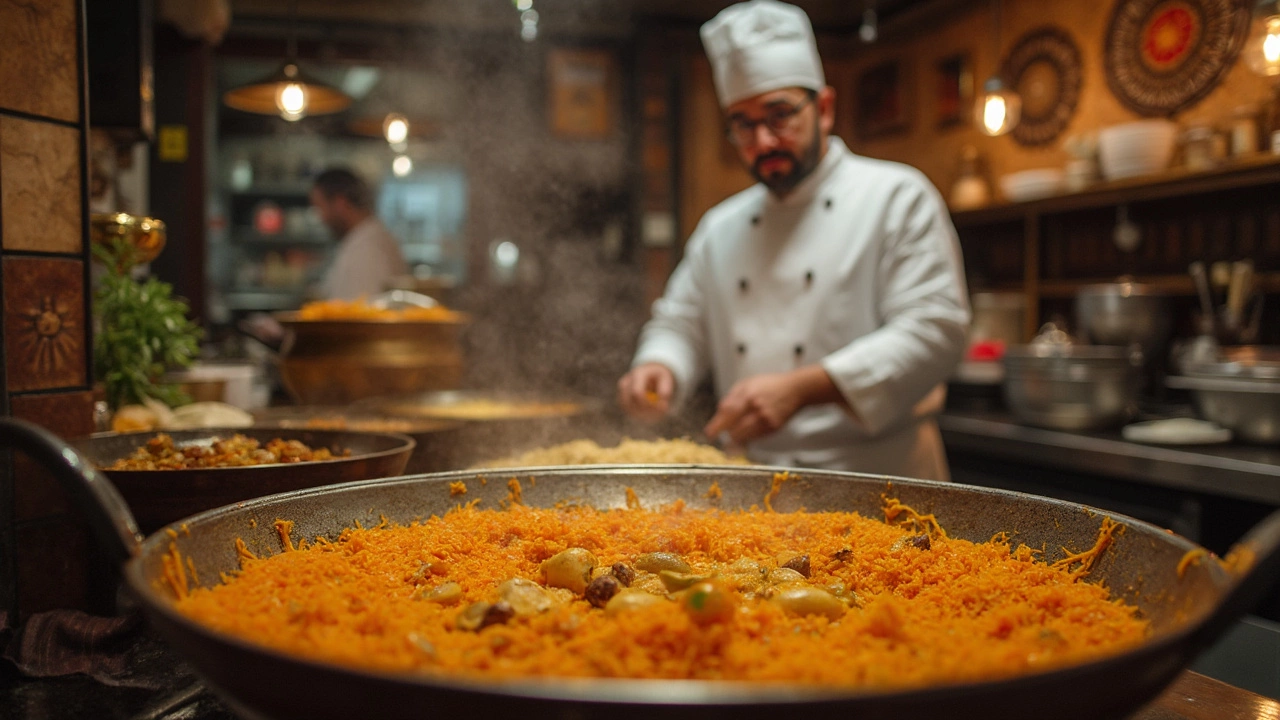
Restaurant Biryani: How It's Made, Why It Tastes Better, and What Makes It Different
When you think of restaurant biryani, a layered rice dish with spiced meat, saffron-infused rice, and slow-cooked aromatics that’s built for depth, not speed. It’s not just rice and meat—it’s a slow dance of heat, time, and spice that turns simple ingredients into something unforgettable. You’ve tasted it at a wedding, a roadside stall, or a fancy Indian restaurant. But why does it always taste better than the biryani you make at home? The answer isn’t just more spices. It’s technique.
biryani spices, a blend of whole spices like cardamom, cloves, cinnamon, and bay leaf, often toasted and ground fresh, are the soul of this dish. Restaurant versions don’t just dump garam masala—they toast each spice separately, grind them just before use, and layer them at different stages. layered biryani, a method where marinated meat, partially cooked rice, fried onions, and herbs are stacked in a pot, traps steam like a pressure cooker without the machine. That sealed pot, often wrapped in dough or cloth, lets the flavors meld for hours. No shortcuts. No microwaves. Just patience and precision.
aromatic biryani, a term that refers to the fragrance released when the lid is lifted—saffron, rose water, fried onions, and slow-cooked meat isn’t added at the end. It’s built in. The meat is marinated overnight with yogurt, ginger-garlic paste, and turmeric. The rice is parboiled just until it’s 70% done, then layered with the meat so it finishes cooking in the steam. That’s why restaurant biryani never turns mushy. The rice stays separate. The meat falls off the bone. The scent hits you before you even take a bite.
Most home cooks skip the sealing step. They stir it. They rush it. They use pre-ground spices. But restaurant biryani doesn’t just taste different—it feels different. It’s richer, deeper, and more complex because every layer has its moment. The onions caramelize slowly. The meat absorbs the marinade over hours. The rice soaks up the saffron water without breaking. That’s the secret: time, not quantity.
What you’ll find in the posts below aren’t just recipes. They’re breakdowns of the real techniques behind that restaurant-quality biryani. You’ll learn why browning the meat before cooking matters, how to pick the right rice, why saffron isn’t just for color, and how to fix common mistakes that turn biryani into plain rice with meat. No fluff. No guesswork. Just what works—because you deserve to taste the real thing, even if you’re cooking in a small kitchen.