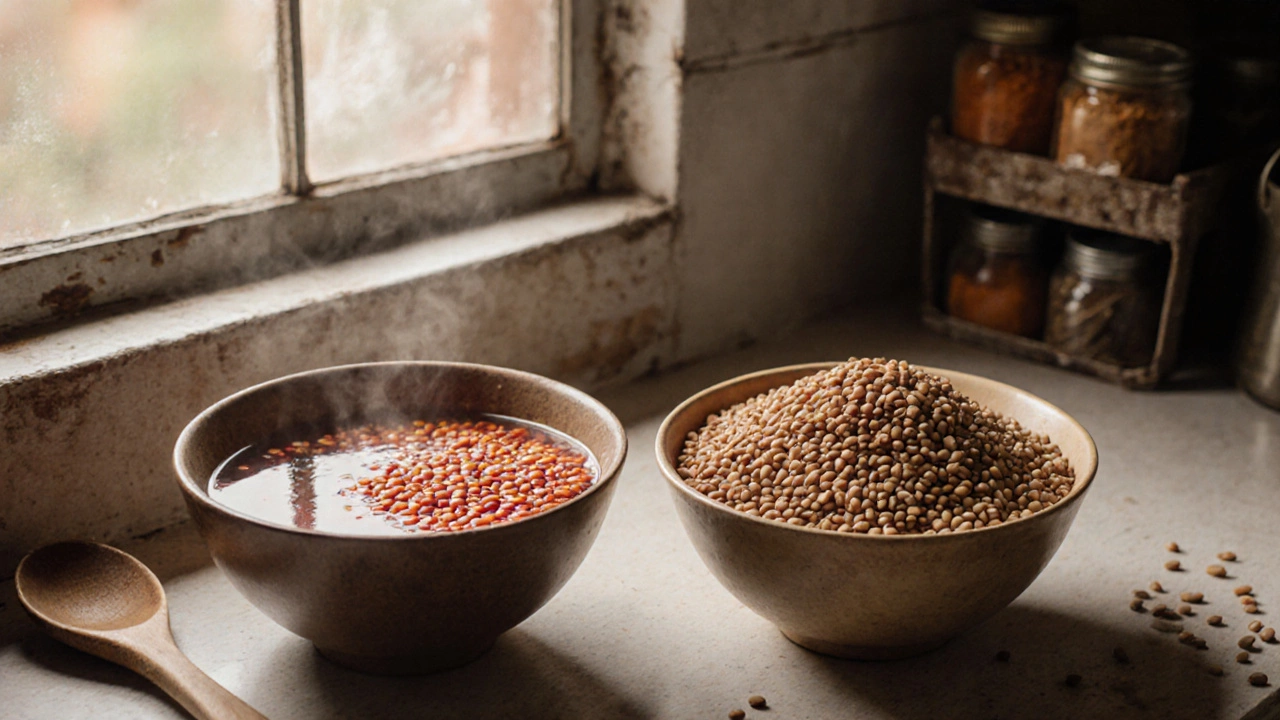
Soak Pulses: Why It Matters and How to Do It Right
When you soak pulses, the process of letting dried lentils, chickpeas, or beans sit in water before cooking. Also known as pre-soaking lentils, it’s not optional—it’s the foundation of great Indian cooking. Skip it, and you’ll end up with hard dal, longer cooking times, and bloating that lingers all afternoon. This isn’t just tradition; it’s science. Soaking breaks down phytic acid and oligosaccharides—compounds that make digestion harder and cause gas. The result? Softer lentils, faster cooking, and meals that sit well in your stomach.
Think about your water to dal ratio, the amount of water used to cook lentils after soaking. Dal water ratio changes depending on whether you soaked them or not. Unsoaked pulses need way more water and time, often turning mushy or uneven. Soaked pulses? They absorb water evenly, cook in under 20 minutes, and hold their shape. That’s why recipes for dal preparation, the full process of cleaning, soaking, and cooking lentils always start with soaking. It’s the same reason why reduce gas from dal, methods to minimize bloating after eating lentils always begin with soaking. Even sprouting, a more advanced trick, starts with soaking. It’s the first domino.
You’ll find this in nearly every post here. Whether it’s about soak pulses for moong dal or how to fix hard store-bought chana dal, the answer always circles back to soaking. Some people skip it because they’re in a rush. Others think rinsing is enough. But rinsing doesn’t soften. It doesn’t reduce gas. It doesn’t cut cooking time. Only soaking does. And the right way? Cold water, 4 to 8 hours, or overnight. A pinch of salt or baking soda? Optional, but helpful. A lid? Keep it on to avoid dust. Drain and rinse before cooking—don’t use the soaking water. That’s where the gas-causing compounds settle.
What you’ll find below isn’t just a list of articles. It’s a practical guide to making dal that’s tender, tasty, and easy on your gut. From the exact water ratio for toor dal to why soaking prevents gas, these posts cut through the noise. No fluff. No myths. Just what works—in your kitchen, on your schedule, with ingredients you already have.