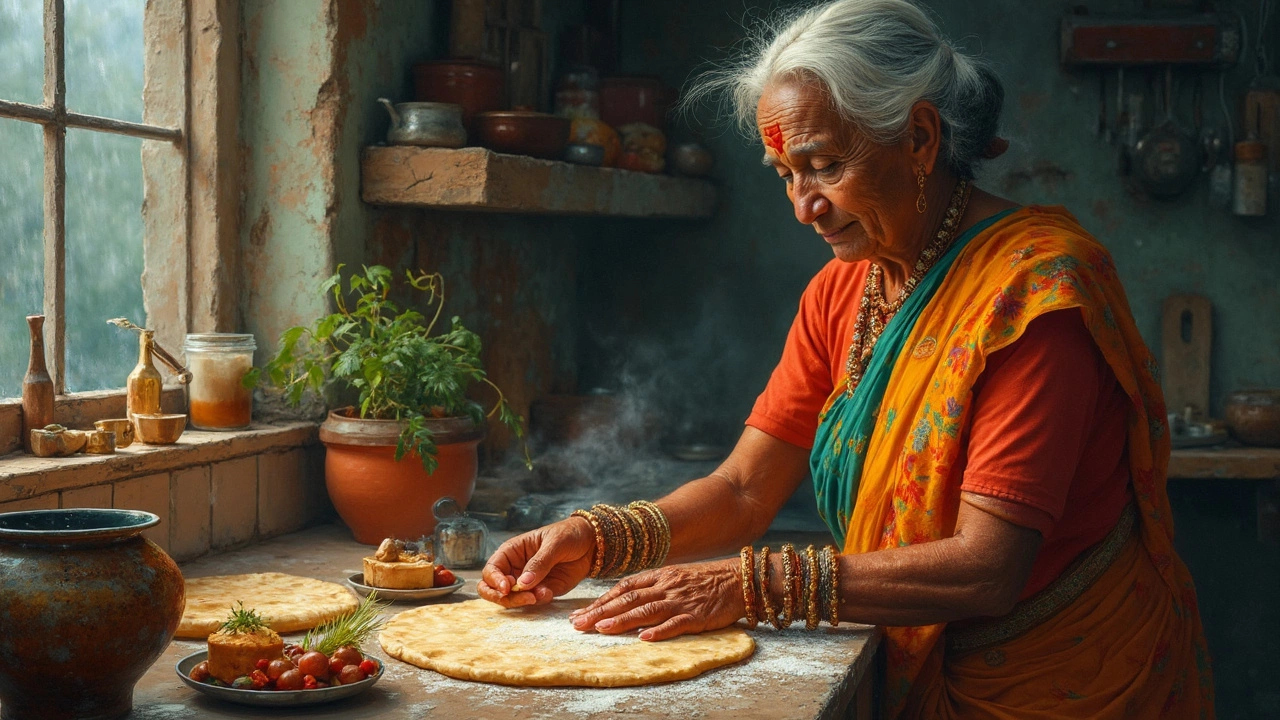
Soft Roti: How to Make Perfectly Fluffy Indian Flatbread Every Time
When you pull a warm soft roti, a traditional Indian unleavened flatbread made from whole wheat flour, water, and a pinch of salt. Also known as chapati, it's the foundation of countless meals across India—from simple dal and ghee to rich curries and pickles. The difference between a good roti and a great one isn’t just technique—it’s understanding how flour, heat, and pressure work together. Most people think roti is just dough rolled thin and cooked, but the real secret lies in hydration, resting time, and the right cooking surface.
Why does your roti turn out hard or dry? It’s rarely the recipe. More often, it’s skipping the resting step, using cold water, or cooking on too high heat. A whole wheat roti, a staple in Indian households, made from atta (whole wheat flour) and known for its fiber-rich, nutty flavor needs time for the gluten to relax. If you roll it right after mixing, it snaps back and becomes tough. Let it sit for 20–30 minutes, covered, and you’ll notice the dough becomes smoother, more pliable. And don’t skip the water temperature—lukewarm water helps activate the flour’s natural starches, giving you that pillowy texture.
Heat matters too. A cast iron tawa or griddle, preheated just right, makes all the difference. Too hot, and the outside burns before the inside puffs. Too cool, and the roti stays flat and leathery. The puff is not magic—it’s steam trapped inside the dough. Press gently with a cloth as it cooks, and you’ll see it balloon up like a little cloud. That’s when you know it’s perfect. And yes, even store-bought atta can make soft roti if you treat it right. Many think roti is just a side, but in homes across India, it’s the utensil, the plate, and the comfort all in one.
What you’ll find in this collection aren’t just recipes—they’re fixes. Why does your roti crack when rolling? How do you store it so it stays soft for days? Can you make it without a tawa? You’ll see real answers from people who cook this every day, not just once a year for Diwali. These posts cut through the noise. No fluff. No fancy tools. Just what works.