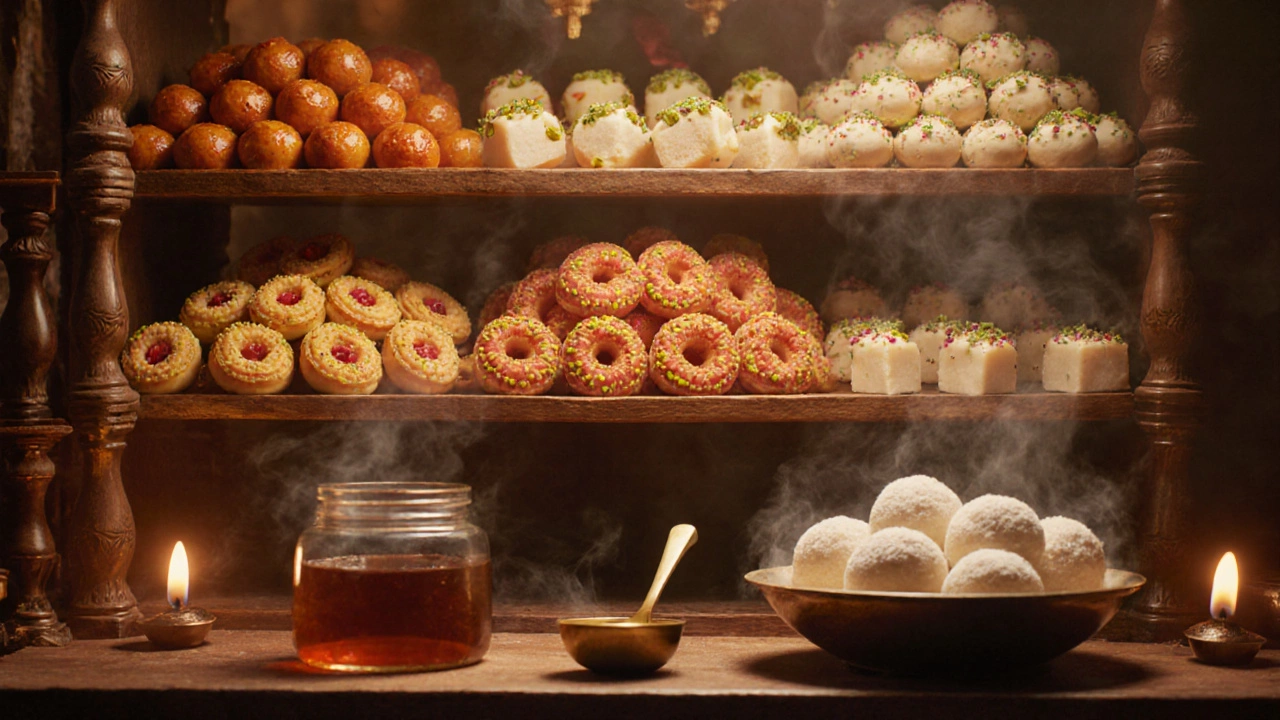
Traditional Indian Candy: Sweet Treats, Ingredients, and How They're Made
When you think of traditional Indian candy, handmade, sugar-based sweets rooted in centuries-old recipes, often made with jaggery, milk solids, and spices like cardamom and saffron. Also known as mithai, it's not just dessert—it's celebration in every bite. Unlike mass-produced candies, these sweets are made slowly, with care, and often passed down through families. You won’t find artificial colors or preservatives here. Instead, you’ll taste raw sugar, roasted gram flour, dried fruits, and the warm earthiness of jaggery.
One of the most surprising examples is pashmak, a delicate, hand-spun sugar thread dessert with Mughal origins, often served at weddings and festivals. Also known as Indian candy floss, it’s made by pulling hot sugar syrup into fine strands using nothing but a wooden stick and skill—no machines, no dyes. Then there’s jaggery, unrefined cane sugar that gives many Indian sweets their deep, molasses-like flavor and natural color. It’s not just a sweetener—it’s a cultural staple, used in everything from candies to lentil dishes to balance spice and heat. These aren’t just ingredients; they’re the backbone of a whole system of flavor that’s been refined over generations. You can’t make authentic Indian candy without understanding how jaggery behaves differently than white sugar, or why milk solids need to be cooked low and slow to avoid burning.
People often assume Indian sweets are all sugary and heavy, but that’s not the whole story. Many traditional candies are made with nuts, seeds, and spices that add texture, nutrition, and even digestive benefits. Cardamom in pashmak isn’t just for aroma—it helps settle the stomach. Sesame and jaggery balls are eaten in winter for warmth and energy. Even the way these candies are stored—wrapped in banana leaves or sealed in clay pots—has a purpose, keeping them fresh without plastic or chemicals.
What you’ll find in the posts below isn’t just recipes. It’s the real talk about what goes into these sweets, how they’re made in homes across India, and why store-bought versions often miss the point. You’ll learn how to tell real pashmak from fake cotton candy, why jaggery is better than sugar for certain sweets, and how to avoid the common mistakes that turn soft candies into hard rocks. Whether you’re curious about the history, trying to make them at home, or just want to understand why these treats still matter, you’ll find the answers here—no fluff, no filler, just the sweet truth.