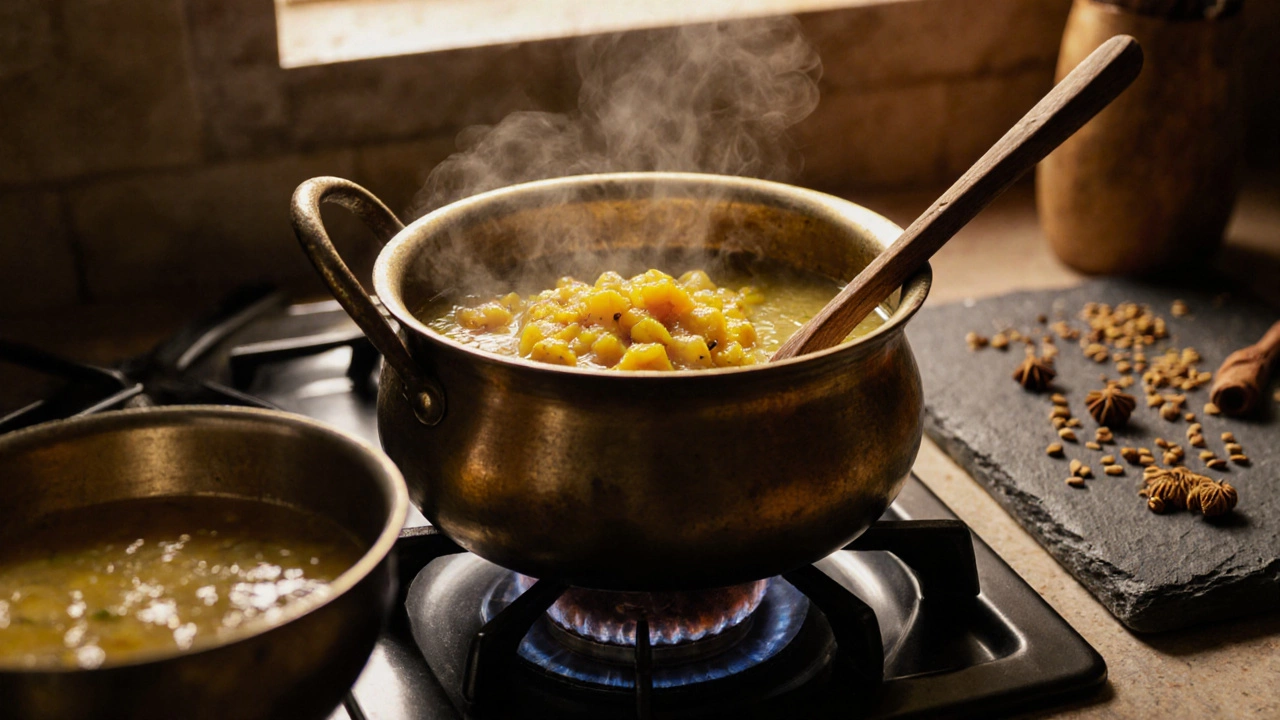
Water to Dal Ratio: Perfect Lentil Cooking Ratios for Soft, Creamy Dal
When you cook water to dal ratio, the amount of liquid needed to cook lentils to the right texture without turning them to paste. It's not just a number—it's the difference between a bowl of comfort and a disappointing, watery mess. Most people guess. They pour in a cup, then another, then another—until the dal either turns to soup or stays stubbornly hard. But the truth? Different dals need different amounts of water. Moong dal? That’s one part lentil to two and a half parts water. Toor dal? You’ll need closer to three parts. Skip this and you’re not just wasting time—you’re wasting flavor.
The dal, a staple lentil dish in Indian households, made from split pulses like moong, toor, or masoor isn’t just about spices. It’s about balance. Too little water and your dal stays gritty, hard to digest, and tough on the stomach. Too much and you end up with bland, runny liquid that needs thickening with flour or paste—something no traditional cook would do. The cooking method, how you heat, simmer, and cover the dal during cooking matters just as much. Covering the pot traps steam and helps the dal soften evenly. Leaving it open lets the water evaporate faster, which can help thicken the dal if you’re going for a thicker consistency. And don’t forget soaking—especially for chana dal or urad dal. Skipping it means longer cooking, more water, and more gas.
What you find in your kitchen matters too. Store-bought dal can be older, drier, and need more water. Freshly ground or home-cleaned dal? It might need less. Pressure cookers change the game—they need less water than stovetop pots. And if you’re making dal tadka, you want it thick enough to hold the tempering, not drown in it. That’s why the dal consistency, the ideal texture of cooked lentils—creamy but not runny isn’t one-size-fits-all. It’s personal. Some like it soupy. Others want it spoonable. But the right water to dal ratio gives you control. You start with the base, then adjust. No more guessing. No more throwing out failed batches.
You’ll find posts here that break down exactly how much water to use for each type of dal—from the quick-cooking masoor to the stubborn chana. You’ll learn why rinsing matters before measuring water, how pressure cooking changes the math, and what to do if your dal turns out too thick or too thin. We’ll show you how to fix it with simple tricks, not fancy ingredients. This isn’t theory. It’s what works in real kitchens, day after day. Whether you’re making dal for the first time or you’ve been cooking it for years, the right water to dal ratio is the one thing that can turn good into great.