Tandoori Marinade Optimizer
Configure Your Marinade
The foundation determines tenderness and heat protection.
Full-Fat / Greek
Best Choice Rich lipids, thick textureLow-Fat / Non-Fat
Weak Runny, lacks flavor carrierOil Only
Avoid No tenderizing powerMarinade Analysis
Remember: Full-fat yogurt is key for authentic results.
Ever wondered why your homemade tandoori chicken turns out dry while the restaurant version stays juicy and tender? You probably spent hours grinding spices, mixing chilies, and balancing flavors. Yet, something is missing. The secret isn't just about heat or aroma. It’s about texture and chemistry. The single most important ingredient in any great marinade, especially for tandoori chicken which is a popular Indian dish of marinated chicken cooked in a clay oven, is yogurt.
Yogurt does more than add creaminess. It acts as a tenderizer, a flavor carrier, and a protective shield against high heat. Without it, you’re just coating raw chicken in spices that will burn before they penetrate. With it, you unlock the true potential of the meat. Let’s break down why this humble dairy product is the unsung hero of Indian grilling.
The Science Behind Yogurt as a Tenderizer
When you marinate meat, you want two things: flavor penetration and tenderness. Most people think salt draws moisture out and lets spices in. That’s partly true. But salt alone can make meat tough if left too long. This is where yogurt comes in. It contains lactic acid, a mild acid that breaks down muscle fibers without making the meat mushy like lemon juice or vinegar might.
Think of it this way. Lemon juice is like a sledgehammer. It smashes through protein structures quickly but aggressively. Yogurt is more like a gentle hand massaging the fibers loose over time. This slow breakdown allows the meat to retain its natural juices while becoming incredibly soft. For tandoori chicken, which is often grilled at very high temperatures, this tenderness is crucial. If the meat is tough, it dries out instantly under the heat. Tender meat holds onto moisture better.
Additionally, yogurt has a higher pH level than citrus fruits. This means it doesn’t denature proteins as rapidly. You can marinate chicken in yogurt for 12 to 24 hours without worrying about it turning into mush. In fact, longer marination times with yogurt yield better results because the enzymes have more time to work their magic deep within the muscle tissue.
Why Not Just Use Oil?
Many Western marinades rely heavily on oil. Olive oil, vegetable oil, or sesame oil are common bases. Oil is great for carrying fat-soluble flavors like garlic and herbs. However, oil cannot penetrate meat effectively. It sits on the surface. When you grill oiled chicken, the oil burns off quickly, leaving the meat exposed to direct flame. This leads to charred exteriors and bland interiors.
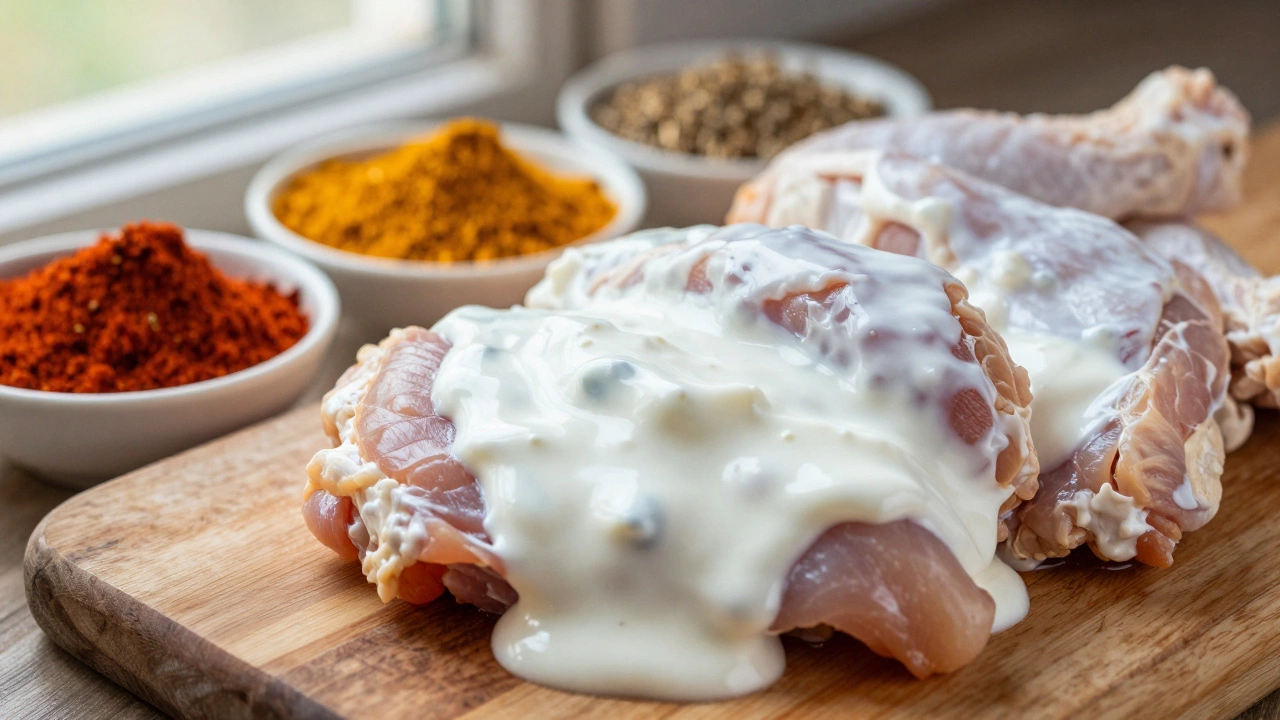
Yogurt, on the other hand, is an emulsion of water, fat, and solids. The water content helps keep the surface moist during the initial stages of cooking. The fat provides richness and helps conduct heat evenly. More importantly, the solid particles in yogurt cling to the meat, creating a thick paste that protects the surface from burning. This crust forms a barrier that locks in juices while allowing the exterior to caramelize beautifully.
| Ingredient | Tenderizing Ability | Flavor Penetration | Burn Protection | Best For |
|---|---|---|---|---|
| Yogurt | High (Enzymatic & Acidic) | Deep | Excellent | Tandoori dishes, Kebabs |
| Oil | None | Surface Only | Poor (Burns easily) | Herb rubs, Quick sears |
| Lemon Juice/Vinegar | Very High (Aggressive) | Moderate | Moderate | Shawarma, Adobo |
| Buttermilk | Medium | Good | Good | Fried chicken, BBQ |
The Role of Spices in Yogurt Marinades
Yogurt isn’t just a base; it’s a canvas. Its mild tanginess balances the intense heat of chili powder and the earthiness of cumin and coriander. In traditional Indian cuisine, spices are rarely used raw. They are toasted and ground to release essential oils. These oils dissolve best in fat. Since full-fat yogurt contains milk fat, it captures these aromatic compounds far better than watery marinades do.
Consider turmeric. It gives tandoori chicken its signature golden hue. Turmeric is hydrophobic, meaning it repels water. If you mix turmeric with just water or lemon juice, it clumps up and stains unevenly. Mixed into yogurt, however, it disperses smoothly, coloring every fiber of the meat consistently. The same applies to paprika and Kashmiri red chili powder, which provide color without overwhelming heat.
Ginger-garlic paste is another staple. Fresh ginger and garlic contain volatile compounds that evaporate quickly when heated. Encasing them in yogurt slows down this evaporation, ensuring that the pungent, savory notes remain intact throughout the cooking process. The result is a complex flavor profile where no single spice dominates, but rather all contribute to a harmonious whole.
Choosing the Right Type of Yogurt
Not all yogurts are created equal. For authentic tandoori chicken, you need full-fat, plain yogurt. Low-fat or non-fat varieties lack the necessary lipids to carry flavors and protect the meat. They also tend to be thinner, leading to a runny marinade that slides off the chicken instead of clinging to it.
In India, cooks often use dahi which is traditional homemade yogurt known for its thick consistency and rich taste. If you can’t find fresh dahi, Greek yogurt is an excellent substitute available globally. It’s strained, removing excess whey, resulting in a thicker texture similar to dahi. Avoid flavored yogurts, sweetened yogurts, or those with added stabilizers. These additives can interfere with the chemical reactions needed for proper tenderization and may cause bitter tastes when burned.
If your yogurt is too thin, strain it through a cheesecloth for a few hours. This removes liquid and concentrates the solids, giving you a creamy, spreadable consistency ideal for marinating. Conversely, if it’s too thick, whisk in a tablespoon of water to loosen it slightly. The goal is a paste that coats the back of a spoon without dripping off immediately.
Marination Time: Patience Pays Off
Once you’ve mixed your yogurt with spices, salt, and aromatics, don’t rush the next step. Marination time is critical. While some recipes suggest 30 minutes, this is barely enough for surface flavoring. For genuine tenderness and depth, aim for at least 4 hours. Overnight marination (8-12 hours) is optimal.
During this period, keep the chicken refrigerated. The cold temperature slows bacterial growth while allowing the acids and enzymes in the yogurt to work steadily. As the chicken rests, the salt begins to cure the outer layers, drawing out some moisture which then reabsorbs along with the marinade. This brining effect enhances juiciness.
Before grilling, take the chicken out of the fridge 30 minutes prior. Bringing it closer to room temperature ensures even cooking. Cold chicken placed directly on hot coals will cook unevenly-the outside chars while the inside remains cold. Room-temperature chicken responds more predictably to heat, resulting in a perfectly cooked piece every time.
Common Mistakes to Avoid
- Using sour yogurt: If your yogurt has started to spoil or separate significantly, discard it. Sourness indicates bacterial activity beyond fermentation, which can ruin the flavor and pose health risks.
- Skippping salt: Salt is essential not just for taste but for breaking down proteins. Without adequate salting, the marinade won’t penetrate deeply.
- Overloading with liquid: Too much water or lemon juice dilutes the yogurt’s effectiveness. Stick to a thick paste consistency.
- Ignoring resting time: After grilling, let the chicken rest for 5-10 minutes. Cutting into it immediately releases all the trapped juices, leaving you with dry meat.
Variations Beyond Tandoori Chicken
While tandoori chicken is the classic application, yogurt marinades shine in many other dishes. Try using it for lamb kebabs, where the richness of the meat pairs beautifully with the tang of yogurt. It works wonders on paneer cubes for vegetarian skewers, preventing them from crumbling under high heat. Even fish fillets benefit from a quick yogurt soak, which adds moisture and prevents flaking.
In Middle Eastern cooking, yogurt marinades are equally revered. Dishes like shish tawook rely on yogurt to keep chicken breast tender despite minimal fat content. The principles remain the same: acid for tenderness, fat for flavor, and solids for protection. Understanding this core concept empowers you to adapt recipes across cuisines confidently.
Can I use buttermilk instead of yogurt for tandoori chicken?
Yes, buttermilk works well as a substitute. It has a similar acidic profile and tenderizing properties. However, buttermilk is thinner, so you may need to reduce other liquids in the recipe or thicken it with a little cornstarch to achieve the right coating consistency. Full-fat yogurt yields richer results due to higher fat content.
How long can I marinate chicken in yogurt safely?
You can safely marinate chicken in yogurt for up to 24 hours in the refrigerator. Beyond this, the texture may become overly soft or mushy, and there’s a slight risk of bacterial growth if temperatures fluctuate. For best balance of tenderness and safety, stick to 8-12 hours.
Does vegan yogurt work for marinades?
Vegan yogurts made from coconut, soy, or almond milk can work, but they behave differently. Coconut yogurt is closest in fat content and texture. Soy-based options may be thinner. Note that plant-based yogurts lack the specific enzymes found in dairy yogurt, so tenderizing effects will be milder. You might need to extend marination time or add a bit of vinegar for extra acidity.
Why does my tandoori chicken turn grey instead of red?
Color comes from spices like Kashmiri red chili powder or food-grade annatto, not from the yogurt itself. If your chicken looks grey, you likely didn’t use enough coloring agents or cooked it at too low a temperature. Ensure you’re using vibrant red chilies and finish cooking under high heat or a broiler to develop that characteristic char and color.
Can I freeze marinated chicken?
Yes, you can freeze chicken after marinating. Place it in an airtight container or freezer bag, removing as much air as possible. It will keep for up to three months. Thaw overnight in the refrigerator before cooking. Note that freezing may alter the texture slightly, making it less tender than freshly marinated chicken, but it’s still delicious and convenient.