Curry Spice Ratio Calculator
Build Your Perfect Curry
Determine exact spice quantities for authentic curry flavor based on servings and spice type.
Your Spice Requirements
Select servings and spice type to see measurements
If you’ve ever made a curry that tasted flat or one-dimensional, the problem wasn’t the chicken or the coconut milk-it was the spices. Curry isn’t a single recipe. It’s a layered experience built on a foundation of spices that, when used right, turn simple ingredients into something deeply comforting and complex. The most important spices for curry aren’t just about heat. They’re about balance: warmth, earthiness, sweetness, and a hint of smoke that lingers long after the last bite.
The Core Five: Spices That Define Every Good Curry
Every authentic curry starts with five foundational spices. Skip any one of these, and you’re missing a piece of the puzzle.
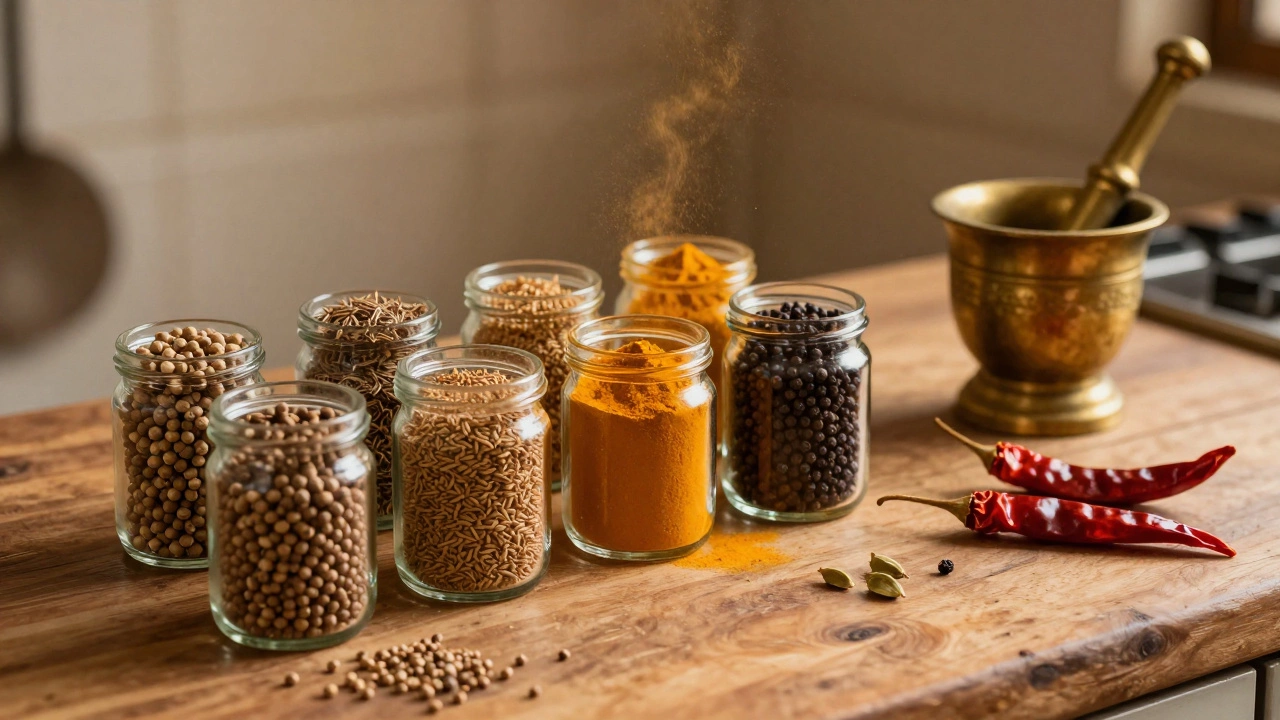
- Coriander seeds - Ground into powder, they bring a citrusy, slightly sweet base note. They’re the backbone of most curry blends, softening sharper spices and helping everything blend together. In India, whole coriander seeds are toasted before grinding to unlock their full aroma.
- Cumin seeds - These small, oblong seeds have a nutty, earthy flavor that’s unmistakable. When dry-roasted and ground, they add depth and a subtle smokiness. Cumin is what makes a curry smell like home, not just a restaurant.
- Turmeric - Not just for color. Turmeric adds a warm, slightly bitter earthiness and has a unique ability to mellow out other flavors. It’s the spice that gives curry its golden hue, but its real job is to tie everything together. Fresh turmeric root is even more potent, but powdered works fine if it’s fresh (check the expiration date-old turmeric loses its punch).
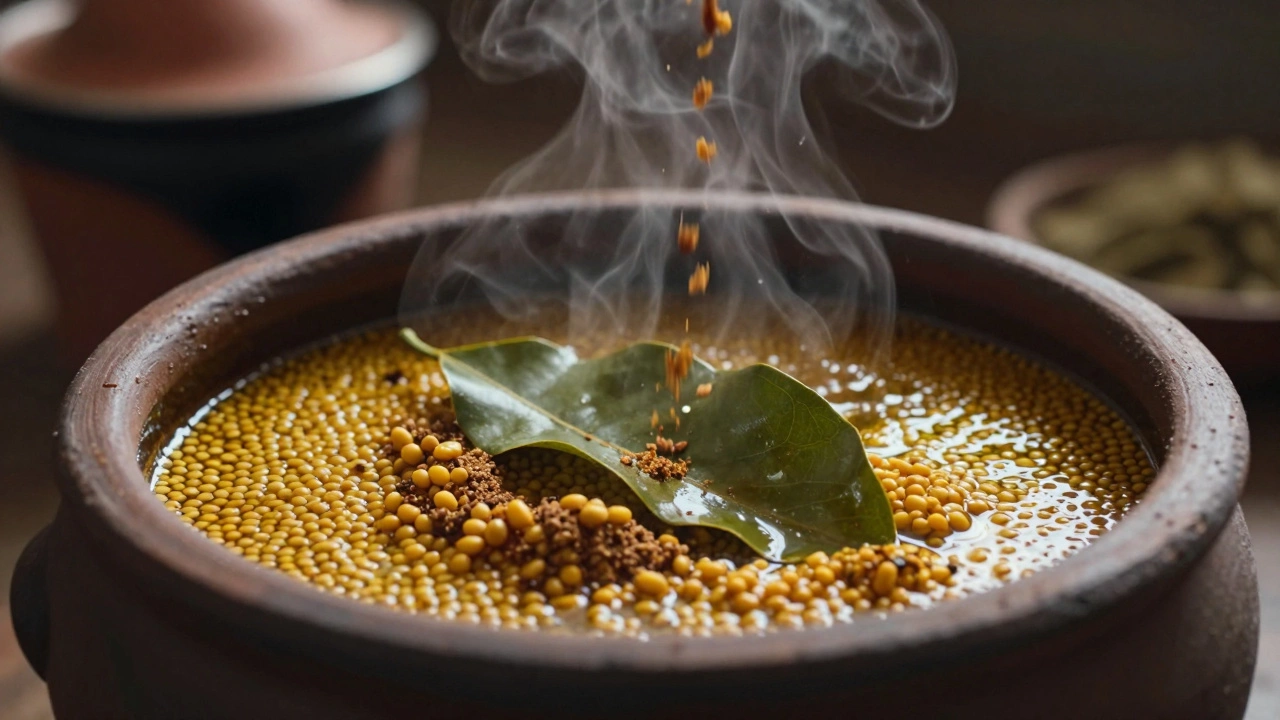
- Mustard seeds - Often overlooked, these tiny seeds pop when heated in oil, releasing a sharp, pungent aroma. In South Indian curries, they’re the first thing you fry in hot oil. That crackle? That’s flavor ignition.
- Black pepper - Not just a garnish. Freshly cracked black pepper adds a clean, sharp heat that cuts through richness. Unlike chili powder, it doesn’t burn-it wakes up the other spices. In traditional Indian kitchens, pepper is added whole and crushed with a mortar and pestle just before cooking.
These five form the core of most homemade curry powders. Buy them whole, toast them lightly in a dry pan, then grind them fresh. Pre-ground spices lose their oils within weeks. A bag of curry powder from the supermarket might have these, but it’s likely stale, mixed with fillers like flour, and missing the nuance you get from fresh grinding.
The Supporting Cast: Spices That Elevate
Once you’ve got the core five, the next layer of spices turns good curry into unforgettable curry.
- Cardamom - Green cardamom pods, cracked open and toasted, add a floral, almost minty sweetness. It’s what makes a curry smell luxurious. Remove the husks before grinding, or leave them whole and fish them out later. Don’t confuse it with black cardamom, which is smokier and used in meat curries.
- Cloves - Just two or three cloves in a curry go a long way. They bring a warm, almost medicinal sweetness that balances acidity. Too many, and your curry tastes like a Christmas cookie. Use sparingly.
- Cinnamon or cassia - A small stick (about 1 inch) adds a subtle sweetness and body. Cassia, the more common type in Indian cooking, is stronger than Ceylon cinnamon. It’s not for dessert-it’s for depth. Remove it before serving.
- Fenugreek seeds - Bitter on their own, but when toasted, they turn nutty and add a unique maple-like undertone. Used in tiny amounts, they’re what gives many North Indian curries their signature complexity. A pinch of ground fenugreek can make a curry taste like it’s been simmering all day.
- Chili powder or dried red chilies - Heat is personal. Kashmiri chili powder gives color without overwhelming spice. Byadgi chilies are mild but deeply red. If you want real heat, use dried bird’s eye chilies. Toast them with the other spices, then grind. Always wear gloves when handling dried chilies-your fingers will burn for hours.
These aren’t optional. They’re what separates a quick weeknight curry from one that feels like it was made with time and care. In a home kitchen in Chennai or Delhi, these spices sit in little glass jars on the counter, labeled in Hindi or Tamil, used every single day.
Spice Blends: When to Use Garam Masala and Curry Powder
People often confuse curry powder with garam masala. They’re not the same, and they’re not interchangeable.
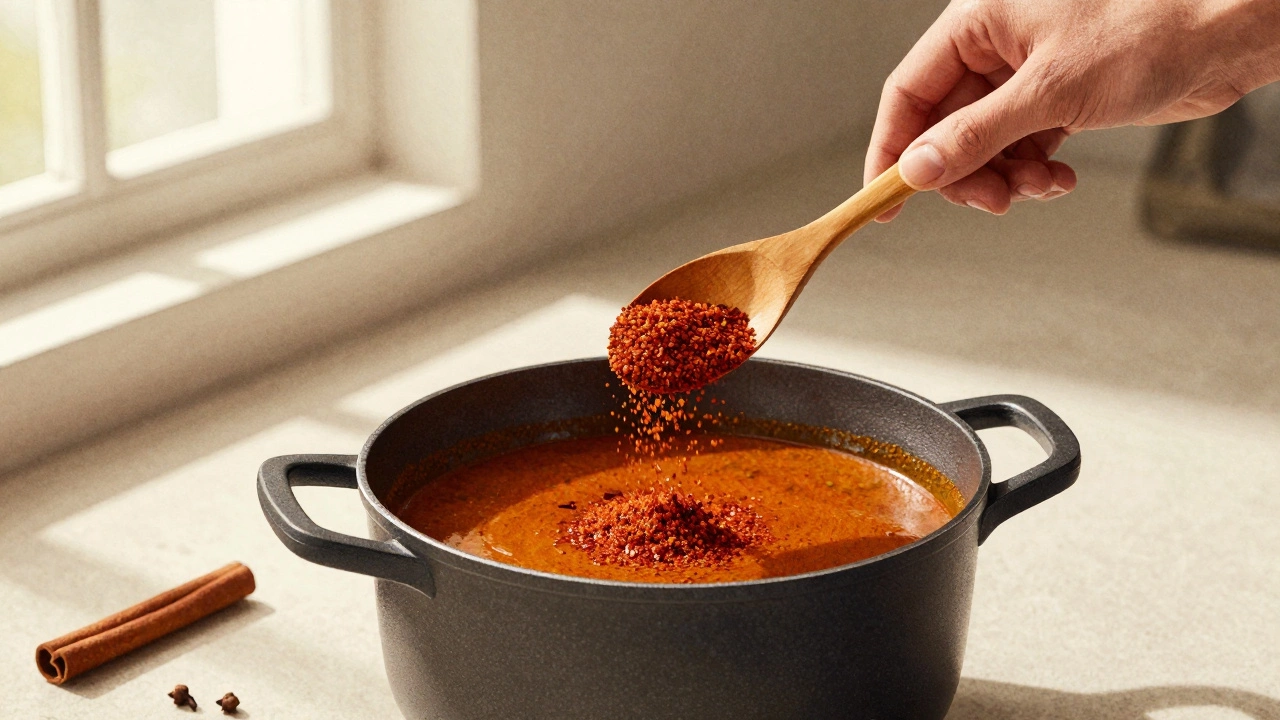
Curry powder is a blend of ground spices meant to be added early in cooking. It’s your base. It includes coriander, cumin, turmeric, fenugreek, and chili. In Western supermarkets, it’s often a one-size-fits-all mix that’s bland and dusty. Make your own. Toast and grind your own blend. Store it in a dark jar. It lasts 3 months-no longer.
Garam masala means "hot spice mix," but it’s not about heat. It’s about warmth. It’s added at the end of cooking. A pinch stirred in just before serving wakes up the whole dish. Typical ingredients: cinnamon, cardamom, cloves, cumin, coriander, black pepper, and sometimes nutmeg or mace. You can buy it, but again-fresh is better. Make a small batch every month. Keep it in the fridge.
Here’s the rule: curry powder goes in with the onions. Garam masala goes in at the very end. Get that wrong, and you lose the magic.
What About Curry Leaves and Asafoetida?
These aren’t spices in the traditional sense, but they’re non-negotiable in many Indian curries.
- Curry leaves - These aren’t the same as the curry leaf plant used in Thai food. Indian curry leaves are small, aromatic, and slightly bitter. They’re fried in hot oil at the start of cooking. That sizzle releases a resinous, herbal fragrance that clings to the chicken and rice. Skip them, and your curry tastes like something from a takeout menu.
- Asafoetida (hing) - It smells like rotten onions when raw. When fried in oil, it transforms into something deeply savory, almost umami. It’s used in tiny pinches (literally a toothpick tip) in lentil and vegetable curries to aid digestion and add depth. In chicken curries, it’s optional but elevates the flavor in a way you can’t name-just feel.
These two ingredients are the secret weapons of South Indian kitchens. If you can’t find curry leaves at your local Indian store, ask for them by name. They’re sold fresh in bundles, frozen, or dried. Frozen works fine. Dried? Skip it.
How to Build Your Own Curry Spice Kit
You don’t need 20 jars. Start with these:
- Coriander seeds
- Cumin seeds
- Turmeric powder (fresh)
- Black mustard seeds
- Black peppercorns
- Green cardamom pods
- Dried red chilies (Kashmiri or Byadgi)
- Cinnamon stick (cassia)
- Fenugreek seeds
- Curry leaves (frozen or fresh)
- Asafoetida (optional, but recommended)
Buy whole spices. Use a small coffee grinder just for spices. Toast them in a dry pan over medium heat until fragrant-no more than 2 minutes. Let them cool, then grind. Store in dark glass jars away from sunlight. Label them. Use them within 3 months.
Every time you cook curry, start with this ritual: heat oil, add mustard seeds, wait for them to pop, toss in curry leaves, then add your ground spices. Let them sizzle for 10 seconds. That’s when the magic happens.
Common Mistakes and How to Fix Them
- My curry tastes bitter. You burned the spices. Lower the heat next time. Spices should sizzle, not smoke.
- My curry tastes flat. You didn’t toast the spices. Raw ground spices taste dusty. Always toast whole spices first.
- My curry is too spicy. You used too much chili powder. Use Kashmiri chili for color, not heat. Add heat gradually.
- My curry smells weird. You used old turmeric or stale coriander. Check expiration dates. Fresh spices smell sweet, not musty.
- I can’t find curry leaves. Try an Asian grocery, or use a bay leaf as a last resort. It’s not the same, but it helps.
The best curries aren’t made with recipes. They’re made with instinct. Taste as you go. Add a pinch more cumin. A dash more garam masala. A single curry leaf. You’ll know when it’s right.
What’s the difference between curry powder and garam masala?
Curry powder is a base blend added early in cooking-it includes turmeric, cumin, coriander, and chili. Garam masala is a finishing spice mix with warming spices like cinnamon, cardamom, and cloves, added at the end to brighten the dish. They’re not interchangeable.
Can I use pre-ground spices for curry?
You can, but it won’t taste the same. Pre-ground spices lose their essential oils within weeks. Freshly toasted and ground spices release far more aroma and flavor. For the best curry, buy whole spices and grind them yourself.
What’s the most important spice in chicken curry?
There’s no single "most important" spice-it’s the balance. But if you had to pick one, coriander seeds form the base of nearly every Indian curry. They’re the glue that holds the other flavors together.
Do I need curry leaves for chicken curry?
Yes, if you want authentic flavor. Curry leaves add a unique herbal aroma that can’t be replicated. If you can’t find them fresh, frozen works. Dried curry leaves are not a good substitute-they lack the fragrance.
How long do curry spices last?
Whole spices last up to 2 years if stored in a cool, dark place. Ground spices lose potency after 3-6 months. For best results, grind small batches every 6-8 weeks. Smell them-if they don’t smell strong, they’re too old.