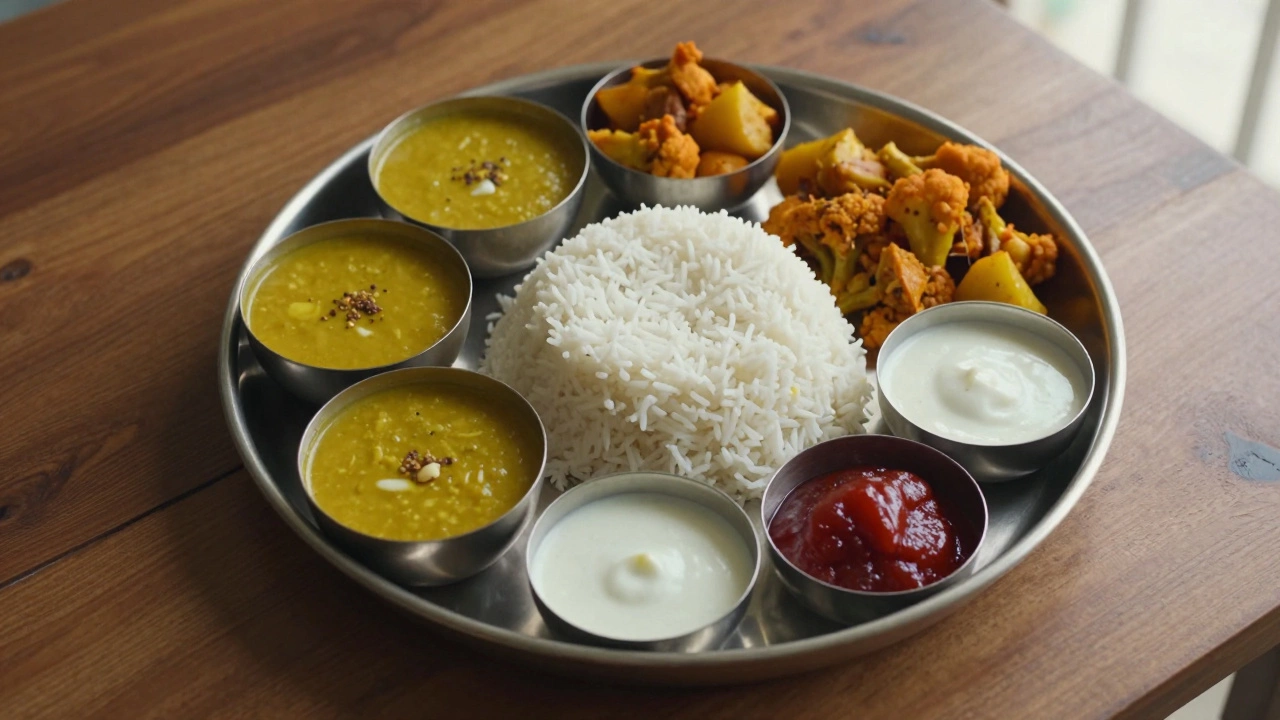
Traditional Thali Plate Builder
Build your ideal balanced lunch. Select one item from each category to see how it completes the "Nutritional Blueprint" of a traditional Thali.
Plate Analysis:
Quick Summary of a Classic Plate
- The Base: Usually steamed rice or a flatbread like roti.
- The Protein: A lentil-based stew (dal) or a vegetable curry.
- The Freshness: A raw salad, pickled vegetables, or a yogurt-based side.
- The Finish: Often a small piece of jaggery or a sweet treat.
The Anatomy of a Thali
If you've ever seen a large round platter with several small bowls, you've seen a Thali. This isn't just a presentation style; it's a nutritional blueprint. The thali ensures you get a bit of everything. First, you have the Staple Grain. In the North, this is usually Wheat in the form of rotis or parathas. In the South, West, and East, Rice reigns supreme. The grain provides the energy, but it's never eaten alone. Then comes the Dal. This is the heart of the meal. Dals are legumes-like yellow pigeon peas or black lentils-slow-cooked into a creamy stew. They provide the essential protein, especially in vegetarian households. A simple tadka (tempering) of cumin seeds and garlic in hot oil is what transforms a bland pot of lentils into a flavor bomb. To round it out, you'll find a "sabzi," which is simply a sautéed vegetable dish. This could be cauliflower and potatoes (Aloo Gobi) or okra (Bhindi). The sabzi adds fiber and different textures, from the crunch of a fresh vegetable to the softness of a slow-cooked root.| Component | Common Examples | Primary Purpose | Typical Taste Profile |
|---|---|---|---|
| Grain | Basmati Rice, Chapati, Roti | Energy/Satiety | Neutral |
| Protein | Tarka Dal, Rajma, Chole | Muscle Repair/Satiety | Savory/Umami |
| Vegetable | Aloo Gobi, Baingan Bharta | Vitamins/Minerals | Spicy/Tangy |
| Coolant | Raita, Curd (Dahi) | Digestion/Heat Balance | Sour/Cool |
| Condiment | Mango Pickle, Chutney | Palate Stimulation | Sharp/Salty/Acidic |
Regional Differences: North vs. South
India is a subcontinent, not just a country, and that means lunch changes drastically every few hundred miles. If you're in Punjab or Delhi, your lunch will likely be "heavy." You'll see thick rotis, creamy dals, and perhaps a side of paneer. The flavors are rich, often using butter or ghee to add depth. Switch to Tamil Nadu or Kerala, and the landscape shifts. Here, Rice is the undisputed king. A traditional South Indian lunch often starts with a scoop of rice mixed with Sambar-a tangy lentil and vegetable stew made with tamarind. This is followed by a dry vegetable fry and a generous serving of Rasam, a spicy, thin soup that aids digestion. In the East, particularly Bengal, fish is a central part of the lunch for many. A meal might consist of steamed rice, a fish curry (Machher Jhol), and a side of mashed vegetables (Bharta). The use of mustard oil gives the food a pungent, sharp kick that you won't find in the butter-heavy dishes of the North.The Role of Digestion and Probiotics
Why is there always yogurt on the table? It's not just for taste. Indian cuisine is deeply connected to Ayurveda, the ancient system of medicine. Spices like turmeric, cumin, and coriander aren't just for flavor; they are chosen because they help the body process the food. Dahi (plain yogurt) or Raita (yogurt with cucumber or boondi) acts as a coolant. When you're eating spicy chilies, the lactic acid in the yogurt neutralizes the heat and protects the stomach lining. Moreover, the probiotics in curd help break down the complex carbohydrates in the rice and lentils, preventing that heavy, bloated feeling after a big meal. Then there's the pickle. Achaar is fermented vegetables (usually mango, lime, or chili) preserved in oil and salt. In small quantities, these fermented foods stimulate the appetite and trigger the release of digestive enzymes.Making it Happen: Easy Indian Recipes for Beginners
If you want to recreate this at home without spending six hours in the kitchen, you don't need to cook five different dishes. You can create a simplified version that still hits all the traditional marks. The key is to use easy indian recipes that rely on a few basic pantry staples. Start with the rice. Use a medium-grain Basmati for that aromatic scent. While the rice steams, make a basic yellow dal. Sauté some cumin seeds in oil, add a chopped onion and a tomato, and stir in red lentils (Masoor Dal) with water and turmeric. Let it simmer until creamy. For the vegetable part, try a quick Aloo Jeera (cumin potatoes). Dice some potatoes and sauté them with cumin, turmeric, and salt until they are golden brown. Add a squeeze of lemon at the end for that essential "sour" note. Finally, keep it simple with the sides. A dollop of plain store-bought Greek yogurt mixed with a pinch of salt and roasted cumin powder creates a quick raita. Slice some cucumbers and carrots, sprinkle a bit of salt and lemon, and you have a traditional Indian lunch that is nutritionally balanced and takes less than 40 minutes to prepare.Common Pitfalls to Avoid
One of the biggest mistakes people make when trying to eat a "traditional" lunch is overdoing the cream and butter. Real Indian home cooking is surprisingly light. The richness comes from the slow reduction of vegetables and the quality of the spices, not from adding a cup of heavy cream to everything. Another error is ignoring the textures. A meal of just rice and dal is a bit monotonous. That's why the raw salad or the crunchy pickle is so important-it breaks up the softness of the cooked grains and legumes. Lastly, don't fear the spices. Many beginners think "spicy" means "hot." In reality, most traditional lunch dishes use spices for aroma and depth. Turmeric is for color and anti-inflammatory properties; cumin is for earthiness; coriander is for a citrusy lift. You can have a flavor-packed meal without breaking a sweat.Is traditional Indian lunch always vegetarian?
Not always, but a huge portion of the population is. Even in non-vegetarian homes, lunch often features a mix of veg and non-veg. For example, you might have rice, dal, and a side of fish or chicken curry. However, the structure remains the same: a grain, a legume/protein, and vegetables.
What is the difference between a lunch thali and a dinner thali?
Lunch is typically the largest meal of the day in India. It's designed to be hearty to sustain you through the workday. Dinner is often lighter, perhaps consisting of just rotis and a simple vegetable dish, avoiding heavy rice portions to ensure better sleep.
Can I substitute rice with something else?
Absolutely. Depending on the region, rice is often replaced by wheat-based flatbreads like chapati, phulka, or paratha. If you're looking for a healthier alternative, some people use millet (Bajra or Jowar) rotis, which are very common in rural Rajasthan and Maharashtra.
Why is lemon or tamarind added to so many dishes?
Acidic elements like lemon juice, tamarind, or kokum are used to balance the earthiness of lentils and the richness of oils. From a nutritional standpoint, the Vitamin C in lemon helps the body absorb the iron found in lentils and spinach.
How do I know if my dal is cooked properly?
A well-cooked dal should have a creamy, consistent texture. The lentils should be soft enough to mash easily between two fingers, but not completely disintegrated into a paste unless you are making a specific smooth soup version.
Next Steps for Your Indian Cooking Journey
If you've mastered the basic rice-dal-sabzi combo, try experimenting with different legumes. Move from yellow moong dal to kidney beans (Rajma) or chickpeas (Chole). Once you're comfortable with the flavors, try making your own fresh chutney using cilantro and mint. This adds a layer of authenticity that store-bought sauces just can't match. For those who want to venture further, exploring the art of tempering (tadka) with different seeds and spices will open up a whole new world of flavor profiles.